
Lieferung heute & morgen

Qualitätsgarantie

Willkommens-Angebote freischalten: KOSTENLOSE Lieferung | Bis zu 80 % RABATT | Kostenlose 30-Tage-JoyPlus-Testphase
App herunterladen
Toys should suit your child’s age and interests, as well as how they’ll actually be used in everyday family life. But product descriptions often highlight colourful features more than important details about safety, space requirements or ongoing costs. So, when buying children’s toys online, don’t focus solely on brands, pictures or supposed educational benefits.
Lights, music, remote controls and lots of accessories can look versatile at first glance. But a toy with too much going on may overwhelm younger children. Electronic features are also often used less than expected. So check whether the toy is still fun to play with without batteries.
A product labelled ‘3+’ isn’t automatically suitable for every three-year-old. Small parts, magnets, moving elements and complicated rules may mean extra supervision is needed. The CE mark is an important indication of conformity, but it doesn’t replace checking the specific safety warnings.
Large playsets, construction toys with lots of pieces and extensive board games all need a dedicated storage solution. Without a way to sort everything, pieces are more likely to go missing. This can significantly reduce a toy’s play value, even if the product itself is still in good condition.
Start by checking the recommended age range and your child’s abilities. For babies and toddlers, easy-to-grip, wipe-clean products with a simple design are often more suitable than complex sets. For example, an activity table for ages 6 to 36 months should be stable and have easy-to-use features.
For children aged 3 and over, animal figures, dinosaur toys, vehicles and simple role-play toys are all options. From around 5 to 7 years old, LEGO sets for children, more challenging construction kits and introductory cooperative board games become more appealing. Older children and adult fans may prefer larger construction kits or strategy games.
For plastic toys, check the material details, rounded edges and overall build quality. Follow the warning if the product contains small parts. Toys with magnets need extra care: swallowing magnets can cause serious injuries. Keep these products out of reach of younger children.
For electronic toys, check which batteries they need, whether they’re included and whether the battery compartment can be secured safely. Volume control can be useful at home, but it’s no substitute for keeping a suitable distance and limiting how long the toy is used.
Board games and figures can often be cleaned with a dry or slightly damp cloth. Don’t soak cardboard components. A resealable box or separate storage compartment can help keep play money, figures and pieces together.
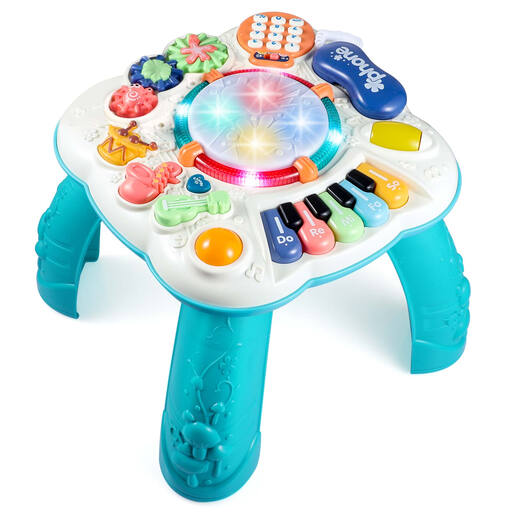
Why this product suits this profile: Six play areas, including piano keys, a drum, gears and a toy phone, offer a range of activities in one product. The removable legs let you use it as a floor play panel or a table.
The product description mentions volume control and a quiet mode, so you can adjust how it’s used around the home. Batteries aren’t included, according to the product details.
Suitable from 6 to 36 months; made from ABS plastic according to the product details; several play modes in a compact design.
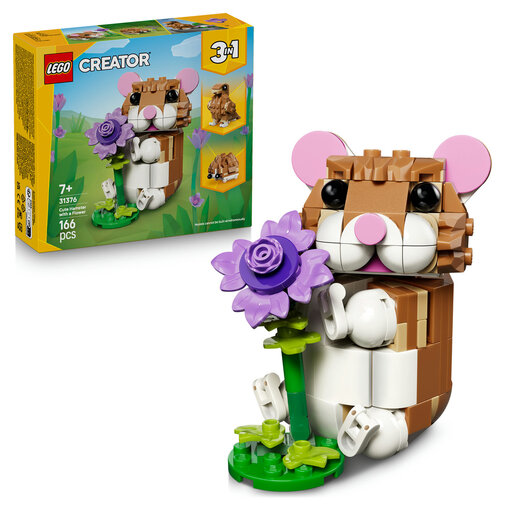
Why this product suits this profile: According to the product details, this 3-in-1 construction toy is designed for children aged 7 and over and contains 166 bricks. The same pieces can be used to build a hamster, hedgehog or eagle.
The three building options add variety without the need for extra accessories. The small-parts warning still applies, so it isn’t suitable for children under 3.
166 bricks; movable elements; digital 3D building instructions via the LEGO Builder app, according to the manufacturer.
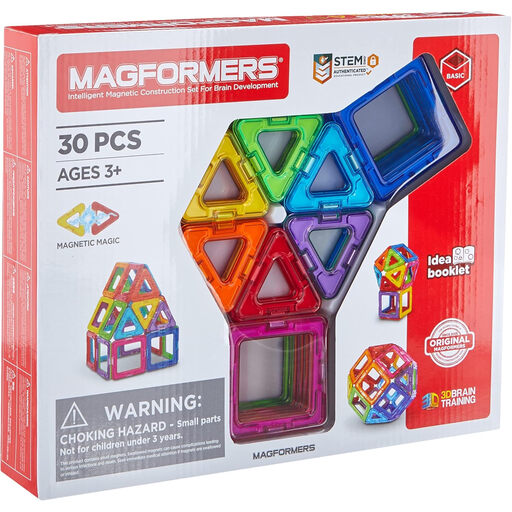
Why this product suits this profile: The set contains 30 magnetic plastic pieces and is intended for children aged 3 and over, according to the product details. It’s a good choice for families who want to explore shapes and construction without batteries.
The product information specifically warns about small parts and strong magnets. If you have younger siblings at home, the pieces need to be stored separately and securely.
30 pieces; no batteries needed; create 2D and 3D designs with magnetic connections.
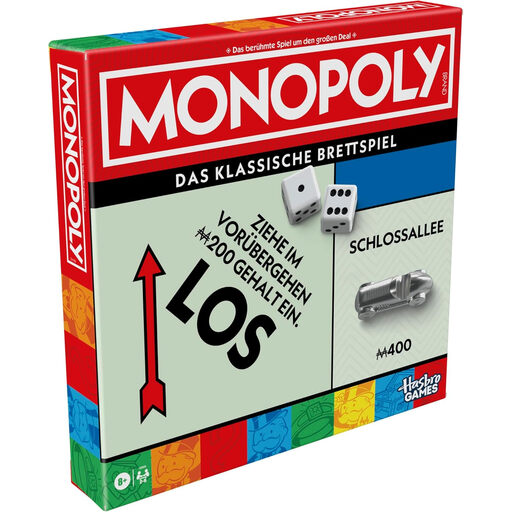
Why this product suits this profile: According to the product details, the German edition is designed for 2 to 8 players aged 8 and over. A lidded storage compartment keeps the money, cards, houses and hotels organised.
The built-in compartment makes it less likely that essential game pieces will end up scattered across drawers. The small parts mean it isn’t suitable for children under 3.
For 2 to 8 players; eight larger metal playing pieces; no batteries or assembly required.
We’ve put together a complete, regularly updated list of products that meet these strict selection criteria and fully comply with the safety regulations in force in the EU.
Suitable options might include animal figures, simple vehicles, dinosaur toys or age-appropriate construction toys. The key things to check are the specific age recommendation, the size of the pieces and the manufacturer’s guidance. Take extra care with magnets and small parts that could be swallowed, and supervise play accordingly.
For toddlers, choose products with a few easy-to-understand controls and sturdy parts. Children from around 5 years old can enjoy introductory construction kits, role-play and simple board games. From ages 6 to 8, they may be ready for more complex educational games, logic games and children’s board games with several rules. A child’s individual development may not match the recommended age exactly.
How long a toy stays engaging depends less on the number of features and more on how much it can be expanded and the depth of play it offers. Construction toys, figure sets and board games can inspire new scenarios over time. When buying, look for accessories you can buy separately, sturdy materials and easy-to-manage storage. That way, gift ideas for children can be enjoyed well beyond a single occasion.