
Lieferung heute & morgen

Qualitätsgarantie

Willkommens-Angebote freischalten: KOSTENLOSE Lieferung | Bis zu 80 % RABATT | Kostenlose 30-Tage-JoyPlus-Testphase
App herunterladen
By Joybuy Product Recommendation Officer
Children’s toys should suit the child’s age, living situation and play interests. At the same time, parents and grandparents need to pay attention to small parts, materials, batteries and the actual dimensions. A flashy box or a long list of features alone doesn’t tell you much about how practical a toy will be day to day.
“Toy for children aged 3 years and over” isn’t just a loose guideline. With many products, small components are a clear indication of a potential choking hazard. This includes items such as play food, arrows, accessories for till sets or parts of electronic figures.
For babies and toddlers, only baby toys designed for their specific developmental stage should be used. A toy intended for children aged 3 and over should not be given to a younger child – even under supervision. Supervision does not replace the required age suitability.
Lights, music, sounds and remote controls can make play more varied. But they also mean you need to consider the battery compartment, volume, replacement batteries and cleaning. With electronic toys, it’s important to know before you buy whether batteries are included and how many are needed.
For example, a remote-control dinosaur requires six AAA batteries, which according to the product information are not included. A toy till runs on batteries and also has calculator, piano and sound functions. That might be interesting, but it’s less straightforward than a battery-free toy car.
A toy can look compact in product images but take up a lot of space in your home. The Dreamora dump truck is approximately 59.69 cm long according to the product details. A train set with tracks needs a clear area of around 70 × 41 inches for the layout described. Similarly, a comprehensive children’s kitchen accessory set should be fully storable after play.
Before ordering, it’s worth running through a quick checklist:
The age rating must match the child’s actual developmental stage. Warnings such as “Not suitable for children under 36 months” often refer to small parts. For toys with arrows, moving mechanisms or sound functions, direct adult supervision is advisable or, according to the product information, required.
One example is a bow and arrow set with suction-cup arrows, a target and an LED function. It is intended for children aged 3 and over. The arrows and suction cups should be checked regularly for wear or damage. It is not suitable for younger children.
Terms like “non-toxic” or “child-safe” should not be taken at face value as a comprehensive quality judgement. More meaningful are specific details about the material, edges, cleaning and use. EVA foam on a play mat, ABS plastic on vehicles or BPA-free plastic on play food are verifiable product details.
Also important are:
The CE marking is a mandatory declaration of conformity from the manufacturer and not an independent quality seal. When it comes to standards, look for specific references in the product description. For example, the bow set mentions testing to ASTM-F963; a baby activity table states CE and EN71 conformity. Such statements relate to the product information provided and do not replace checking the individual item for damage.
With musical toys, activity tables, RC figures and electric vehicles, batteries are an ongoing cost. So check the following:
A battery-free toy car or a friction-powered dump truck incurs no battery costs during use. However, moving parts, wheels and tipping mechanisms must be checked regularly for damage.

Why this product suits the profile: The six EVA foam tiles can be joined together without tools and used to create a manageable play area indoors.
The dimensions and what’s included are clearly stated: six tiles with edges and a connecting system. This makes it easier to judge the space needed before you buy.
EVA foam, interlocking tiles and easy cleaning. The tiles can be separated again when needed.
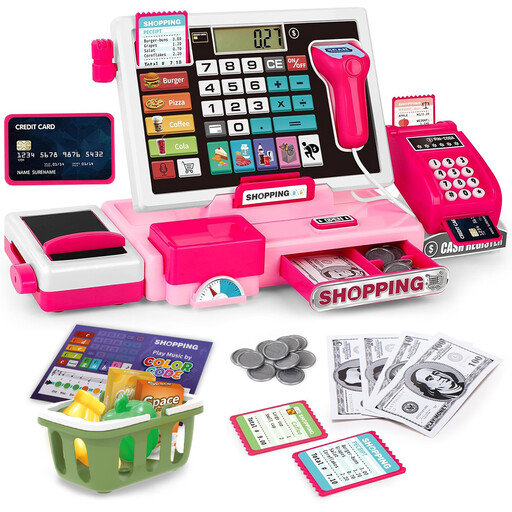
Why this product suits the profile: This role-play toy combines a till, scanner, play money, shopping basket and play food in one set for children aged 3 and over.
Age suitability, dimensions of approximately 37.49 × 8.99 × 19 cm and a note about small parts are all provided. Batteries are not included and need to be budgeted for separately.
Calculator, piano, light and sound functions, plus accessories for various role-play scenarios.
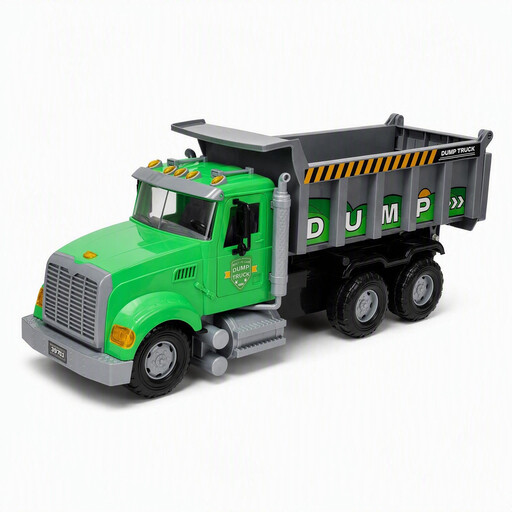
Why this product suits the profile: This battery-free toy car is designed for indoor use, sandpits and other suitable outdoor areas, and features a manually operated tipping bed.
According to the product information, it requires no batteries. At the same time, the notes about sand, moving parts, heat and regular damage checks should be followed.
Large design, tipping function, friction drive and a loading area for sand, building blocks or small toys.
We’ve put together a full, regularly updated list of products that fully meet these strict selection criteria and the safety regulations in force in the EU.
Suitable products are those with the correct age labelling, manageable features and no easily detachable small parts. An EVA foam play mat or an age-appropriate activity table could be an option. The manufacturer’s details and any warnings should be read in full before you buy.
The lifespan depends on the material, how it’s used and how it’s cared for. Outdoor toys should be cleaned of sand and dirt after use and stored dry. For vehicles, arrows, hinges and plug-in connections, regular visual checks are important. Damaged parts should not be used.
In addition to the purchase price, you may need to factor in batteries, bubble solution or charging accessories. With battery-operated musical toys and RC models, it’s worth checking the battery type and quantity. Battery-free options like a friction-powered vehicle incur no battery costs during play, but they still need care and inspection.