
Lieferung heute & morgen

Qualitätsgarantie

Willkommens-Angebote freischalten: KOSTENLOSE Lieferung | Bis zu 80 % RABATT | Kostenlose 30-Tage-JoyPlus-Testphase
App herunterladen
Children’s toys should bring joy, suit the child’s age and actually get used in everyday life. Yet eye-catching packaging, lengthy product descriptions and supposedly educational promises often lead to poor purchases. Parents, grandparents and relatives should therefore look beyond the design or the number of pieces included.
Lights, music and buttons look appealing at first glance. With babies and toddlers, however, what really matters is whether the features are understandable, reachable and appropriate for their developmental stage. A toy with numerous effects can become confusing, whereas simple cause-and-effect games often hold interest for longer.
With electronic interactive baby toys, buyers should also check whether batteries are included, whether the volume can be adjusted and how the battery compartment is secured.
A toy for 3-year-olds is not automatically suitable for a younger sibling. Small parts and magnets can pose a serious choking hazard. Similarly, an elaborate construction toy can be overwhelming if fine motor skills and concentration aren’t yet developed enough.
The age rating on the product page and packaging should always be checked before purchase. It does not replace adult supervision.
A high piece count says little about which shapes are actually included. With magnetic building blocks, the individual size, the type of connection and compatibility with existing sets are also important. Different systems cannot always be sensibly combined with one another.
For your buying decision, specific details such as number of pieces, individual dimensions, storage solution and recommended age group are what count.
For babies from 6 months, larger, easy-to-grasp elements without loose small parts are suitable. A musical activity table for toddlers can combine several play areas, but should stand stably and have easily reachable controls.
With magnetic sets for ages 3 and up, extra caution is needed: the product descriptions of several sets explicitly state that swallowed magnets can cause serious injury. Parts should be regularly checked for cracks, loose magnets or damage. If anything seems wrong, the toy should be taken out of use.
Claims such as “non-toxic”, “BPA-free” or “rounded edges” should be specifically stated in the product information. For plastic products, material details like ABS are helpful. References to CE or EN 71 can provide guidance, but do not replace checking the specific age rating and warning notices.
For electronic toys, the following points are also relevant:
Learning toys, educational toys and Montessori toys should not just be marketed with learning buzzwords. What’s more meaningful is the specific play activity: sorting, building, rolling, pressing, matching or acting out everyday situations.
For small homes, foldable or easily storable products are practical. A carry bag can help prevent missing pieces with magnetic building blocks. When choosing a gift for children, you should also consider whether similar sets are already owned.

Why this product fits the profile: This set is aimed at children aged 2 and over and contains 22 large bricks for building various construction vehicles. It’s ideal for families who want to start with construction toys on a manageable scale.
The age recommendation, number of pieces and possible vehicle variations are clearly stated. The large elements are designed for small hands; the warning about small parts should still be observed.
22 pieces, three described vehicle combinations and two included builders. No batteries required for assembly.
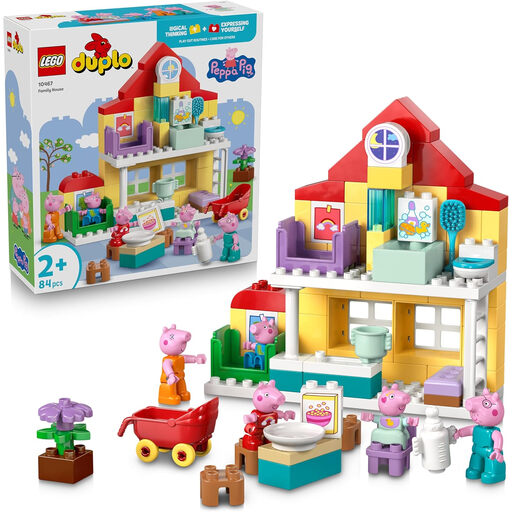
Why this product fits the profile: For children aged 2 and over, this set combines several rooms, figures and everyday scenes. It suits households where shared role play and repeatable play situations are wanted.
The play scope isn’t just a single function: bedroom, bathroom, kitchen and living room offer different role-play approaches. The age suitability and handling of the DUPLO bricks are specified.
Several figures, accessories and familiar everyday situations. Additional Peppa Pig sets can be bought separately, according to the product description.
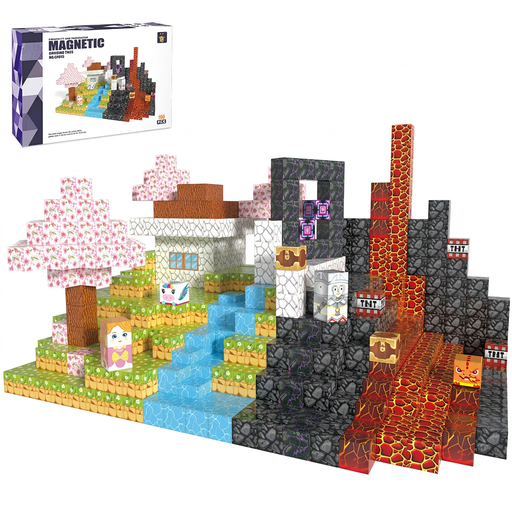
Why this product fits the profile: This set is designed for children aged 3 and over and contains 100 pieces with geometric shapes plus a storage bag. It’s suitable for regular building at home, at school or on the go.
The individual piece size of 2.5 cm, the number of pieces and the warning about swallowable magnets are all stated. Compatibility with other sets is explicitly described as working with 2.5 cm systems.
100 pieces, basic geometric shapes, carry bag and no batteries required. Use only from age 3 and with attention to safety instructions.
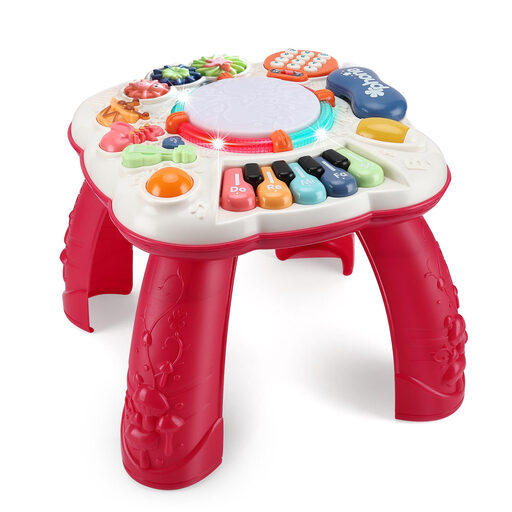
Why this product fits the profile: This product is specified for 6 to 36 months and can be used as a floor play panel or with detachable legs as an activity table. This makes it suitable for different developmental stages in early childhood.
The age range, detachable legs and battery requirement are all listed in the specifications. A volume control allows adjustment to your home environment.
Six described play areas, including piano keys, drum, telephone and gears. Batteries are not included, according to the product description.
We’ve put together a complete, regularly updated list of products that fully meet these strict selection criteria and the safety regulations in force in the EU.
From age 2, large building bricks, simple role-play sets and age-appropriate vehicles are good options. With LEGO DUPLO from age 2, the bricks are designed for small hands. The specific warnings and supervision remain important, especially if there are other small parts in the household.
The lifespan depends on the material, construction, storage and use. Magnetic building blocks should be checked regularly for cracks and loose magnets. Electronic toys need a dry storage place; batteries should be removed if the toy won’t be used for a while. A sealable storage container also helps prevent lost pieces.
A suitable gift for children is based on age, interests and existing toys. For babies, simple sensory and grasping toys can be appropriate. Children from age 2 often benefit from role-play or building sets, while toys for age 3 and up with magnets and small parts should only be considered with attention to the warnings. What matters isn’t the number of features, but whether the toy is safe, understandable and can be used regularly.