
Lieferung heute & morgen

Qualitätsgarantie

Willkommens-Angebote freischalten: KOSTENLOSE Lieferung | Bis zu 80 % RABATT | Kostenlose 30-Tage-JoyPlus-Testphase
App herunterladen
Children’s toys and family games should suit the child’s age, abilities and family routine. In practice, however, unclear age recommendations, overcrowded accessory boxes or games with overly complicated rules can quickly lead to disappointment. Making an objective selection based on safety, game content, target group and usage situation makes it easier to compare products sensibly.
“250 pieces” initially sounds like it offers plenty of possibilities. What matters, however, is whether the building blocks are suitable for small hands, easy to grip and compatible with existing sets. If there is no practical storage solution or the pieces are difficult to sort, the toy can quickly become impractical in everyday family life.
The recommendation “from 3 years” or “from 6 years” is no guarantee that every child will immediately manage the product. For children’s board games, the length of the rounds, the number of rules and the reading ability required are also important. For construction toys from 18 months, easy-to-grip shapes, rounded edges and sufficiently large components are particularly relevant.
A farm or animal theme may appeal to children, but it does not automatically guarantee a suitable play experience. With PLAYMOBIL farm sets and PLAYMOBIL animal playsets, you should check how many small parts are included, whether adults need to help with assembly and whether the accessories match the existing collection. For games for 2 players, it is also important to check whether the game is genuinely designed for two players or only works with a larger group.
Pay attention to the manufacturer’s age recommendation and the warnings on the packaging and product page. Small parts can pose a choking hazard. A toy recommended from age 4 is therefore not automatically suitable for younger siblings.
The following points are particularly practical when choosing building blocks for toddlers:
A set with lots of components requires sufficient storage space. For families with limited room, compact board games or a small games collection may be more practical than an extensive construction toy set. For outdoor family games, you should also consider transport, the space needed for setting up and storage.
A croquet set, for example, is suitable for gardens, parks or larger grassed areas. However, the product warning for the specified Outdoor Play Croquet Set states that it is not a toy and should be kept away from children. Families with young children should therefore plan for safe use by adults and physical separation during play.
For children’s games from age 3, simple sequences of play and short rounds are often more suitable. The game “Bobo the Dormouse” is designed for 2 to 4 players from age 3 and is described as taking around 10 minutes to play. For family games from age 6, more extensive rules and several game variants can be appealing, provided the children enjoy staying at the table for longer.
A cooperative game from age 10 has different requirements. Players need to communicate, plan strategically and be able to deal with possible wrong decisions.
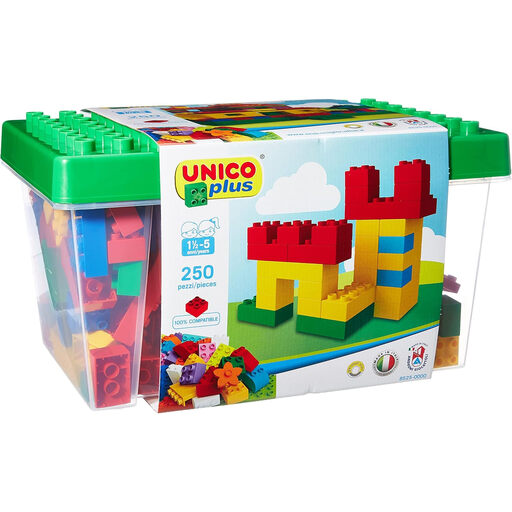
Why this product suits the profile: According to the product information, the set is aimed at children from 18 months to 5 years and provides a substantial selection of building blocks for early construction attempts.
The number of pieces is combined with a clear age range and a storage box. The stated compatibility with popular building-block systems can complement existing play materials.
250 coloured plastic pieces, designed for children from 18 months to 5 years and described by the product listing as robust.

Why this product suits the profile: This cooperative game for ages 10 and up is designed for exactly 2 players and is aimed at families looking for strategic gameplay rather than short dice-rolling rounds.
The target audience and player count are clearly stated. According to the product description, 21 airport scenarios provide different challenges and replayable rounds.
Cooperative dice-placement mechanism, 21 missions and no batteries required.
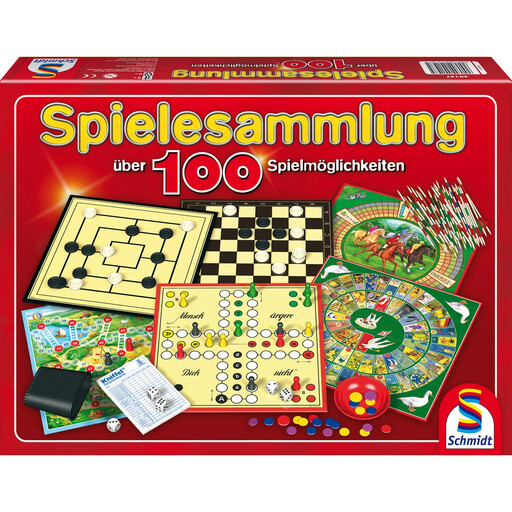
Why this product suits the profile: This collection is ideal for households that want to keep different types of games in one box and regularly play with people from different age groups.
Rather than offering just one game mechanic, the box contains 100 game options according to the product information. The age recommendation from 6 years makes it easier to narrow down your choice.
100 game variants, including well-known classics, for players aged 6 and over; no batteries required.
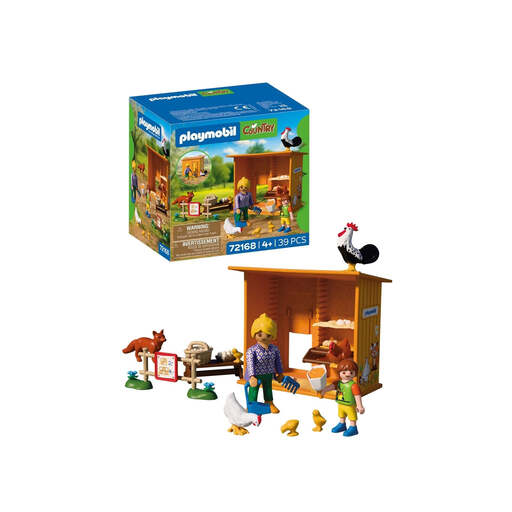
Why this product suits the profile: This set for ages 4 and up combines figures, animals and accessories for creating your own farm scenarios.
The product information clearly states the age range, contents and presence of small parts. Due to the warnings, separate storage is advisable if there are younger siblings.
39 pieces, including figures, animals, a stable, fence and accessories; according to the product information, no batteries are required.
We have put together a complete, regularly updated list of products that fully meet these strict selection criteria and the safety regulations applicable in the EU.
Before buying children’s toys and family games, it is worth carrying out this quick check:
Building blocks with easy-to-grip, sufficiently large pieces can support early sorting, stacking and construction play. The UNICO Plus set is specified for use from 18 months to 5 years. Adult supervision is still advisable for toddlers.
A collection containing several simple and classic game variants can cater to different interests. The Schmidt Spiele Family Games Collection is listed as offering 100 game options and an age recommendation from 6 years. Before buying, families should check whether the children already have a secure understanding of colours, numbers and basic rules.
According to the product information, a cooperative game such as KOSMOS Sky Team is designed for exactly two players from age 10. It uses secret dice placement and a range of missions. This makes it more suitable for older children and adults who enjoy planning together than for short games aimed at younger children.