
Lieferung heute & morgen

Qualitätsgarantie

Willkommens-Angebote freischalten: KOSTENLOSE Lieferung | Bis zu 80 % RABATT | Kostenlose 30-Tage-JoyPlus-Testphase
App herunterladen
Toys should keep children occupied, reflect their interests and suit their stage of development. When choosing products for babies, toddlers and children up to around eight years old, however, product images and advertising claims often seem more convincing than the actual features. Three typical purchasing decisions particularly often result in unsuitable buys:
A suitable choice should therefore take the child’s age, the material, the purpose of the play, the space required and the family’s everyday routine into account.
The age recommendation on the packaging is a key point to check. Toys for ages 3 and over may contain small parts that pose a choking risk to younger children. When buying a gift for siblings of different ages, you should also check whether all the components can safely be used together.
For children aged 1 to 3, large, softer or firmly attached elements are often suitable. A busy book with zips, buttons and lacing can be an interesting activity toy for toddlers, but it should be used according to the product information and under supervision.
For plastic toys, information about the material, rounded edges and clear manufacturer or importer details are important points of reference. According to the product information, the CHEERFUN card machine is made from ABS plastic and is free from BPA, lead and formaldehyde. Compliance with EU REACH requirements is also stated. Such information should always be checked against the labelling on the packaging and product page.
For products containing liquids, suction cups or moving parts, other points are also relevant:
CE marking is mandatory in the EU, but it does not replace checking the specific age recommendation and instructions for use.
Educational toys for children do not necessarily have to be digital. A drawing board, card-based toy, motor skills set or workbench can encourage learning without requiring a screen. The key question is whether the activity suits the child and can be used repeatedly.
When travelling, low weight, compact dimensions, easy cleaning and tidy storage are particularly important. A product with 30 reusable stickers may be more practical for a car journey or restaurant visit than a comprehensive set with lots of individual parts. For creative activities, parents should also check whether paper, pens or other accessories are already included.
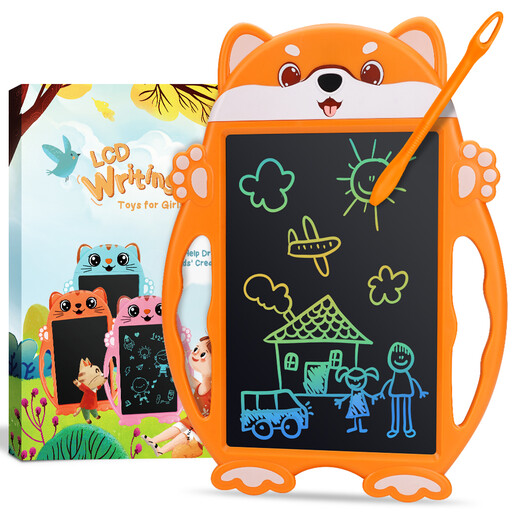
Why this product suits the profile: According to the product information, the lightweight drawing and writing tablet is designed for children aged 3 to 8 and requires neither paper nor pens.
The compact design and weight of 0.178 kg reduce the space and accessories required. Drawings can be erased at the touch of a button.
8.5-inch writing surface, ABS casing and dimensions of 26.5 × 20.31 × 1 cm according to the product description.
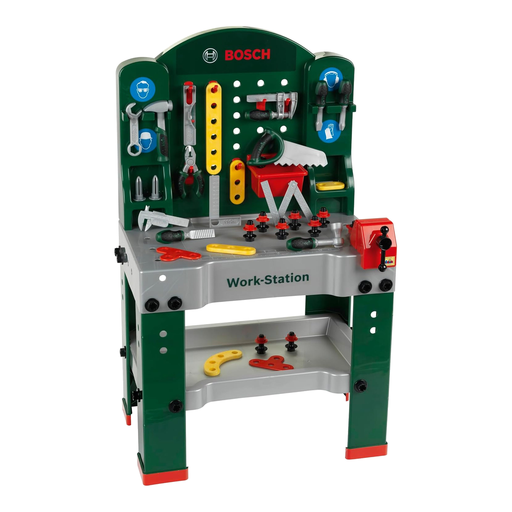
Why this product suits the profile: The workbench offers structured role play with several tools, storage compartments and a work surface for children aged 3 and over.
The 44 pieces and designated storage compartments make it easier to keep everything organised. Because it contains small parts, the minimum age of 3 years must be observed.
Tools such as a screwdriver, hammer and pliers, a vice function and a height of 101 cm according to the product data.
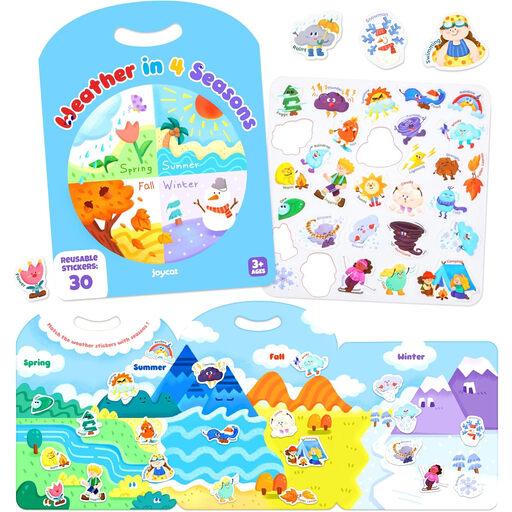
Why this product suits the profile: As a travel toy for children, the compact book is ideal for car journeys, flights, waiting times and restaurant visits.
According to the description, the stickers can be peeled off, reused and washed with water. Nevertheless, they must not be put in the mouth.
30 jelly stickers, laminated pages, carry handle and suitability for smooth surfaces; recommended for ages 3 and over.

Why this product suits the profile: The soft, compact activity book is designed for children aged 1 to 3 and combines everyday actions with a farmyard story.
The intended use is clearly defined. The product information states that the elements are firmly stitched; nevertheless, the toy is intended to be used under supervision.
15 activity pages with buttons, zips, hook-and-loop fasteners and lacing; a quiet format for use at home or on the go.
We have put together a complete, regularly updated list of products that fully meet these strict selection criteria and the safety regulations applicable in the EU.
When choosing birthday and Christmas gifts for children, it is worth considering their existing interests: Does the child enjoy drawing, building stories or having something to do while travelling? A smaller product that is used regularly may be more useful in everyday life than a large set with accessories that are rarely used.
Suitable products are those whose age recommendation explicitly starts at 3 years and whose components match the child’s stage of development. Workbenches, simple vehicles, creative sets or sticker books may be suitable options. Small components should only be used in accordance with the warnings and, where necessary, under supervision.
How long a toy remains useful depends less on its label than on the different ways it can be played with. Products that encourage open-ended play, such as a workbench, drawing board or activity book, can often be used in a range of situations. Toys with limited functions, on the other hand, may lose their appeal more quickly.
The price depends, among other things, on the material, scope, brand, accessories and build quality. For a fair comparison, buyers should not only look at the number of parts, but also check whether replacement parts, batteries, consumables or additional storage space are required. With Montessori toys, motor skills toys and creative toys, the focus should also be on how the product is actually used, not simply on the “educational” label.