
Lieferung heute & morgen

Qualitätsgarantie

Willkommens-Angebote freischalten: KOSTENLOSE Lieferung | Bis zu 80 % RABATT | Kostenlose 30-Tage-JoyPlus-Testphase
App herunterladen
Toys should suit a child’s age and interests, as well as the space you have available. But eye-catching packaging and big product claims don’t always lead to a good buying decision. When shopping for children’s toys online, focus on details you can check: age guidance, materials, part size, features and cleaning requirements.
A large set with lots of accessories can look appealing at first. What matters, though, is whether the pieces can be combined and whether your child can come up with their own scenarios. With construction toys, compatible shapes, clear instructions and a good variety of building pieces matter more than the overall piece count.
‘Ages 3+’ isn’t just a recommendation about a child’s development. It often relates to the risk of small parts being swallowed. Even if a child is already good at building or playing, small figures, magnets or accessories can still pose a risk. Always check the age guidance on the product page and packaging against your child’s stage of development and the level of supervision available.
Wheels, cranes, trailers, flaps and joints add to play value, but they can also collect dust and hair. When buying toy cars and construction vehicle toys, check whether moving parts are accessible and can be cleaned with a dry or slightly damp cloth. Complicated mechanisms aren’t necessarily more durable.
With plastic toys, rounded edges, securely closed housings and sturdy connection points are important practical considerations. For products made from a combination of metal and plastic, the product description should clearly state which parts are made from die-cast metal and which are plastic.
Take extra care with magnetic products. Check whether the magnets are permanently enclosed, whether there are warning notices and whether damaged parts need to be disposed of immediately. If individual magnetic balls are swallowed, several magnets can attract one another inside the body. These products should be kept away from children who still put objects in their mouths.
For learning toys for ages 3+, parents should consider the size of figures, building blocks and accessories, as well as the minimum age. LEGO sets, for example, contain small parts and aren’t suitable for children under 3, even if the building instructions are easy to follow. For younger children, larger vehicles that don’t need batteries and have few detachable parts may be more suitable.
A play set should suit your home and the space where it will be used. Miniature vehicles around 7 to 9 cm long are easy to add to an existing toy town. A larger vehicle, such as an excavator around 35 cm long, needs more room to stand and move around. Sturdy plastic models are a good choice for the sandpit or garden, while delicate building models are better suited to a tidy indoor space.
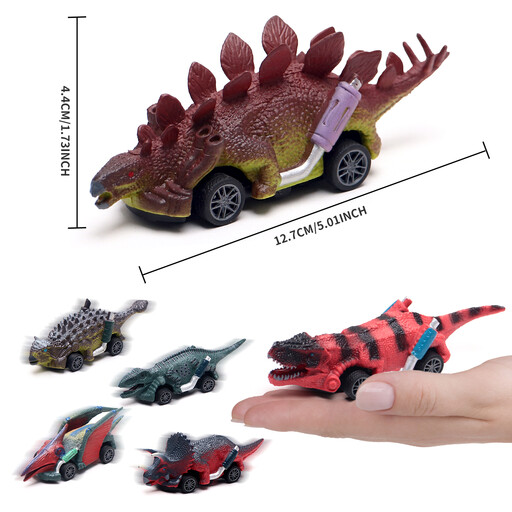
Why it suits this buyer: Six dinosaur cars combine vehicle play with an interest in dinosaurs. The pull-back mechanism needs no batteries or charger, making them suitable for short play sessions indoors or out.
The feature is clearly described and doesn’t rely on electronics. However, take note of the small-parts warning and the age guidance of 36 months and over.
Six vehicles, no batteries required and compact dimensions of around 13 × 4 × 3,5 cm.
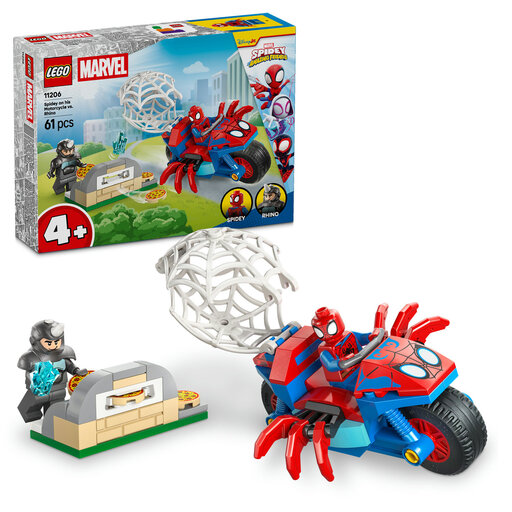
Why it suits this buyer: This LEGO set is designed for children aged 4 and over, combining building with superhero role play. It includes 61 building pieces, two minifigures and a motorbike model.
The number of pieces, recommended age and model dimensions of around 12 × 7 × 7 cm are clearly stated. Small parts still require care, though.
Building instructions, minifigures and action-packed vehicle play in one set.

Why it suits this buyer: This excavator is designed for children aged 2 and over, needs no assembly and can be combined with other construction vehicle toys, such as dump trucks or bulldozers.
It can be used straight away, with no batteries or assembly needed. Before buying, check that you have enough space for its size.
Movable excavator arm, sturdy plastic body and suitable for use indoors and out.
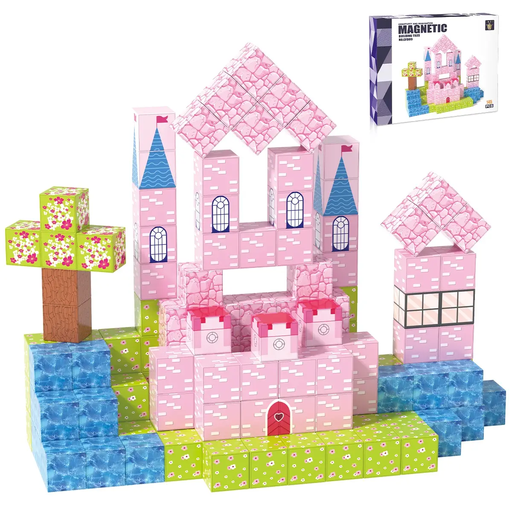
Why it suits this buyer: These magnetic building blocks for children aged 3 and over are designed for larger builds, such as villas and space structures. A storage bag makes it easier to sort everything after playtime.
The product details state that the magnets are enclosed and include specific warnings. Damaged pieces should be discarded, and magnetic balls need close supervision.
145 pieces, no electricity needed and, according to the product details, compatible with other magnetic building blocks of the same size.
For horse lovers, horse play sets with a vehicle, trailer, figures and a tent can bring several types of play together. The Schleich Horse Club Adventure Set 42535 includes these elements, is recommended for ages 5 to 12 and contains 18 pieces. With sets like these, parents should consider how much assembly is involved and the size of the accessories.
For children who love dragons and fantasy worlds, dragon play sets with movable figures and building components are worth considering. LEGO NINJAGO Lloyd’s Green Forest Dragon 71829 contains 128 pieces and is designed for ages 6 and over. The Zilvar and Grimtak 71863 set contains 232 pieces and, according to the product details, is suitable for children aged 7 and over. Both sets contain small parts and need a suitable building space.
For children interested in vehicles, miniature service vehicles are another option. The SZ D/C Playset Service Vehicle includes three different vehicles, each around 7 to 9 cm in size. The product details list die-cast metal and plastic as the materials, as well as moving parts. It is designed for ages 3 and over and should only be used with appropriate supervision because of the small parts.
We’ve put together a complete, regularly updated list of products that meet these strict selection criteria and fully comply with the safety regulations in force in the EU.
For children aged 2 and over, look for toys that are large and easy to grip, with no loose small parts. A simple excavator with a movable arm or larger vehicles could be a good choice. Always follow the manufacturer’s age guidance and the warnings on the product page.
How long a toy gets used depends less on the number of features advertised and more on how many different ways there are to play with it. Construction toys, magnetic building blocks and role-play toys can often be used in a variety of scenarios. Look for accessories you can buy separately or combine with other toys, and storage that’s easy to manage.
Battery-powered toys need replacement batteries or rechargeable batteries, which can add to the cost if they’re used often. Many toy cars, construction vehicles and pull-back models, on the other hand, work entirely by hand. Before buying, check the ‘Batteries required’ section to make sure any ongoing costs suit how the toy will be used.