
Lieferung heute & morgen

Qualitätsgarantie

Willkommens-Angebote freischalten: KOSTENLOSE Lieferung | Bis zu 80 % RABATT | Kostenlose 30-Tage-JoyPlus-Testphase
App herunterladen
As a Joybuy Product Recommendation Officer, I see every day how challenging it can be to choose the right toys for children. The market is filled with products that promise short-term excitement but often fail to deliver. Many parents and relatives invest in gifts for children, only to find they are ignored after a few days or pose safety risks. This guide is designed to help you avoid the most common pitfalls and make an informed decision.
Before we dive into the selection criteria, it's important to understand the typical mistakes that often lead to disappointment and unnecessary expense.
To avoid a bad purchase, you should focus on objective and verifiable features. Three parameters are of central importance here.
The age rating, especially the "Toy for ages 3 and up" label, is more than just a recommendation; it's crucial safety information. For children under 36 months, small, swallowable parts pose a choking hazard. Therefore, look for:
The feel and durability of a toy depend directly on its material. High-quality, non-toxic plastic (e.g., ABS plastic) is often a better choice than brittle, cheap plastic. You can recognise good craftsmanship by its rounded edges, clean joints, and a solid build that can withstand falls. This is particularly relevant for motor skills toys and vehicle toys, which are subject to heavy use.
A good toy grows with the child or can be rediscovered again and again. Open-ended play concepts foster creativity and problem-solving skills.
Here are some product recommendations tailored to different needs and play styles, all of which meet the criteria mentioned above.
Why it's a great fit: Ideal as a birthday gift for boys and girls who love to tinker. It combines a fascination with dinosaurs with the basics of mechanics, specifically promoting fine motor skills and logical thinking.
This kids' building set offers high replay value through repeated disassembly and reassembly, thus avoiding the short-lived fascination trap.
The set includes both an electric screwdriver and manual tools, plus a practical storage case that helps keep everything organised.

Why it's a great fit: A classic outdoor toy that helps children aged 2 to 6 develop balance and coordination. It's the ideal preparation for riding a bike without training wheels.
With its adjustable seat and handlebar, the balance bike grows with the child, offering long-lasting value instead of limited play potential.
Its lightweight design makes it easy for children to handle, while the flat-free tyres minimise maintenance for parents.
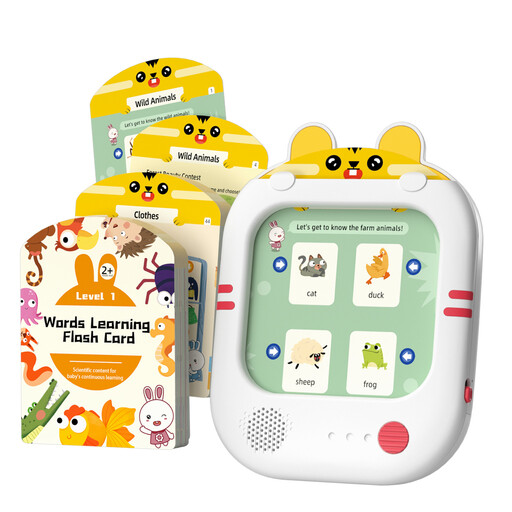
Why it's a great fit: A screen-free educational toy that is ideal for quiet playtime or on-the-go learning. It promotes language development and logical thinking in an interactive way, without relying on a screen.
Unlike passive screen media, this tablet requires active participation from the child. The variety of learning cards ensures sustained, educationally valuable fun.
The set includes 47 double-sided cards with over 180 words and logic games. The built-in battery is rechargeable via USB-C and offers up to 6 hours of playtime.
We have compiled a complete, up-to-date list of products that fully meet these strict selection criteria and all relevant safety standards.
Primarily, look for the CE mark, which indicates conformity with EU safety standards. Additionally, inspect the toy for sturdy, shatterproof materials, rounded edges, and the absence of small parts if it is intended for children under three. The product packaging must include clear warnings, such as "Not suitable for children under 36 months."
In this case, open-ended toys are a safe bet. A versatile kids' building set, high-quality art supplies, or a simple outdoor toy like a ball game set are usually well-received as they allow the child's creativity to flourish. Above all, follow the manufacturer's age recommendation.
This term describes toys that are specifically designed to promote certain skills in a playful way. This could be a motor skills toy to improve hand-eye coordination, an educational toy to foster language and logic, or a construction toy that trains spatial reasoning. The value lies in encouraging the child to actively problem-solve rather than just passively consume.