
Lieferung heute & morgen

Qualitätsgarantie

Willkommens-Angebote freischalten: KOSTENLOSE Lieferung | Bis zu 80 % RABATT | Kostenlose 30-Tage-JoyPlus-Testphase
App herunterladen
Children’s toys should be fun, suitable for their age and practical for everyday family life. The choice ranges from baby toys and educational toys to construction sets, vehicles and soft toys. However, particularly when shopping online, not every advertised feature is automatically a convincing reason to buy.
Three common buying mistakes are especially widespread:
A suitable choice should therefore start not with the theme or colour, but with the child’s age, the intended use and the product details.
The recommended age is an important guide. For toys for ages 3 and up, manufacturers often warn about small parts that could be swallowed. This applies, for example, to small vehicles, building blocks and accessories. For babies and toddlers, choose products that are expressly designed for the relevant age group.
Extra care is needed with magnetic construction toys. According to the product information, the magnetic building blocks from XINQIYUAN listed here are intended for children aged 3 and over and contain small, strong magnets. The product must not be given to children under 3. Damaged parts should be removed from use. If magnets are swallowed, seek medical help immediately.
For plastic toys, details such as ABS plastic, rounded edges and an enclosed construction are more meaningful than broad advertising claims. Parents and grandparents should also check the following before buying:
Information about CPC, ASTM, REACH or EN71 should not be confused. CPC and ASTM relate to US documentation or standards. CE conformity is relevant for sales in the EU. However, a marking does not replace checking the specific toy during use.
Educational toys for children should suit their stage of development and interests. Construction toys are ideal for children who enjoy connecting, building and changing things. Toy cars are a practical choice for role play and shorter play sessions. Children’s musical instruments offer instant responses through buttons, drums or microphones, but in a home environment they may need adjustable volume control.
Storage and cleaning also contribute to comfortable play. Sets with lots of pieces should come with a bag or box. With electronic toys, also check whether batteries are required and whether they are included.

Why this product suits the profile: This compact set is ideal for families who want to try magnetic building blocks on a smaller scale first. It does not require batteries and comes with a storage bag.
The age recommendation of 3 and over and the warning about small parts make the conditions for use clear. Even so, damaged parts must be checked regularly.
28 pieces, 5.5-cm format, manual play and, according to the product information, sealed magnets.
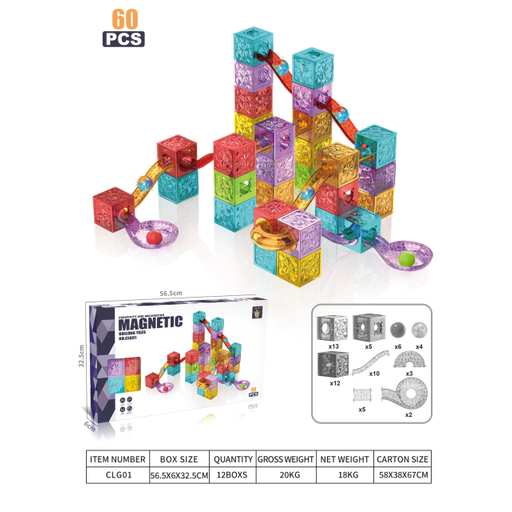
Why this product suits the profile: This larger set is designed for children aged 3 and over who want to build more extensive 2D and 3D constructions. According to the product information, the 5.5-cm system can be combined with compatible sets.
The product description specifies the material, number of pieces, age limit and warning about magnets that could be swallowed. A storage bag helps keep individual pieces from being scattered.
60 pieces, diamond-shaped elements, storage bag and, according to the supplier, CPC/ASTM information.
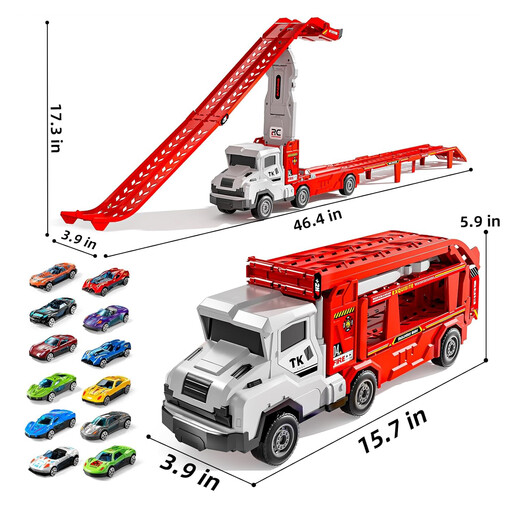
Why this product suits the profile: This set combines a transport vehicle, storage space and a fold-out racetrack. It is suitable for children aged around 3 and over who enjoy playing with toy cars or holding races together.
The number of pieces and the two fold-out tracks are clearly specified. Even so, check before buying that there is enough space to unfold the set.
12 vehicles, foldable construction, manual play and use by two or four players, according to the product description.
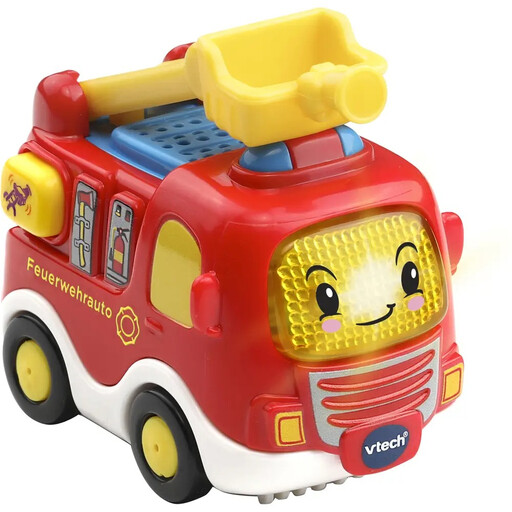
Why this product suits the profile: According to the product information, this interactive vehicle is intended for children aged 1 and over. It features buttons, lights, sounds and a movable ladder.
The recommended age group is clearly stated. Parents should check the battery compartment cover regularly and only use the vehicle on suitable surfaces.
According to the description, two AAA batteries are included, along with three songs, six melodies and compatibility with other Tut Tut Baby Flitzer playsets.
We have put together a complete, regularly updated list of products that fully meet these strict selection criteria and the safety regulations applicable in the EU.
For babies from around 6 months, simple activity toys with large controls, colours and shapes are worth considering. With electronic baby toys, pay attention to volume control, the battery compartment and stability. One example is a musical activity table with removable legs which, according to the product description, is intended for babies aged 6 to 36 months.
For children aged 2 and over, larger battery-free vehicles such as dinosaur pull-back cars can be appealing. From the age of 3, construction toys, magnetic sets, vehicle worlds and small service vehicles open up more opportunities for role play. Soft toys, on the other hand, are most suitable when the material-care requirements, packaging information and age recommendation match the intended use.
For 2-year-olds, choose larger, easy-to-grip toys without small parts that could easily come loose. Pull-back vehicles, simple sorting games, large connecting pieces and age-appropriate soft toys can all be suitable options. Check the specific manufacturer’s information and warnings before buying. A suitable selection can be found in the children’s toys for 2 years category.
Their lifespan depends on the material, construction, use and storage conditions. Toys should be checked regularly for cracks, loose parts, sharp edges and damaged magnets. Battery-powered products should be cleaned without water and not exposed to liquids unless the manufacturer states otherwise.
Battery-operated children’s toys incur ongoing costs for replacement batteries. Before buying, check which battery size is required and whether batteries are included. Manual building blocks, pull-back cars and many vehicles without lights or sound do not require batteries.