
Lieferung heute & morgen

Qualitätsgarantie

Willkommens-Angebote freischalten: KOSTENLOSE Lieferung | Bis zu 80 % RABATT | Kostenlose 30-Tage-JoyPlus-Testphase
App herunterladen
Children’s toys should be entertaining, support development and work reliably in everyday family life. However, when choosing toys for babies, toddlers and children up to around eight years old, unclear age recommendations, noisy electronics or materials that are difficult to clean can quickly lead to disappointing purchases. This buying guide explains which details really matter and which toys suit different needs.
The “3+” age recommendation is not simply a marketing suggestion. It often indicates small parts that could be swallowed, moving components or magnets. A toy that is suitable for an older sibling should therefore not automatically be left in a shared play area used by a toddler.
It is also worth taking a closer look at baby toys. A product description may mention several age ranges, while the safety labelling specifies a narrower intended use. The information on the packaging and product page is decisive.
Lights, music, sensors and remote controls can be interesting, but they can also take away children’s opportunity to create their own ways to play. With educational and sensory toys, it is therefore important that the functions match the child’s developmental stage. A simple slot-together, push-along or building toy may remain useful for longer in everyday life than a product with numerous preset effects.
Parents should also check the following when buying electronic children’s toys:
The CE mark shows that the manufacturer has declared that the product meets the relevant EU requirements and has labelled it accordingly. However, it is not an independent quality seal. The EN 71 series of standards covers, among other things, mechanical and physical properties, flammability and certain chemical requirements.
Warnings about magnetic building blocks must be taken particularly seriously. Powerful magnets can pose a significant risk if swallowed. Damaged parts with visible magnets must be removed from the play area immediately.
Choose toys not only according to the child’s age, but also according to how and where they will actually be used. For babies aged six to 18 months, rolling or tactile elements can capture their attention. The child will need enough floor space and a supervised environment.
For toys for children aged 3 and over, larger components, simple vehicles and role play are often suitable. From around six years old, more complex features such as a remote-controlled car, manually operated cranes or more challenging building tasks may be appropriate. The child’s individual maturity and the manufacturer’s guidance remain decisive.
Look out for:
Claims such as “BPA-free” or “non-toxic” should always be treated as information provided by the manufacturer. For baby products, wipe-clean surfaces and a straightforward design are also practical features.
Electronic musical instruments for children often require batteries. Check the battery type, how accessible the compartment is and the stated battery life. A volume control is useful at home, particularly for drum kits and toys that play melodies.
For vehicles, turning circle, surface and storage also matter. A large construction vehicle toy can be great fun in a sandpit, but it requires sufficient space. A remote-controlled car is only practical if there is a suitable clear area and the controls are appropriate for the child’s age.
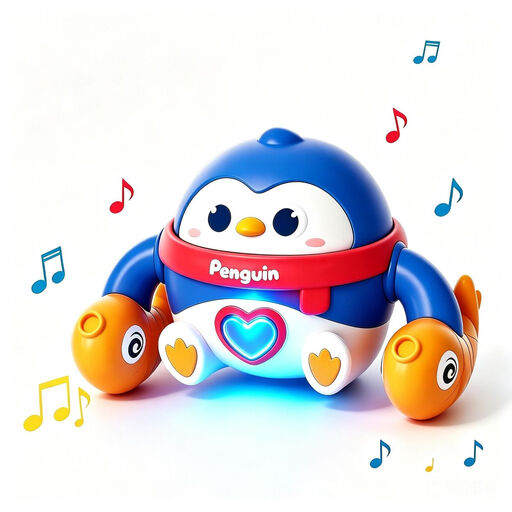
Why this product suits this profile: According to the product information, this rolling baby toy is designed for children aged 6 to 36 months and combines movement, lights and music in a single product.
The product information states that it is made from BPA-free ABS, has rounded edges and contains no loose parts. However, batteries are not included and need to be taken into account.
360-degree rolling movement and, according to the description, a responsive motion sensor; suitable for supervised playtime on the floor.
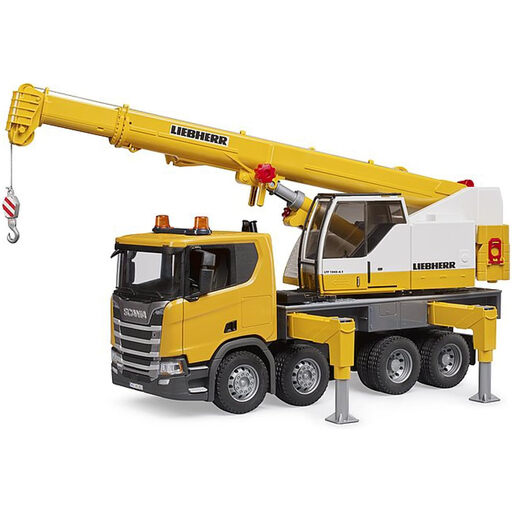
Why this product suits this profile: The 1:16 scale, manually adjustable crane arm and fold-out supports provide hands-on play features for children aged 4 and over.
The function description is specific: 360-degree crane rotation, an arm extending up to 1.30 metres and a counterweight that can be filled. The battery cover must be opened with a screwdriver.
Detailed construction, light and sound module, and suitability for indoor and outdoor use according to the product description.

Why this product suits this profile: The 28 pieces, each with a stated size of 5.5 centimetres, are suitable for creating 2D patterns and 3D constructions under supervision.
The product page expressly mentions small, powerful magnets and includes a warning about swallowing them. Parts should be checked regularly for cracks and exposed magnets.
No batteries required, a storage bag included and, according to the product information, designed to support spatial reasoning and fine motor skills.
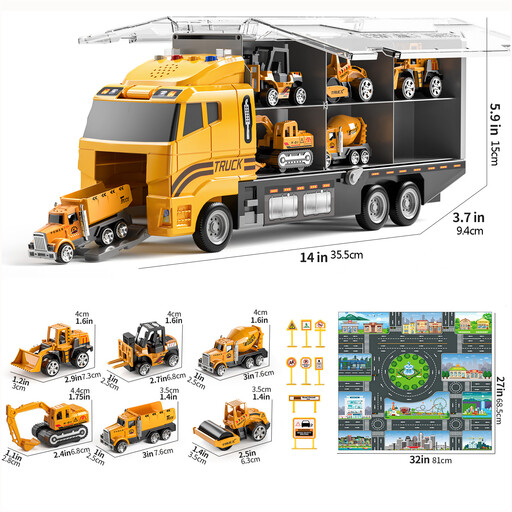
Why this product suits this profile: According to the description, this set combines several construction vehicles with a foldable play mat and is suitable for children aged 3 to 8.
The included vehicles and mat size of approximately 81 × 69 centimetres are specified. This makes it easier to check before buying whether the accessories and space requirements are suitable.
Several vehicle types, a play mat, and light and sound effects on the transport vehicle encourage shared role play.
We have put together a complete, regularly updated list of products that fully meet these strict selection criteria and the safety regulations applicable in the EU.
For babies, a baby musical instrument or a simple shape-sorter toy could also be considered alongside a rolling sensory toy. According to the product information, the Baby Musical Drum Toy for 6 to 18 months combines drum surfaces, lights, animal sounds and shapes. For older toddlers, a children’s drum kit with a microphone and volume control may be more appealing. The volume should be adjusted to suit the home environment.
For a birthday, construction vehicle toys, a dinosaur toy or a manually operated excavator can make suitable gifts. If you are looking for a present for children, check in advance whether they already have compatible building pieces, vehicles or accessories. This helps avoid buying duplicates.
Suitable products have no loose small parts, feature rounded edges and display a clear age recommendation. Rolling baby toys, grasping and tactile objects, or simple musical toys can encourage observation and interaction. Electronic products should only be used under supervision and at a moderate volume.
Lifespan depends on the material, construction, play environment and care. Check vehicles, joints, wheels, battery compartments and magnetic connections regularly. Sand and moisture should be removed after play. Products with cracks, sharp edges or loose parts should no longer be used.
In addition to the purchase price, you may need to pay for batteries, replacement parts and, where applicable, charging accessories. For products supplied without batteries, check the required battery type before buying. Toys with speakers, lights and moving parts may need new batteries more often than fully manual models.