
Lieferung heute & morgen

Qualitätsgarantie

Willkommens-Angebote freischalten: KOSTENLOSE Lieferung | Bis zu 80 % RABATT | Kostenlose 30-Tage-JoyPlus-Testphase
App herunterladen
Children’s toys should suit a child’s age, interests and home environment. In practice, however, the wide choice can quickly lead to unsuitable purchases: a toy may be too loud, contain unexpectedly small parts or lose its appeal after a short time. Product descriptions featuring terms such as “educationally valuable”, “safe” or “suitable for a wide range of ages” should not be accepted without checking them carefully.
This buying guide explains what parents, grandparents and other family members should look out for when buying children’s toys. We then present a selection of products for different needs – from baby toys and motor skills toys to interactive toys for older children.
The “from 3 years” recommendation is an important guide, but it does not tell you everything about how the toy can actually be used. A toy with small figures, balls or detachable parts may be unsuitable for younger children, even if it initially appears easy to use.
You should therefore check:
Lights, sounds, remote controls and music can make a product appealing. However, if it only offers a limited number of ways to play, interest often fades. With interactive toys, it is therefore worth asking: can the child try things out, combine elements or change something independently?
Depending on the child, a simple construction toy, a vehicle with moving elements or a logic game may be used for longer than a product with lots of predefined sound effects.
When buying electronic children’s toys, shoppers should check whether batteries are included, which battery size is required and whether the product has a rechargeable battery. With musical toys for children, adjustable volume is also useful, particularly indoors.
For products with a rechargeable battery, charging time, charging accessories and the possibility of replacing the battery at a later date are all relevant details. If this information is missing, the product page should be checked carefully before purchase.
The CE marking indicates that the manufacturer has declared the product to comply with the relevant EU requirements. However, it is not a quality seal and does not replace checking the warnings, build quality and intended use.
The age limit is particularly important for toys containing small parts. For children under three, small balls, toy figures or detachable components may pose a choking risk. Even with toys for children aged 3 and over, adults should check whether any parts are damaged or loose.
With plastic toys, smooth surfaces, rounded edges and a battery compartment that closes securely are important features. Wooden toys should be free from splinters. According to the product description, the hauck Wooden Shape Sorting and Motor Skills Toy is made from FSC-certified wood and contains eight differently shaped blocks. At the same time, the manufacturer warns about small parts and states that supervision is required.
Stability is also important for vehicles and playsets. A toy used on carpet, tiles or a play mat should not tip over or fall apart easily.
Electronic products need clear information about batteries or rechargeable batteries. According to the product details, the VTech Tut Tut Baby Flitzer includes two AAA batteries. The drum toys, on the other hand, require batteries which, according to the description, are not included. This difference directly affects whether the product is ready to use.
For baby toys that are used frequently, ease of cleaning is important. Washable fabrics or wipe-clean plastic surfaces make care easier. A soft toy should be cleaned according to the care instructions; for mechanical soft toys, only wiping with a damp cloth is usually recommended.
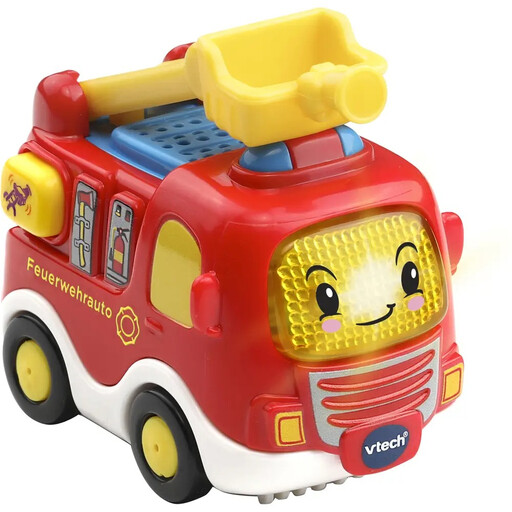
Why this product suits this profile: According to the product information, this compact vehicle is suitable for children aged one and over. It combines pushing along with lights, sounds and songs. It is a straightforward introduction to interactive toys.
The product details specify the age recommendation, dimensions of 5.77 × 8.97 × 8.09 cm and the required AAA batteries. This makes it easier to assess the space needed and operating requirements before purchase.
Movable fire ladder, three songs, six melodies and compatibility with other Tut-Tut Baby Flitzer sets, according to the product description.
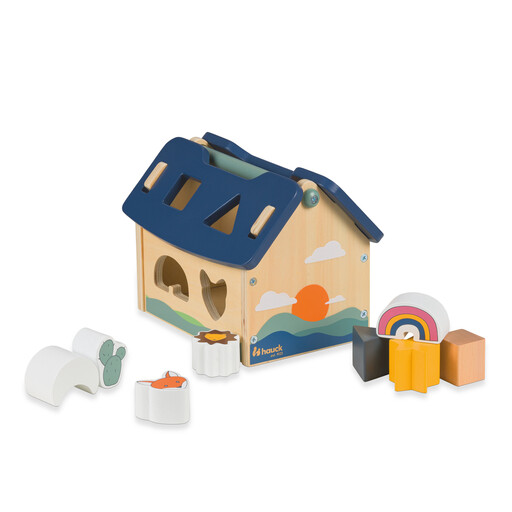
Why this product suits this profile: According to the product information, the shape-sorting house is designed for children aged 12 months and over and has no electronic functions. It is a good choice for households looking for a clearly structured motor skills toy.
The eight blocks can be stored inside the house. This reduces the number of loose accessories in the child’s room, but does not replace checking for damage.
FSC-certified wood according to the supplier, a removable roof, carry handle and storage function.
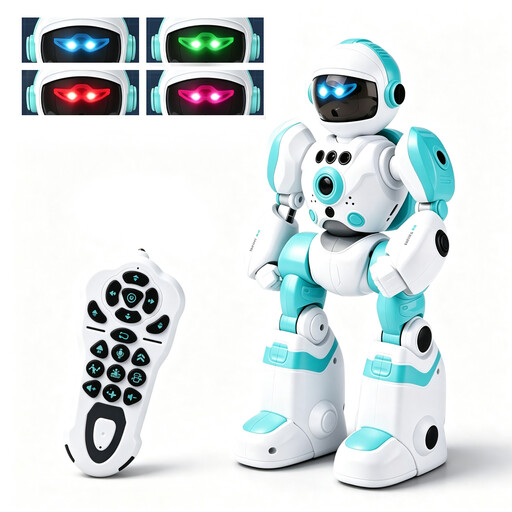
Why this product suits this profile: According to the warning, the robot is suitable for children aged three and over. It offers remote control, gesture control, a recording function, dancing movements and programmable sequences.
The toy requires direct adult supervision. The age limit and integrated lithium battery must be taken into account explicitly before purchase.
2.4 GHz remote control, four-colour LED eyes and individually programmable action sequences, according to the product description.
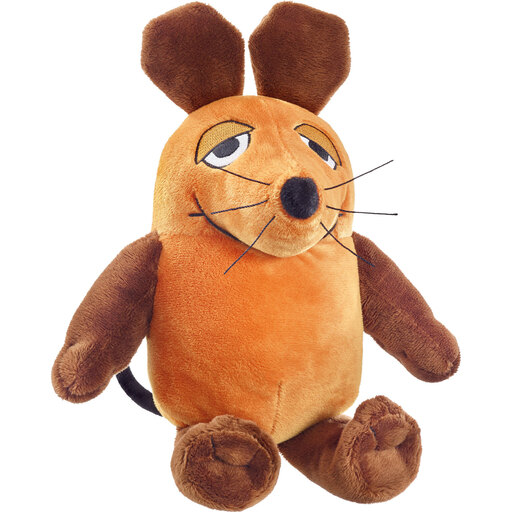
Why this product suits this profile: According to the product information, the plush mouse is suitable for children aged three and over, is approximately 25 cm tall and is washable. It makes a straightforward gift with no batteries required.
There are no interactive functions and no batteries. This means no noise, charging requirements or additional running costs.
Washable plush material, compact size and a clearly stated age recommendation of three to six years, according to the product details.
We have put together a complete, regularly updated list of products that fully meet these strict selection criteria and the safety regulations applicable in the EU.
Before ordering children’s toys, check the following points:
With RC toys, dinosaur toys and musical toys for children, you should also check the range, controls, rechargeable battery or battery type, as well as the amount of space required. For small homes, compact logic games or a soft toy may be more practical than large vehicles and play towers.
For babies, consider products with a clearly stated age recommendation, sturdy construction and large, securely attached elements. Baby toys should be checked regularly for cracks, loose parts and damaged surfaces. Electronic functions are optional; with musical toys, adjustable volume is advisable.
With toys for children aged 3 and over, you should pay attention to warnings about small parts, magnets and balls. The age recommendation is a minimum guideline and does not mean that the child can play without supervision. The child’s individual abilities and behaviour are also important.
Costs depend on the battery type, how long the toy is used and the charging options available. Products using two or three AA or AAA batteries result in regular ongoing costs when used frequently. An integrated rechargeable battery can reduce these costs, but it requires suitable charging accessories and should be stored safely after every use.