
Lieferung heute & morgen

Qualitätsgarantie

Willkommens-Angebote freischalten: KOSTENLOSE Lieferung | Bis zu 80 % RABATT | Kostenlose 30-Tage-JoyPlus-Testphase
App herunterladen
Children’s toys should be enjoyable, support their development and work reliably in everyday life. However, with such a wide range to choose from, making the right decision is not always easy. Colourful packaging, numerous features and terms such as “educational” or “Montessori” alone reveal little about whether a product is suitable for your child.
Three common purchasing misconceptions in particular can lead to unnecessary spending:
The age recommendation is a safety and usage indication, not merely a marketing detail. Toys for ages 3+ have different requirements in terms of fine motor skills and handling small parts than baby toys. Products containing individual parts that could be swallowed should not be given to children under 36 months.
For toys for ages 6+, more complex functions, smaller accessories and detailed imaginative play may be appropriate. Before buying, parents and gift shoppers should therefore check:
Look for clear information about the materials used and details of the applicable safety requirements. The CE marking indicates that the manufacturer declares compliance with the relevant EU requirements; however, it does not replace an individual inspection of the toy for damage or loose parts. The EN 71 series of standards covers, among other things, the mechanical and physical properties and flammability of toys.
For products intended for young children, rounded edges, sturdy connections and a securely closed battery compartment are practical advantages. Claims such as “BPA-free” or “no loose parts” should be stated clearly in the product information, rather than appearing only on the packaging.
Educational toys do not necessarily have to be electronic. A manual vehicle, a construction set or a board game for children can also support motor skills, spatial thinking, communication or imagination. What matters is whether the play concept suits the child and the family’s circumstances.
You should also check:
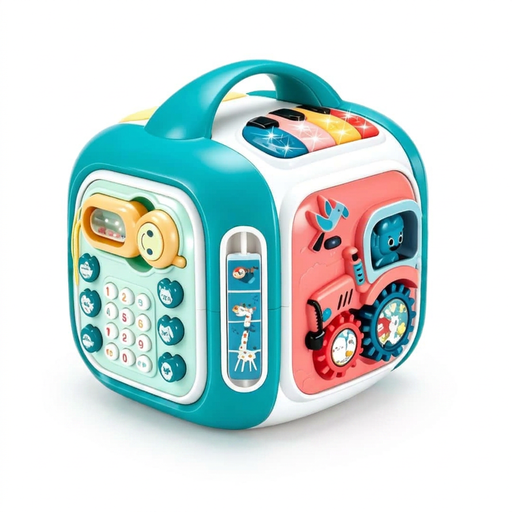
Why this product suits this profile: The compact activity cube combines eight activities in one product, eliminating the need for a collection of individual educational toys. It is designed for children aged 1 to 3.
The functions are arranged on a 23 × 23 × 24 cm cube. According to the product information, the surfaces are made from ABS with rounded edges and no loose parts.
A piano, guitar, telephone, gears and other controls encourage a range of gripping, turning and pressing movements.
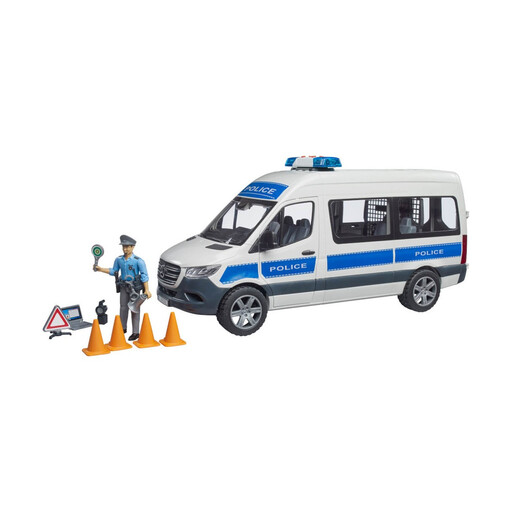
Why this product suits this profile: This police car toy, made to a 1:16 scale, is designed for children aged 4 and over. It combines a detailed vehicle with a bworld police officer figure.
The product description specifies the age limit, small parts, battery information and cleaning with a cloth. This makes it easier to check the key details before buying.
The Light & Sound module and included figure support imaginative role play; the manufacturer states that the product complies with EN-71 requirements.
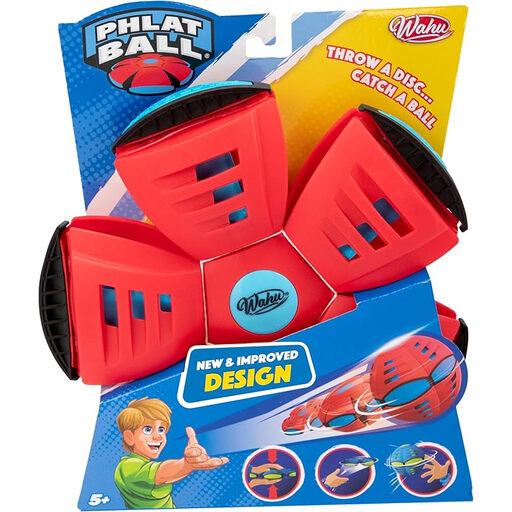
Why this product suits this profile: Designed as an outdoor toy for the garden, park, beach or days out, this throwing toy is suitable for children aged 5 and over and requires no batteries.
Its compact shape makes it easy to transport and avoids ongoing battery costs. The safety information highlights the age limit and explains that it is a toy, not a dog toy.
The 2-in-1 concept combines a flying disc and a ball. According to the product information, playing with it supports movement, dexterity and reaction skills.
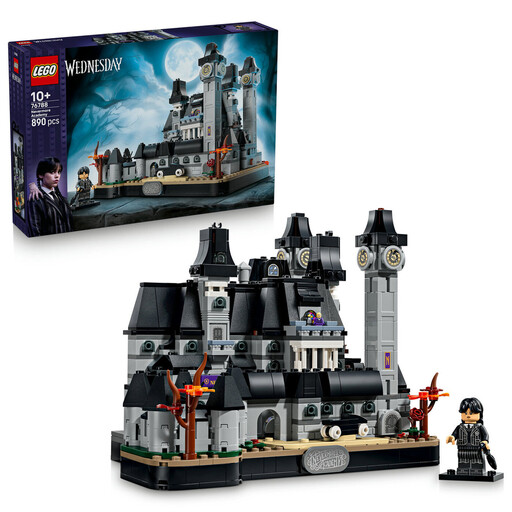
Why this product suits this profile: This construction toy is designed for children aged 10 and over and is aimed at fans of building, decorating and imaginative scenarios.
The 10+ age recommendation and warning about small parts make the usage requirements clear. According to the product information, batteries are not required.
The set contains 890 pieces, several figures and a model measuring over 17 cm in height. Once built, it can also be displayed as a decorative piece.
We have put together a complete, regularly updated list of products that fully meet these strict selection criteria and the safety regulations applicable in the EU.
For babies and toddlers, choose products with a clear age recommendation, sturdy construction, rounded edges and no small parts that could be swallowed. An activity cube or a simple musical toy can offer a range of gripping and pressing movements. Parents should follow the manufacturer’s instructions and regularly check the toy for damage.
Educational toys generally refers to a play concept that can support specific abilities such as motor skills, language, concentration or spatial thinking. Learning toys for children are often more focused on specific tasks such as sorting, matching or building. Neither term represents a uniformly protected quality category. Buyers should therefore compare the actual functions, age group and play process.
This depends on the child’s stage of development, their interests and the opportunities for open-ended play. Products with several difficulty levels, combinable parts or open-ended role play can be used over a longer period. A construction vehicle toy, police car toy or building set can, for example, be incorporated into changing stories and play environments. What matters is that the size, complexity and safety information are suitable for the child.