
Lieferung heute & morgen

Qualitätsgarantie

Willkommens-Angebote freischalten: KOSTENLOSE Lieferung | Bis zu 80 % RABATT | Kostenlose 30-Tage-JoyPlus-Testphase
App herunterladen
Children’s toys should be entertaining, support their development and work reliably in everyday life. The choice ranges from motor skills toys and musical products to RC toys and educational games. However, this variety can also lead to unsuitable purchases. A product with extensive advertising is not automatically suitable for every child.
“From 3 years” is not merely a recommendation for the target audience. It may relate to small parts, moving mechanisms or components that could be swallowed. A toy for children from 1 year should therefore not only look child-friendly. The size of the parts, stability and ease of use are also important.
Even within the same age group, abilities can vary considerably. An 18-month-old child needs different challenges from a pre-schooler. In addition to checking the age recommendation, make sure the product suits the child’s motor skills and attention span.
Lights, music, speech, remote controls and movement can all be appealing. However, if there are only a few ways to play, an interactive toy can quickly lose its appeal. When buying electronic products, you should therefore look at the specific functions: Are there different modes? Can the volume be adjusted? Are batteries included? Does it have a rechargeable battery?
With musical toys, volume control is particularly useful. With educational toys for children, it should be clear what the child does themselves, rather than simply pressing buttons.
Statements such as “non-toxic” or “safe” should not be the only deciding factors. Look for clear information about the material, manufacturer, responsible person in the EU and warnings. The CE mark is a mandatory conformity marking applied by the manufacturer; it is not, however, an independent quality seal.
For battery-operated toys, an secure battery compartment, correct battery information and easy-to-understand instructions are important points to check. Products containing magnets or small balls require particular care.
For toys from 1 year, larger, easy-to-grip elements without loose small parts are usually suitable. A shape sorter or a vehicle with large controls can provide children with their first experiences of matching and cause and effect.
With toys from 3 years, more complex tasks, figures, vehicles and mechanical functions become available. Nevertheless, warnings must still be taken into account. A product may be suitable for older children but pose a risk to younger siblings in the household.
ABS plastic, wood and plush have different properties. Wooden toys should be checked for splinter-free surfaces and secure connections. With plush toys, seams, filling and care instructions are important. Electronic toys should not be cleaned with water unless the manufacturer expressly permits this.
Also look out for:
A large dinosaur toy or RC vehicle needs more space than a compact logic game. In flats, volume, driving area and storage are therefore practical considerations. For battery-operated products, check whether batteries are included and what size is required. Mechanical wind-up toys do not need batteries, but they may be more sensitive to being wound incorrectly.
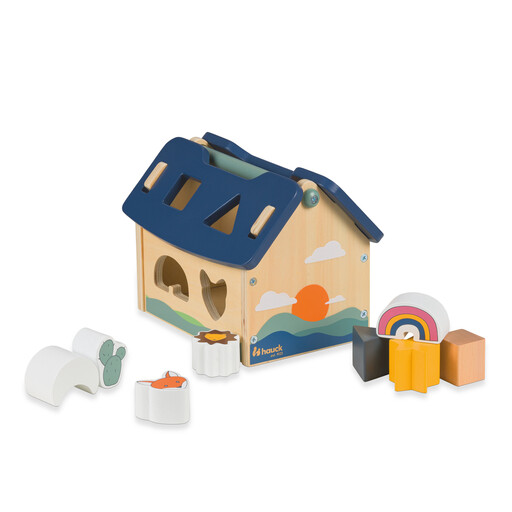
Why this product suits this profile: This shape sorter is designed for children from 12 months and combines simple operation with a manageable range of functions. The components can be stored neatly at home.
The age recommendation from 12 months, storage options and information about small parts make it easier to choose a suitable toy. Damaged or splintered components should be removed immediately.
FSC-certified wood according to the product description, eight blocks, a removable roof and a carry handle.
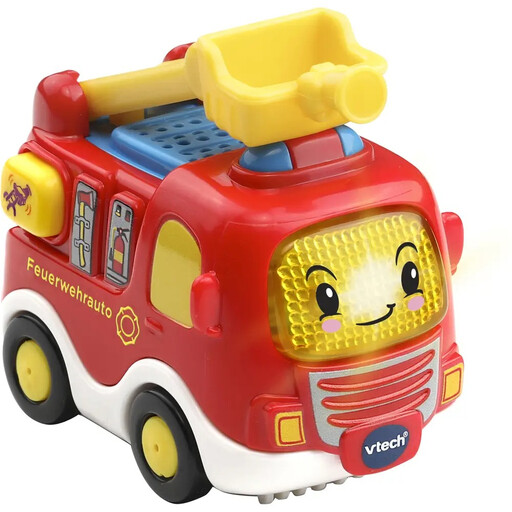
Why this product suits this profile: According to the product information, this vehicle is intended for children from 1 year and offers clearly described interactions with lights, sounds, songs and a movable ladder.
The information on the model number, batteries, cleaning and safety warning is specific. The battery compartment should be checked regularly to ensure it is secure and free from signs of wear.
Two AAA batteries included according to the product description, three songs, six melodies and compatibility with other Tut-Tut-Baby-Flitzer playsets.
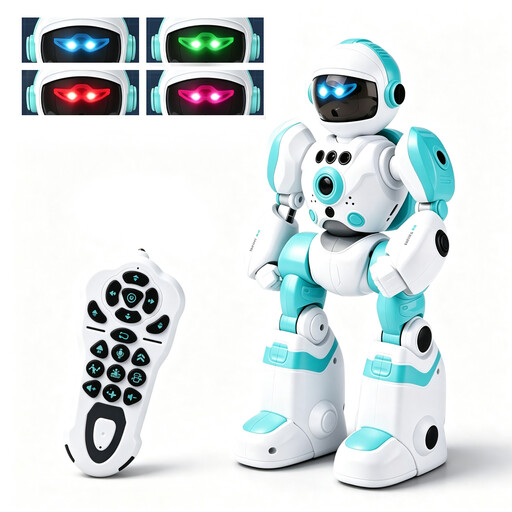
Why this product suits this profile: According to the warning, this robot is intended for children from 3 years and is suitable for families looking to combine programmable movement sequences, remote control and voice recording.
The product description states the suitable age, need for direct supervision, rechargeable battery and motor magnet. This information helps you plan where and how the toy will be used before buying it.
2.4 GHz remote control, gesture control, voice recording, programmable sequences and four-colour LED eyes.
For children from 3 years, a wind-up plush toy, a balance ball game or a dinosaur playset may also be appealing. With the Dreamora Q187 Wind-up Jumping Chicken & Duck Toy, there is no need to buy batteries; because it contains small parts, the age recommendation and supervision are crucial.
The MIMI Wooden Tabletop Balance Ball Game is designed for playing together at the table. It contains small balls and, according to the product information, is not suitable for children under 3 years. For dinosaur fans, the Dinosaur Truck Toy with three Dino Figures offers a transporter, vehicles and figures. Here, pay particular attention to batteries, small parts and the available play area.
We have compiled a complete, regularly updated list of products that fully meet these strict selection criteria and the safety regulations applicable in the EU.
Products with large, sturdy parts and simple, easy-to-understand activities are suitable. According to the respective product information, the Hauck shape sorter and the VTech Tut Tut Baby Flitzer are intended for children from 12 months. Nevertheless, warnings, part size and the necessary supervision should still be taken into account.
Their lifespan depends on build quality, how intensively they are played with, batteries and storage. Check the wheels, casing, seams and battery compartments regularly. For rechargeable batteries, follow the charging instructions. Damaged parts or exposed electronics are reasons to stop using the product.
Mechanical toys generally do not require batteries. Electronic vehicles, robots and musical instruments, on the other hand, require batteries or a rechargeable battery. Before buying, check the power source, included accessories and potential replacement costs. For loud products, volume control is also useful when they are used indoors.