
Lieferung heute & morgen

Qualitätsgarantie

Willkommens-Angebote freischalten: KOSTENLOSE Lieferung | Bis zu 80 % RABATT | Kostenlose 30-Tage-JoyPlus-Testphase
App herunterladen
A children’s vehicle or interactive car toy should suit your child’s age, surroundings and abilities. However, product descriptions often sound more comprehensive than their everyday use actually suggests. In particular, children’s vehicles and interactive toys from 1 year can lead to disappointing purchases because of three common pitfalls:
The recommended age is an important starting point, but it does not replace checking the safety information. With toy cars featuring lights and sound, parents should check whether the battery compartment, moving parts and accessories are safely accessible to children. If a product contains small parts, it must not be passed on to younger children, even if its vehicle shape appears suitable for toddlers.
With a remote-controlled car for toddlers, it is also important that the controls are easy to understand. A small number of clearly recognisable movement directions are easier for younger children to operate than complex controllers. Keep hair and loose clothing away from the wheels. The toy should always be used under supervision.
With a ride-on car for children, a low seating position, sufficient foot space and a sturdy area to hold on to are important. For outdoor use, the tyre material and ground clearance are also relevant. An electric vehicle for children requires more space, a suitable surface to drive on and a responsible adult. Technical details such as speed, charging time, battery capacity and maximum load should be included on your checklist before buying.
For example, according to the product information, a children’s tractor with trailer may measure 151 × 68 × 70 cm, weigh 17 kg and have a load capacity of 30 kg. Dimensions like these affect not only how the vehicle is used, but also transport, storage and the amount of space needed in the cellar or garden.
Interactive toys for toddlers can encourage active play through pressing, pushing, sounds and simple cause-and-effect relationships. However, this should not be interpreted as a therapeutic or medical promise. The key question is whether the child is actively involved.
With electronic products, it is also worth checking the battery type, automatic shut-off and whether the volume can be adjusted to a suitable level for everyday use.
The following products cover a range of situations: from a compact vehicle for the living room to a tricycle that grows with your child or a larger model for outdoor use.
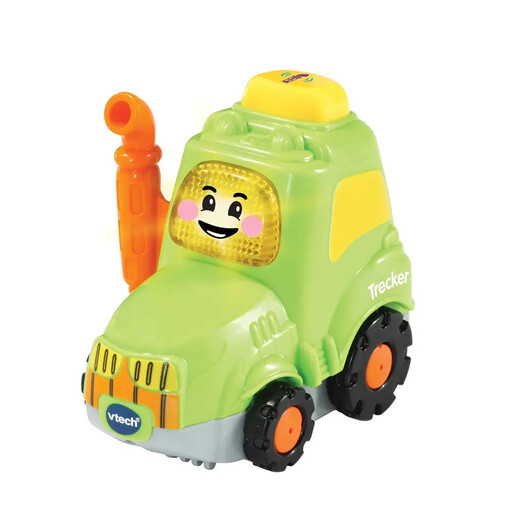
Why this product suits this profile: This compact interactive tractor is listed as suitable for children from 1 year and requires two AAA batteries, which are included according to the product information. This makes it suitable for indoor use and easy to store.
The product details clearly state the recommended age, battery requirements and need for supervision. This makes it easier to check the essentials before buying and avoids choosing unnecessarily large outdoor models for small spaces.
Light button, sounds, three children’s rhymes and six melodies; responds to wheel movement and compatible Magic sensors.
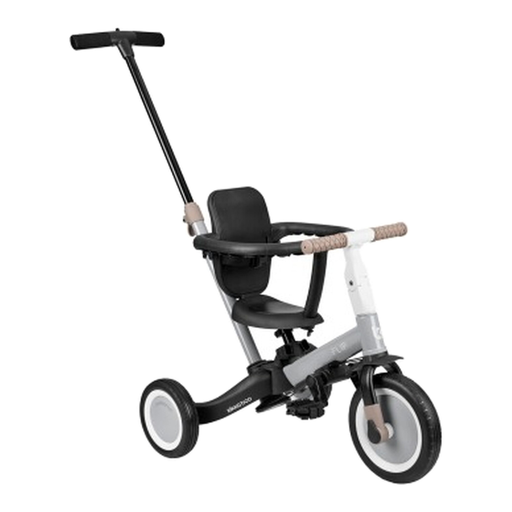
Why this product suits this profile: According to the product description, this model is designed for children aged 1 to 5 years and can be adapted for five different uses. The adjustable seat, push handle and 2-point harness make it an appealing choice for families looking for a versatile vehicle.
The five modes are clearly specified. This makes it easier to assess which functions can be used straight away and which will become useful later.
High-carbon steel construction, 70 × 45 × 65–91 cm, 5.6 kg, plus height-adjustable push handle and seat.
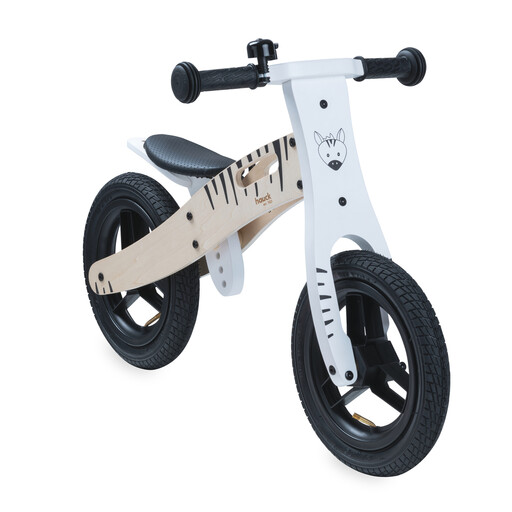
Why this product suits this profile: According to the product information, this balance bike is suitable from 18 months. It is designed for families who want to practise outdoors and value a low weight and an adjustable seat.
The seat height of 33–42 cm, weight of 2.95 kg and lack of a brake all need to be taken into account. This prevents the equipment or design from obscuring the bike’s practical suitability.
FSC-certified wooden components, 12-inch air tyres, four-position seat-height adjustment and an integrated carrying handle.
A large electric vehicle may be suitable for a garden, but is usually impractical in confined indoor spaces. A small VTech Tut Tut Baby Flitzer vehicle, on the other hand, is more likely to fit in a flat, but requires batteries and its sounds may affect the surrounding environment. Your choice should therefore not depend on the range of functions alone.
We have put together a complete, regularly updated list of products that fully meet these strict selection criteria and the safety regulations applicable in the EU.
For many children from 1 year, compact push-along vehicles, simple toy cars or a tricycle with a push handle may be suitable to start with. The key factors are an appropriate seat height, good stability and adult supervision. According to product information, balance bikes are often only recommended from 18 months.
How long a vehicle can be used depends on its load capacity, materials, care and your child’s growth. An adjustable tricycle can cover several stages of development. With wooden balance bikes, the frame, screws, tyres and any cracks should be checked regularly. Electronic toys also require working batteries and a dry storage environment.
Battery-powered interactive toys require AA or AAA batteries. An electric vehicle, on the other hand, needs regular charging and suitable storage space for the battery. Before buying, parents should therefore check whether batteries are included, how many are required and whether an automatic shut-off function is available.