
Lieferung heute & morgen

Qualitätsgarantie

Willkommens-Angebote freischalten: KOSTENLOSE Lieferung | Bis zu 80 % RABATT | Kostenlose 30-Tage-JoyPlus-Testphase
App herunterladen
The right children’s vehicle should make outdoor fun easy, match your child’s stage of development and remain practical beyond just a few weeks. Parents and grandparents face a wide choice: electric vehicles for children, go-karts, scooters, tricycles and ride-ons differ markedly in operation, space requirements, maintenance and safety features.
Three common buying mistakes often lead to poor choices:
The label “children’s vehicle from 3 years” is just a guide. What really counts is whether your child can place both feet safely on the ground or pedals, and comfortably control the handlebar and other controls. With a children’s pedal vehicle or go-kart for kids, seat adjustment and pedal reach are especially important.
Make sure the maximum load suits how you plan to use it. A go-kart with a stated load capacity of 30 kg is intended for a child roughly between 3 and 8 years old. A two-seater electric vehicle with 50 kg load capacity may be designed for two smaller children, but it will need more storage space and a flat, open area to drive.
With a children’s electric car, children’s electric quad or children’s electric motorbike, drive modes matter more than top speed. A model with multiple speed levels can be used slowly to start with. For example, the RFN Warrior Kids SX-E250 lists three stages of 8, 12 and 25 km/h. According to the product data, the larger 14-inch model offers 15, 22 and 30 km/h.
For younger children, features such as a soft start, an emergency stop switch or a parental remote control can make handling easier. However, a remote control does not replace direct supervision. Electric ride-ons should only be used on suitable, clearly visible private areas and never on public roads.
Decide in advance whether the vehicle will be used on tarmac, concrete, grass or uneven ground. A children’s scooter with three wheels and a wide deck can be ideal for pavements and playgrounds, whereas an off-road motorbike has larger tyres and suspension for uneven private terrain.
Key details to check include:
A helmet and suitable protective gear make sense for any ride-on product. Always read the manufacturer’s instructions, assembly guide and age recommendation before first use.

Why this product fits the profile: This pedal-powered go-kart needs no battery and suits children aged 3 to 8. Forward and reverse gears allow versatile use on suitable firm surfaces.
The adjustable seat can be adapted as your child grows, so fit isn’t tied to a fixed age band.
2-position adjustable seat, metal frame, stated 30 kg load capacity and a steering angle limited to 20°.
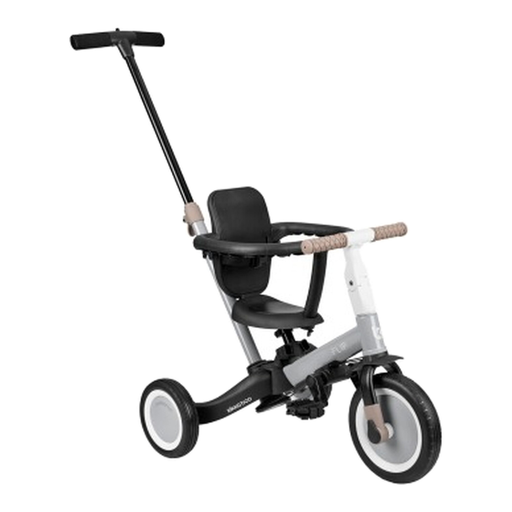
Why this product fits the profile: This 5-in-1 children’s tricycle is designed for a longer developmental window, from 1 to 5 years, and can initially be pushed by an adult.
The adjustable seat position and three push-bar heights support different stages of development rather than a short period of use.
High-carbon steel construction, 2-point harness, adjustable seat and five modes of use at 5.6 kg net weight.
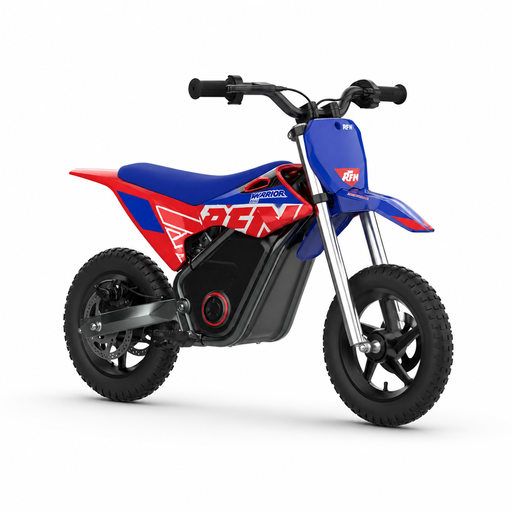
Why this product fits the profile: According to the product information, this children’s electric motorbike is aimed at 4- to 8-year-olds and is designed for supervised rides on suitable off-road private areas.
Three speed levels and a parental speed limit let you gradually match ability and surroundings.
36 V, 350 W as specified, stated range of 18 km, front and rear brakes, and 14-inch off-road tyres.
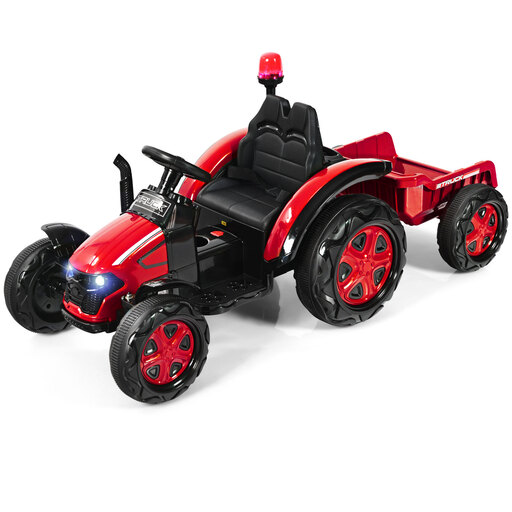
Why this product fits the profile: This children’s tractor with trailer is listed for 3- to 8-year-olds and adds play value on larger private areas thanks to the trailer, music features and parental remote control.
The stated speed of 3 to 8 km/h is lower than many off-road motorbikes. The remote lets adults supervise the ride.
12 V battery, stated 30 kg load capacity, 2-point belt, forward and reverse gears, plus removable trailer.
We’ve compiled a comprehensive, continuously updated list of products that fully meet these strict selection criteria and the safety regulations applicable in the EU.
For short trips around your neighbourhood, a children’s scooter or a tricycle may be all you need. A three-wheeled scooter with an adjustable handlebar and wide deck is designed for children aged 3 to 10. With a ride-on vehicle for children, you’ll need enough space to turn. Before you buy, consider your garage door width, storage space and the vehicle’s weight.
Electric vehicles come with ongoing costs. Power consumption per charge is usually modest, but batteries need several hours to charge and lose capacity over time. Tyres, brakes, the charger and a spare battery can matter more in the long run than the upfront price. A vehicle with replaceable or readily available spare parts can therefore be more practical for regular use.
That depends on height, motor skills and where it will be used. A tricycle, a three-wheeled children’s scooter or a slow electric ride-on with a parental remote control could be options. The manufacturer’s guidance on age, height, load capacity and assembly is decisive. Motorised models require direct supervision.
Runtime depends on battery capacity, weight, terrain, temperature and driving style. For the stated 12 V vehicles, charging time is often 8 to 12 hours. A specific driving time can’t be given reliably without standardised conditions. After each use, charge the battery as per the instructions and store it in a dry place.
Toys such as go-karts, children’s scooters, electric cars or electric quads are generally not intended for public roads unless they have the relevant approval. Suitable areas are private, clearly visible spaces without traffic. Always read the warnings, operating instructions and local requirements before use.