
Lieferung heute & morgen

Qualitätsgarantie

Willkommens-Angebote freischalten: KOSTENLOSE Lieferung | Bis zu 80 % RABATT | Kostenlose 30-Tage-JoyPlus-Testphase
App herunterladen
The right children’s vehicle should suit your child’s age, height and where it will be used. However, there are clear differences between balance bikes, ride-on cars, tricycles and electric vehicles when it comes to operation, supervision and space requirements. Focusing only on eye-catching design or top speed means you risk overlooking important details.
The age recommendation on the packaging is only a rough guide. What really matters includes seat height, handlebar position, legroom and maximum weight capacity. A children’s vehicle for 1-year-olds must meet different requirements to one for 3-year-olds. With a balance bike for 18-month-olds, your child should be able to reach the ground securely with both feet.
Music, lights, a USB port or a remote control can be appealing. However, they don’t replace easy-to-reach controls, a stable base and clear safety instructions. With an electric children’s car, parents should therefore check whether the remote control genuinely allows parental control and what speed settings are available.
A vehicle for indoor use needs compact dimensions and, ideally, quiet wheels. An electric children’s jeep or a children’s tractor with trailer, on the other hand, is usually designed for outdoor use and needs enough space to turn. Uneven paths, slopes, steps and proximity to roads or water increase the risk of accidents. Always use the vehicle in line with the manufacturer’s instructions.
Pay attention to the combination of age recommendation, seat height and maximum load capacity. For example, the hauck Balance N Ride has a seat height of 33 to 42 cm and can be adjusted to several positions. According to the product details, this model is suitable for 18 months to around 4 years and has a maximum load capacity of 20 kg. You should check the actual fit with your child.
For electric vehicles, the vehicle dimensions and turning circle are also important. A large model may look compact enough in the box or on the patio, but in daily use it can take up a lot of floor space.
With an electric children’s vehicle, you should look at voltage, motor power, speed settings and braking capability. A higher motor power does not automatically mean it is better suited to younger children. What matters is that your child understands how to operate it and that adults can supervise its use.
The 12 V jeep in our selection features two motors, a safety belt, lights, music and a remote control, according to the product data. The manufacturer states it is suitable for children aged 3 to 7 years. Before the first ride, you must check the battery, charger, seat fixings and remote control.
With a classic vehicle, wheel diameter, tyre type and frame material affect riding comfort. The hauck Balance N Ride has 12-inch pneumatic tyres, a frame made from FSC-certified wood and an integrated carry handle. Pneumatic tyres need to be checked regularly for correct pressure. Wooden frames should be inspected for cracks, splinters and loose screws.
With an electric children’s motorbike, you also need to consider brakes, protective gear, riding mode and an emergency stop function. The 14-inch model described in the product data has three speed settings, disc brakes, suspension and an emergency stop switch. Its stated top speed of up to 30 km/h makes it suitable only for appropriate, supervised off-road areas – not for public roads or confusing paths.
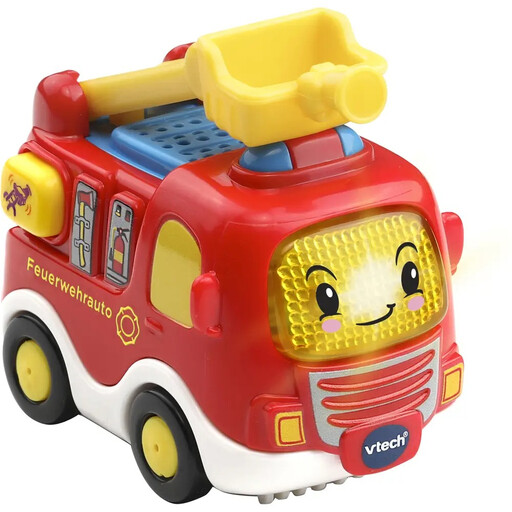
Why this product fits the profile: This compact toy vehicle for children is suitable for indoor use and is designed for children aged 1 year and over. It requires two AAA batteries, which are included according to the product information.
Its manageable size and light weight make storage easy. Use is limited to interactive play rather than motorised driving.
Lights, sounds, three songs and six melodies; compatible with Tut Tut Baby Flitzer play sets.
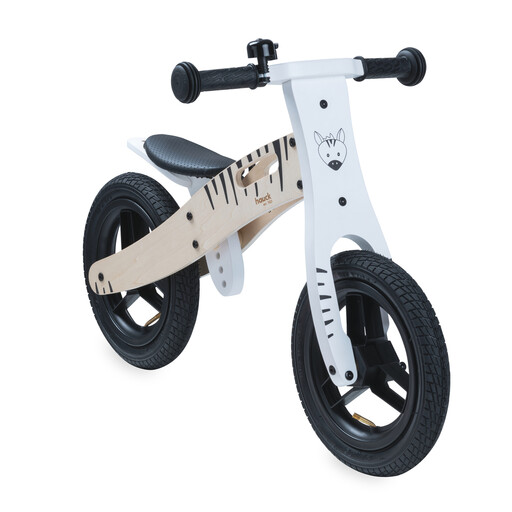
Why this product fits the profile: This balance bike for 18-month-olds is aimed at families looking for a mechanical vehicle with an adjustable seat and clear maintenance instructions.
The four-way adjustable seat height allows it to be adapted to your child’s height. As there is no brake, use is expressly recommended only under supervision and not on public roads.
FSC-certified wooden components, 12-inch pneumatic tyres, carry handle and a stated load capacity of 20 kg.
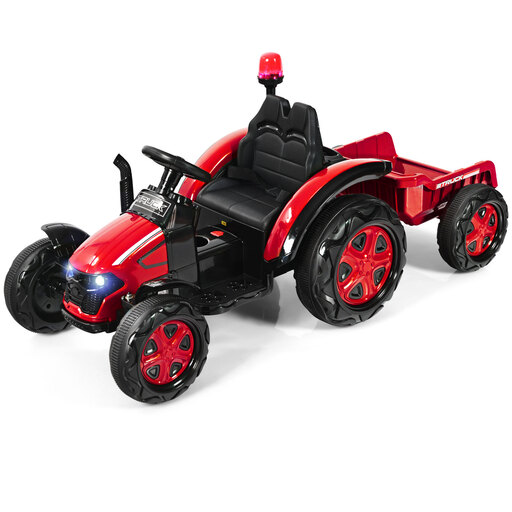
Why this product fits the profile: This children’s tractor with trailer is designed for outdoor use and for children aged 3 to 8 years. It suits families with enough storage space and a suitable, clear riding area.
The 2.4 GHz remote control allows parental control, according to the product information. The safety belt, high-back seat and low speed range of 3 to 8 km/h should be checked before use.
Detachable trailer, forward and reverse gears, foot pedal, music function and a stated load capacity of 30 kg.
We have put together a complete, regularly updated list of products that fully meet these strict selection criteria and the safety regulations in force in the EU.
For children aged 1 year and over, ride-on cars, simple push-along vehicles and interactive models like a VTech Tut Tut Baby Flitzer are good options. Your child should be able to operate the vehicle safely while seated. Adult supervision is required for all types.
A balance bike helps your child learn to balance independently, while a children’s tricycle offers more stability at first thanks to its multiple wheels. The right choice depends on your child’s height, coordination and the surface where it will be used. An adjustable seat height can extend the period of use, but it does not replace checking the size.
In addition to the purchase price, there are electricity costs for charging, possible costs for replacement batteries, and expenses for tyres or small parts. The actual costs depend on the battery capacity, charging frequency, driving time and model. Before buying, parents should therefore check the charging time, availability of spare parts and instructions for battery care.