
Lieferung heute & morgen

Qualitätsgarantie

Willkommens-Angebote freischalten: KOSTENLOSE Lieferung | Bis zu 80 % RABATT | Kostenlose 30-Tage-JoyPlus-Testphase
App herunterladen
Children’s games from age 5 should offer clear rules without becoming boring after just a few rounds. At the same time, children at this age can have very different preferences: some already enjoy solving puzzles, while others prefer movement, cards or imaginative stories. For parents, grandparents and families, the recommended age is therefore only one factor to consider.
Looking at the number of players, playing time, materials and level of supervision required can help you find suitable family games for children. This helps prevent a game from sitting unused on the shelf because the rules are too complicated, the pieces are too small or there are not enough players available.
The age recommendation is a useful guide, but it does not provide a complete picture of the game. A game from age 5 may still require help with reading aloud, sorting or understanding the tasks. With some board games from age 5, the actual playing time is also important: 60 minutes can be far too long for younger children.
You should therefore also check:
Many educational games for children cover colours, shapes, numbers, language or logical thinking. However, this does not automatically result in a particular educational benefit. What can be assessed objectively is which actions the game requires, such as matching, remembering, planning, observing or making joint decisions.
When choosing board games for children, the specific game mechanics should therefore matter more than general marketing claims.
Game materials made from cardboard, wood or plastic may contain small components. You should therefore read the manufacturer’s warnings before buying. With digital games, you should also consider the platform, USK rating, controllers required and any online features.
An app may be optional for a puzzle game, while online multiplayer features often require an internet connection and a paid subscription.
The instructions for a five-year-old should be easy to explain and understand. With cooperative children’s games, an adult can guide the first round without individual children having to compete directly against one another. Flexible player ranges such as 1–4 players or 2–4 players are practical for families with several children.
You should also pay attention to age limits: a product from age 6 is not automatically suitable as a game for a five-year-old. However, it may be suitable for an older sibling or as a family game played together with adult support.
Check whether the components are made from sturdy cardboard, wood or plastic, and whether replacement or additional parts may be required. For games with small parts, follow the manufacturer’s warning: products containing parts that can be swallowed are not suitable for children under 3. Even with older children, age-appropriate supervision is advisable, particularly when the game includes complex accessories.
A compact box is useful for children’s card games or travel games. Puzzles and larger board games, on the other hand, require enough table and storage space.
The following products cover a range of situations and ways to play. The age recommendations and features are based on the relevant product information.
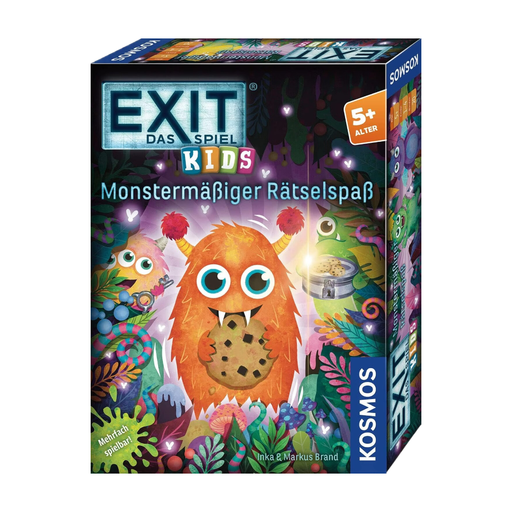
Why this product suits this profile: This puzzle game is designed for children from age 5 and for 1–4 players. The rules are designed to provide an easy introduction for children; adult support is recommended for children aged 5–7.
The optional Kosmos app is not essential. This means the game can also be played without an additional device.
From age 5, 1–4 players, no batteries required and designed for repeat play.
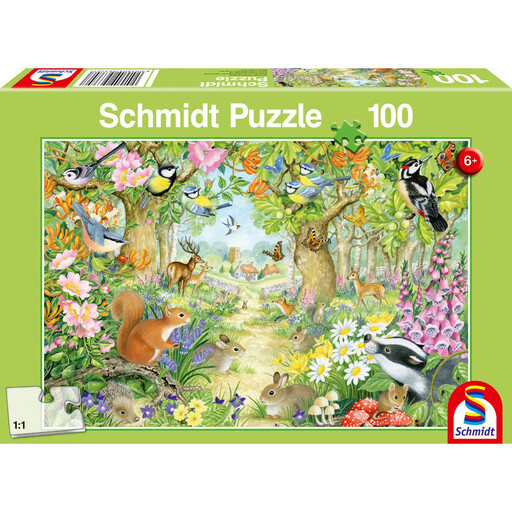
Why this product suits this profile: The puzzle is designed for children from age 6 and contains 100 pieces. A puzzle poster with cut lines makes it easier to get started.
The number of pieces and age recommendation are clearly stated. This makes it easier to assess the difficulty than with a picture whose details are not specified.
100 pieces, matt surface with linen texture and a poster for guidance.

Why this product suits this profile: The Junior edition is designed for 2–4 players from age 6. Simplified trading rules and child-friendly game mechanics make it easier to get started with a strategy game.
The number of players and simplified rules are clearly stated. This reduces the risk of choosing a game with adult rules for younger children.
2–4 players, recommended from age 6, collect resources and build seven pirate hideouts.
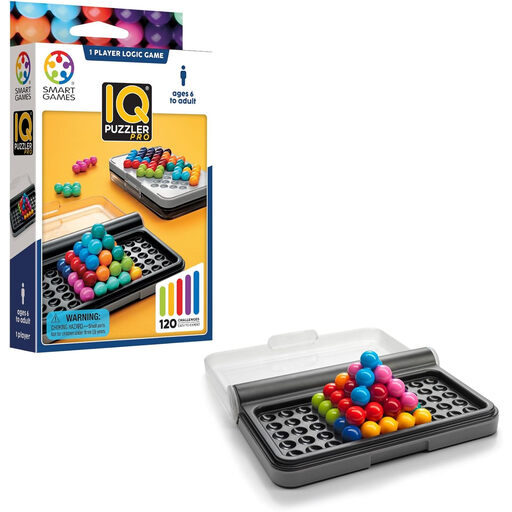
Why this product suits this profile: This compact solo game is designed for children from age 6 and is ideal for travel or short periods of play. It offers 120 challenges in three game modes.
It does not depend on having a group of players. The number of challenges and three game modes make the scope clear before purchase.
One player, 120 challenges, 2D and 3D challenges, plus a compact format.
We have put together a complete, regularly updated list of products that fully meet these strict selection criteria and the safety regulations applicable in the EU.
For shared family game nights, products with at least two game modes or a variable number of players are a good choice. If you are looking for cooperative children’s games, check whether all the children win together or whether individual scores are still awarded.
For Nintendo Switch games for children, the USK rating, number of local players and hardware required are particularly important. According to the product information, Animal Crossing: New Horizons has no age restriction under the USK rating and supports up to four players simultaneously on one console. Online features may require an internet connection and Nintendo Switch Online. Games involving a lot of movement also require enough space and securely fastened wrist straps for the controllers.
Games with clear rules, manageable components and a duration suited to the child’s attention span are suitable. Kosmos EXIT Kids is specifically designed for children from age 5. Many of the board games, puzzles and strategy games in the selection, however, start from age 6 and should be chosen with the child’s individual development in mind.
There is no single ideal playing time. Short card or dexterity games are often better suited to spontaneous play sessions. With longer family games, taking breaks or simplifying the rules can help. The key question is whether the child can follow what is happening over several rounds.
Read the warnings on the packaging and product page. If a game contains small parts, it should not be given to children under 3. With younger children, direct supervision is also advisable above this age limit. After playing, all small parts should be collected and stored in a dry place.