
Lieferung heute & morgen

Qualitätsgarantie

Willkommens-Angebote freischalten: KOSTENLOSE Lieferung | Bis zu 80 % RABATT | Kostenlose 30-Tage-JoyPlus-Testphase
App herunterladen
A children’s jigsaw puzzle should suit your child’s age, motor skills and attention span. In practice, parents and grandparents often choose a picture their child likes, only to find that it’s too challenging or quickly loses its appeal. Claims such as “extra sturdy” or “educational” don’t, on their own, tell you whether a puzzle is genuinely suitable.
A 24-piece puzzle may be too challenging for a child aged 3, but not much of a challenge for a confident 4-year-old. You should also consider the size of the pieces, the picture, the distribution of colours and any visual clues.
“From age 3” or “from age 4” is a guide, not a substitute for getting to know your child’s abilities. A child with little jigsaw puzzle experience may benefit from a tray puzzle with a few easy-to-grip pieces. A more experienced child may be ready for several pictures or a higher piece count.
The thickness of the card, the surface finish and the stability of the base all affect how easy a puzzle is to handle. Small pieces should be kept away from children who, according to the product label, are too young to use it. So always check the age recommendation and safety warnings on the packaging. The information provided by the manufacturer is what matters.
The following ranges can be a useful guide:
A 15-piece puzzle is often a good starting point. A 24-piece puzzle offers more combinations without making the task unnecessarily complicated. The actual difficulty also depends on whether the picture contains lots of similar areas, strong contrasts or clearly defined objects.
A tray puzzle comes with a base featuring outlines. These help your child work out where each piece goes, which can be especially useful for a first jigsaw puzzle. A tray is also handy when you’re puzzling at a small table or on the go.
Traditional jigsaw puzzles without a fixed border offer more freedom, but usually need a reasonably large, flat surface. For sets with several pictures, check that the pieces for each one are easy to tell apart.
Sturdy card is easier for little hands to grip and, if stored carefully, is less likely to warp. A matt or textured surface can reduce distracting reflections, making colours and outlines easier to see. This doesn’t guarantee a longer lifespan, but it can make the puzzle more comfortable to use.
After playing, store the pieces dry and together in the packaging or a sealable box. If you have a children’s jigsaw puzzle set, it’s a good idea to keep the pieces for each picture separate.
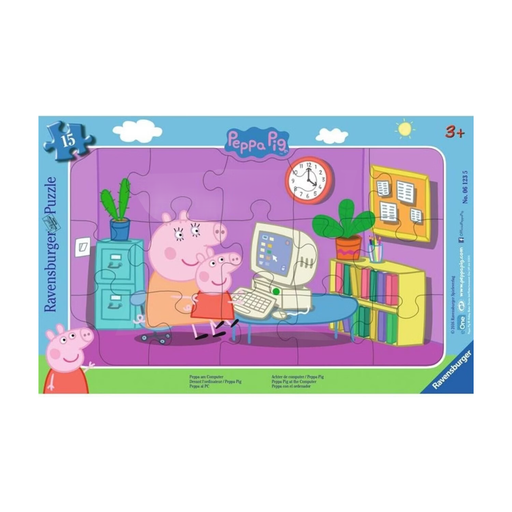
Why it suits this profile: This 15-piece tray puzzle is recommended for children aged 3 and over. The outlines in the tray provide clear guidance for their first puzzling sessions.
The low piece count and marked outlines reduce the risk of a first puzzle feeling too difficult because there aren’t enough visual clues.
15 pieces, integrated tray, paper and card, and a Peppa Pig picture.
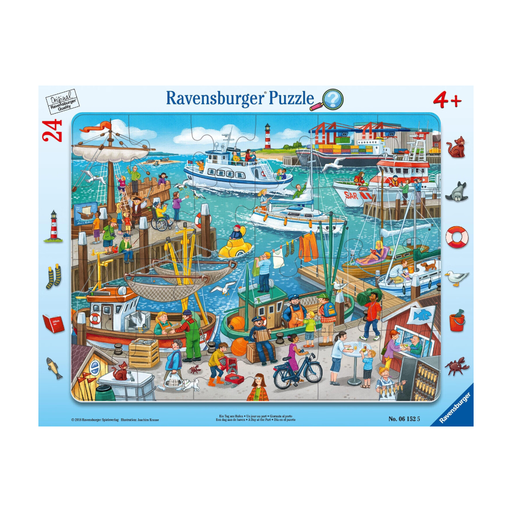
Why it suits this profile: Recommended for children aged 4 and over, this tray puzzle combines a 24-piece picture with a search game and a sturdy card base.
The search game gives children something extra to do once they’ve completed the puzzle, helping to keep it interesting beyond the first go.
24 pieces, extra-thick card, a search game with 10 picture elements, and a size of 32,5 × 24,5 cm.
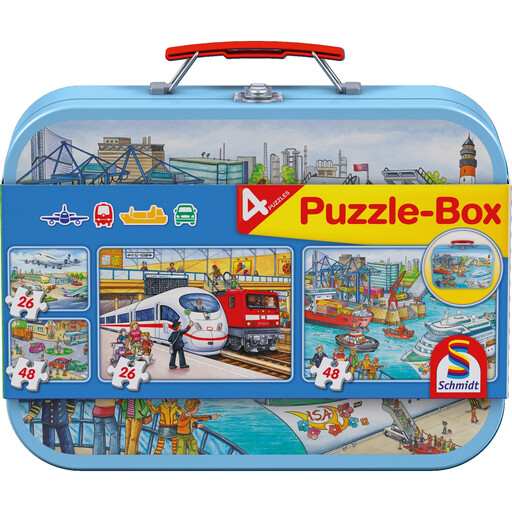
Why it suits this profile: This puzzle box for children aged 4 and over contains four vehicle pictures, with 2×26 and 2×48 pieces, making it suitable for different skill levels.
Different piece counts let children progress at their own pace, rather than being limited to just one level of difficulty.
Four puzzles, a metal storage case, a puzzle poster with visual guides, and vehicle pictures.
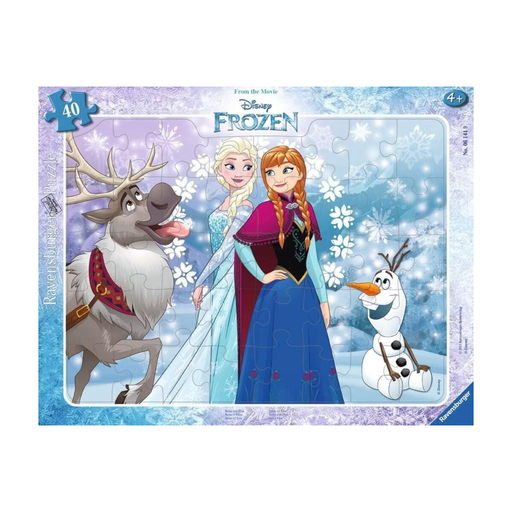
Why it suits this profile: This Disney Frozen jigsaw puzzle is designed for children aged 4 and over who love familiar characters and are ready for a little more of a challenge.
The age recommendation, tray and marked base bring together a much-loved picture and a clear structure to follow.
40 pieces, a tray with visual guides, an Anna and Elsa picture, and a size of 37,3 × 28,8 cm.
We’ve put together a complete, regularly updated list of products that meet these strict selection criteria and fully comply with the safety regulations in force in the EU.
A children’s jigsaw puzzle can be used as an educational toy, as matching shapes, colours and parts of a picture can help children practise concentration, observation and fine motor skills through play. However, this doesn’t mean it will have a specific educational or medical effect in every case. The most important factors when choosing are suitability, material, safety and your child’s genuine interest.
For a jigsaw puzzle for a 3-year-old, 12 to 24 pieces is a common guide. A tray, large pieces and clear pictures can make it easier to get started. Your child’s individual experience is still the most important factor.
A 24-piece puzzle is often suitable for children aged 4 and over, provided the pieces are easy to grip and the picture has clear areas. A set with more pieces or pictures may be a good choice for children with more experience.
How long it lasts depends on the thickness of the card, how it’s handled and how it’s stored. Keeping the pieces dry, removing them carefully and storing them in their complete packaging helps protect them. With a tray puzzle, don’t force the pieces out of the base.