
Lieferung heute & morgen

Qualitätsgarantie

Willkommens-Angebote freischalten: KOSTENLOSE Lieferung | Bis zu 80 % RABATT | Kostenlose 30-Tage-JoyPlus-Testphase
App herunterladen
A children’s jigsaw puzzle should be fun, suit your child’s age and stand up to repeated play. When choosing one, parents, grandparents and childcare providers often look first at the picture and the price. That can mean overlooking important details: too many pieces can be overwhelming, small or thin pieces may not be suitable for younger children, and an attractive picture doesn’t make up for a poorly thought-out play experience.
A 24-piece jigsaw puzzle isn’t automatically right for every child aged three and over. Large, easy-to-recognise pieces and a frame can make it easier to get started. By contrast, a picture with lots of similar colours can be challenging even if it has fewer pieces. For older children, smaller pieces, more complex pictures or extra puzzle-solving elements can increase the challenge.
The recommendation ‘ages 3+’ is a useful guide, but it’s still important to check the packaging. Many jigsaw puzzles contain small parts that could pose a choking hazard for children under three. For a children’s jigsaw puzzle marked as suitable for ages 3+, adults should also check that the pieces are easy to hold and consider whether it would be helpful to play together.
An interactive puzzle, an app or a light-up effect can add something extra to playtime. What matters most, though, is whether the instructions are clear and whether your child can complete the activity independently. A children’s educational jigsaw puzzle shouldn’t just have lots of features: the picture, activity and age range should all work well together.
For children aged around two and over, choose sets with a few sturdy pieces and familiar pictures. Ravensburger’s ‘My First Puzzle’ contains four puzzles that increase in difficulty and, according to the product details, is suitable for children aged two and over. For three-year-olds, 12 to 24 large pieces or a frame jigsaw puzzle with outline guides can make it easier to get started.
From age four, sets with several puzzles or ‘find the object’ activities are worth considering. For children aged six and over, 60- or 100-piece puzzles can offer a suitable step up in difficulty. If your child is still relatively new to jigsaws, a 100-piece jigsaw puzzle should ideally have a clear picture or include a guide.
Cardboard jigsaw puzzles should be sturdy enough to prevent the edges from fraying quickly with frequent sorting. A matt or textured surface can reduce glare, which is handy in a brightly lit room. When choosing a children’s jigsaw puzzle set, think about storage too: metal tins or snug-fitting boxes help keep all the pieces together.
Compact designs are handy for taking out and about. A suitable travel jigsaw puzzle for children should take up little room and ideally come with a firm base, a sorting aid or resealable packaging. Browse more space-saving options in our travel jigsaws for children category.
Look out for:
Magnetic toys require extra care: magnets must not come loose from their casing and must never be swallowed. Many jigsaw and puzzle games are not suitable for children under three. Always follow the relevant manufacturer’s guidance on the product page and packaging.
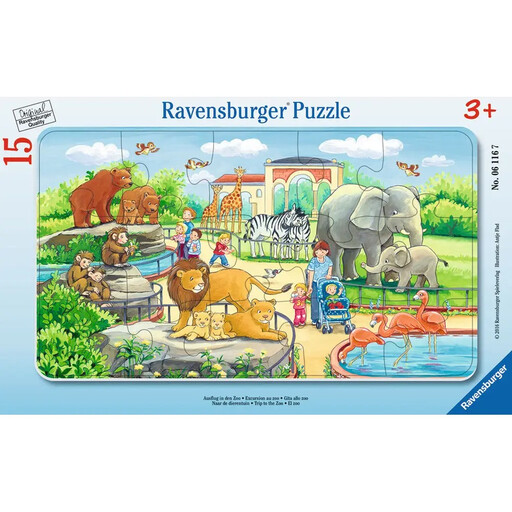
Why it’s a good match: This frame jigsaw puzzle is designed for children aged three and over. It combines 15 pieces with a baseboard and outline guides, making it a good choice for their first attempts at puzzling independently.
The outlines help children work out where the pieces go, so the number of pieces isn’t the only thing that determines the difficulty.
15 pieces, a frame with guide lines and a zoo-themed picture.
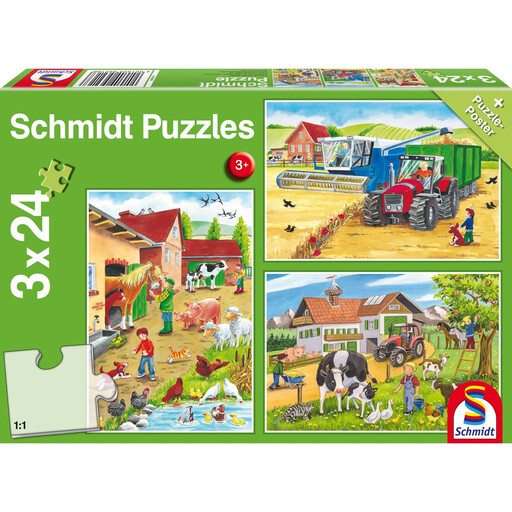
Why it’s a good match: Three different pictures, each with 24 pieces, offer variety while remaining suitable for children aged three and over.
The number of pieces is clearly stated for each picture, making it easier to judge the real level of difficulty than with a single total for the whole set.
3 × 24 pieces, cardboard construction, a matt linen-textured finish and a storage box.
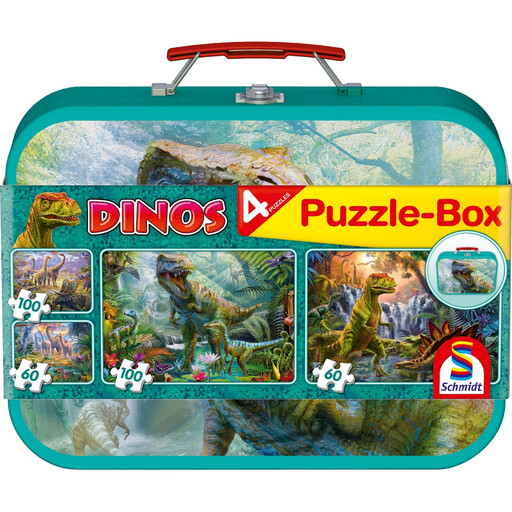
Why it’s a good match: Designed for children aged six and over, this set contains four dinosaur pictures, with two 60-piece and two 100-piece puzzles.
The included puzzle posters have cut-out lines to help guide children, while the different piece counts let them build up to more challenging puzzles step by step.
Four pictures, 60- and 100-piece puzzles, plus a metal storage tin.
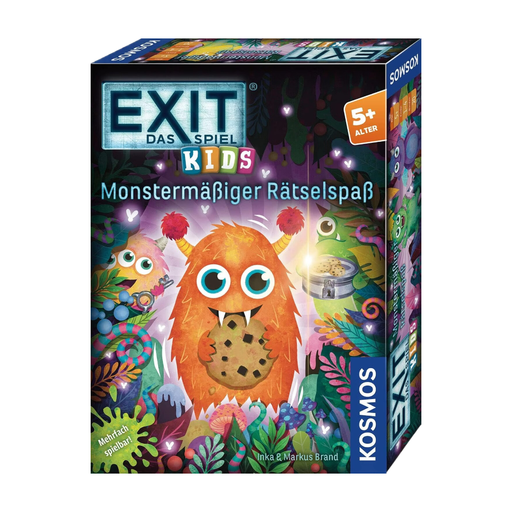
Why it’s a good match: Designed for children aged five and over, this puzzle-solving game is for one to four players and combines riddles with making decisions together.
The rules are tailored to children. The optional app can provide hints and a timer, but it isn’t essential to play.
For 1–4 players, a puzzle-solving theme, optional app support and replayable rounds, according to the product description.
We’ve put together a complete, regularly updated list of products that meet these strict selection criteria and the applicable EU safety regulations.
It depends on the piece size, picture and age recommendation. According to the relevant product details, first puzzles are available for children aged two and over. Many frame jigsaws with 12 or 15 pieces are suitable from age three. Always follow the manufacturer’s safety guidance, whatever the type of puzzle.
For younger beginners, a puzzle with a few large pieces is a good choice. As your child gains experience, you can move on to 24, 60 or 100 pieces. The number isn’t the only thing to consider: a clear picture, outline guides and a reference image can all make it easier to get started. A children’s educational jigsaw puzzle should offer the right level of challenge, without being too easy for too long or requiring help too often.
A children’s escape-room game can be played from the age stated by the manufacturer. For children aged five to seven, adult support is often helpful, especially when reading and explaining the clues. Older children can try more complex adventures with more text, several stages and a higher piece count.