
Lieferung heute & morgen

Qualitätsgarantie

Willkommens-Angebote freischalten: KOSTENLOSE Lieferung | Bis zu 80 % RABATT | Kostenlose 30-Tage-JoyPlus-Testphase
App herunterladen
A children’s mattress needs to offer more than an appealing product photo might suggest. The key factors are the right dimensions, a suitable height, a clearly explained construction and a cover that is easy to care for in everyday family life. If you focus only on the price or terms such as “ergonomic”, you may end up buying a mattress that is unsuitable for the bed, your child’s height or the intended use.
A mattress should not move around significantly in a child’s bed. Even a difference of just a few centimetres can create gaps between the edge of the mattress and the bed frame. Before buying, carefully compare the bed’s internal dimensions with the mattress dimensions.
Typical sizes include:
The mattress height is also important. A 25 cm-high model will not automatically fit every bed and may alter the safety clearances where the bed has a low fall guard.
The term H3 mattress describes a firm model, but it is not defined consistently throughout Germany. The actual feel also depends on body weight, the spring core, foam density and the cover. For children, the firmness rating should therefore not be the only deciding factor.
More important is the combination of:
Babies have specific requirements. An adult mattress or a tall pocket-sprung mattress is not automatically suitable for a cot. For a 60x120 cm baby cot, only the appropriate dimensions and the specified safety instructions should be taken into account.
“Breathable”, “antibacterial” and “orthopaedic” are of limited value without further details. Buyers should check which materials are actually used and how the properties are described.
For example, a breathable mattress may feature an air-permeable cover and several ventilation layers. If a model is described as an antibacterial mattress, check the manufacturer’s specific information about its materials, care requirements and intended use. Such properties do not guarantee a particular hygienic or health-related effect.
A pocket-sprung mattress consists of individually wrapped springs. These can move independently, helping to provide more differentiated pressure distribution. When combined with foam layers, they can also reduce the transfer of movement. Whether this is relevant in everyday use depends, among other things, on whether siblings or parents and children share the same sleeping surface.
Foam mattresses are often lighter and easier to turn. Spring mattresses, on the other hand, may offer better ventilation, but they require a suitable slatted base and are less convenient to carry.
Multi-layer models often combine memory foam, high-density foam, springs and a textile cover. Greater height is not automatically proof of quality. It must be suitable for the bed and must not make access more difficult for smaller children.
You should also look for:
A mattress delivered rolled up should only be used once it has reached its intended shape. According to the product descriptions, the following GTIMEX models are stated to fully expand within approximately two hours. This time should be allowed for before use.
Not every product page includes a mattress. For example, a children’s bed with storage may only include the bed frame, drawers and slatted base. When comparing products, check the following points:
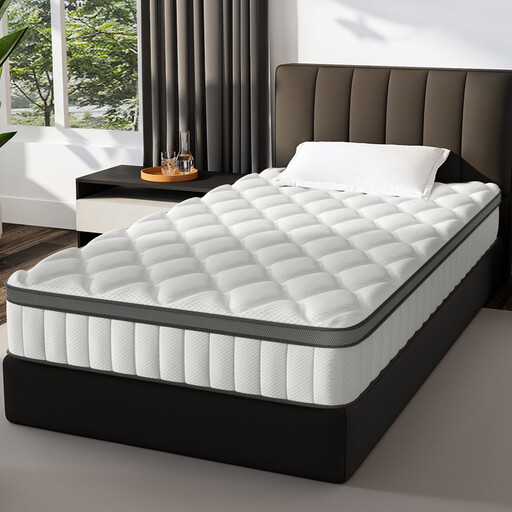
Why this product suits this profile: The size is suitable for a classic single bed in a child’s or teenager’s bedroom and comes with a fitted sheet.
The stated dimensions of 90 x 200 cm and the height of 25 cm make it easier to compare the mattress with the bed. The product description also mentions rolled delivery and the required expansion time.
7-zone construction, pocket springs with a diameter of 2.1 mm, nine material layers and a stated breathable cover.
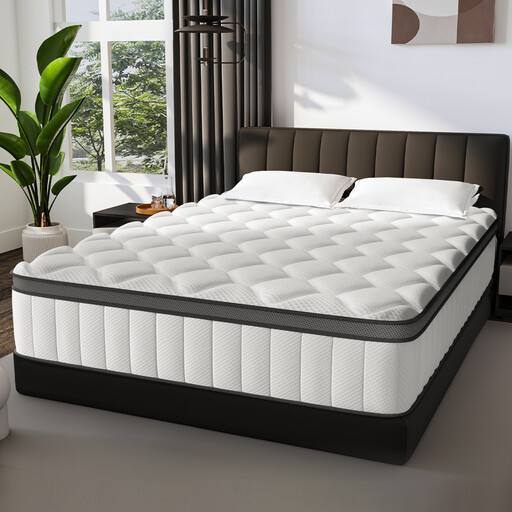
Why this product suits this profile: The wide sleeping surface is designed for teenagers, adults or shared use in the family bedroom.
The product details specify the dimensions, height, H3 firmness rating, core construction and what is included. This makes it easier to compare the model with the bed and slatted base.
Nine layers, 7-zone construction, 2.1 mm pocket springs and a fitted sheet included according to the product description.
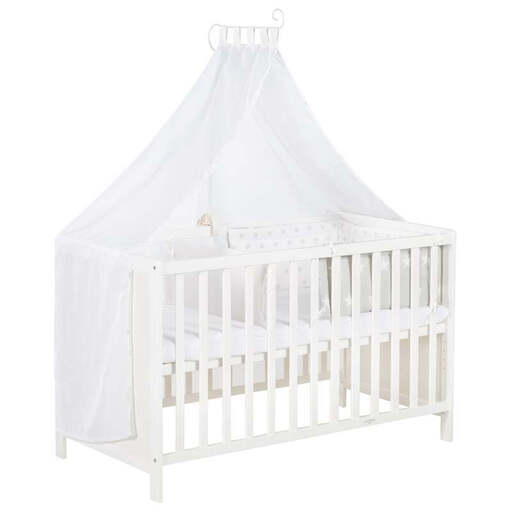
Why this product suits this profile: The set is aimed at families looking for a height-adjustable cot and toddler bed with several usage options.
The bed is specifically designed for a 60 x 120 cm sleeping surface. The product description also states that it has six height settings, includes a mattress and meets the safety requirements of EN 716–1:2017 + AC:2019.
Bedside cot, cot and toddler bed in one design; the package includes a slatted base, mattress, bed rails and canopy, among other items.
We have put together a complete, regularly updated list of products that fully meet these strict selection criteria and the safety regulations applicable in the EU.
For a bed with these internal dimensions, a 90x200 cm children’s mattress may be suitable. You must also check the mattress height, slatted base and fall guard. A 25 cm-high mattress may be unsuitable for a low children’s bed, even if the length and width are correct.
Its service life depends on the materials, the level of use, care and ventilation. Regularly check for indentations, damaged seams, moisture and reduced stability. During periods of rapid growth or when moving from a children’s bed to a teenager’s bed, you should also check whether the size and sleeping properties are still suitable.
The mattress should be kept dry and aired regularly. Stains can be treated locally with a mild cleaning product in accordance with the manufacturer’s instructions. Direct heat, harsh cleaning products and moisture trapped inside for prolonged periods can damage the cover and core materials.