
Lieferung heute & morgen

Qualitätsgarantie

Willkommens-Angebote freischalten: KOSTENLOSE Lieferung | Bis zu 80 % RABATT | Kostenlose 30-Tage-JoyPlus-Testphase
App herunterladen
A children’s play mat should protect the floor, create a comfortable play surface and suit the child’s age. In practice, however, unclear material specifications, unsuitable dimensions or surfaces that are difficult to clean often lead to disappointing purchases. This applies to families as well as nurseries, schools and playgroups.
A non-slip floor mat for children must be suitable for the specific flooring underneath. Its performance can vary considerably on tiles, laminate or parquet flooring. Claims such as “anti-slip underside” are helpful, but they do not replace testing the mat on your own floor. Before buying, check that the mat lies flat and that its edges do not curl up.
A small baby play mat is sufficient for crawling exercises or a limited sitting area. Role play involving several children, however, requires a larger floor area. A play rug with a road design measuring 80 × 150 cm or 100 × 190 cm provides considerably more space for vehicles and figures than a set of six square foam tiles.
Textile surfaces can feel comfortable, but they require regular cleaning and must be allowed to dry completely after mopping. An EVA foam puzzle mat can usually be taken apart into individual pieces and cleaned with a damp cloth. A foldable play mat is practical for small flats, travelling or rooms used by different groups, but may experience more wear if it is opened and folded frequently.
For a children’s play mat, the material, age recommendation, warnings and manufacturer’s details should be clearly stated. EVA foam is often used for soft puzzle mats. The product descriptions for the EVA models featured here list EVA foam as the main material and an interlocking system as the assembly method.
The CE mark is required for toys in the EU where the product falls under the relevant toy regulations. It is a manufacturer’s declaration that applicable requirements have been met, rather than an independent quality mark. Parents should therefore also check the product information, instructions for use and age recommendation.
Before buying, it is worth working through the following checklist:
A floor mat in a child’s bedroom should not extend beneath doors, cupboards or furniture that is moved frequently. For active play, it is also important to leave sufficient space between the mat and sharp edges or breakable objects.
A baby play mat for infants has different requirements from a play mat with vehicles for children aged three and over. Small accessories, vehicles, buttons or battery compartments may be unsuitable for younger children. The age recommendation for the specific product is therefore decisive.
A sensory play mat with moving liquid or a musical play mat mainly appeals to children who respond to visual or sound-based stimuli. These products should only be used in accordance with the manufacturer’s instructions and under supervision. For electronic mats, check the battery type, volume control and whether the battery compartment closes securely.
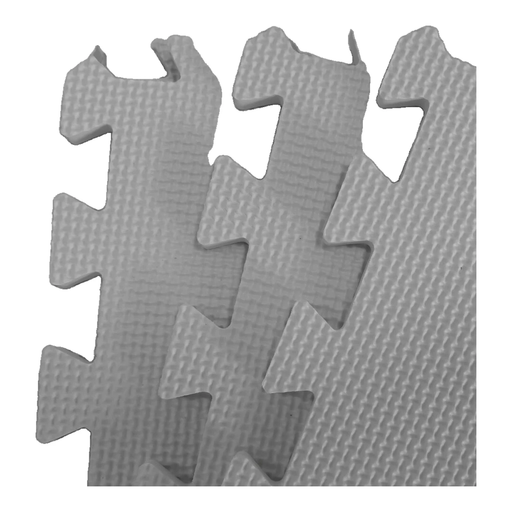
Why this product suits this profile: The set, with six tiles and ten edging pieces, is ideal for creating a clearly defined, smaller play area.
If they become dirty, the individual EVA tiles can be removed and cleaned separately or replaced.
Interlocking design, light grey colour and EVA foam listed as the main material.

Why this product suits this profile: The large, reversible polyester mat combines a road design with an animal-themed side, supporting a variety of role-play activities.
The dimensions of 100 × 190 cm are clearly stated, and the mat can be rolled up after play.
Two play surfaces, hard-wearing polyester and cleaning with a damp cloth, according to the product description.
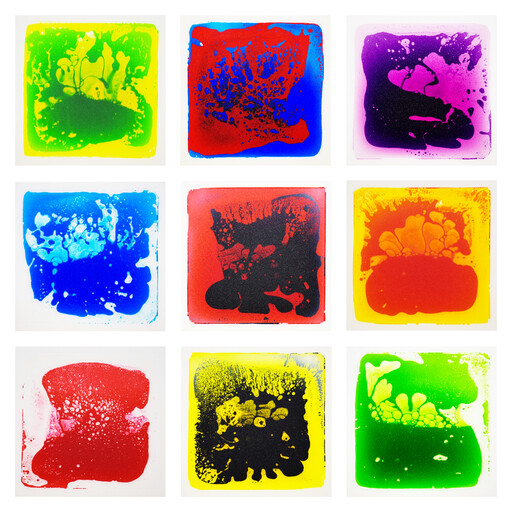
Why this product suits this profile: Nine 30 × 30 cm liquid tiles are suitable for areas where visual movement and active use are combined.
The non-slip PVC underside is explicitly specified, and the tiles are laid without permanent installation.
Nine tiles that can be combined, stated by the supplier as suitable for indoor use, with a wipe-clean surface.
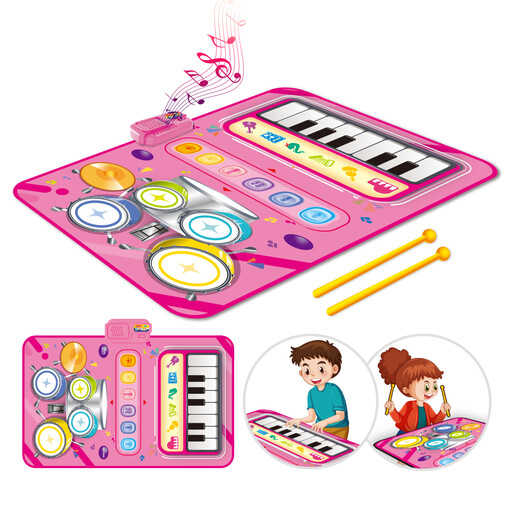
Why this product suits this profile: The musical play mat combines 13 piano keys with six percussion instruments and folds away for storage.
The volume can be adjusted. The stated age recommendation of three years and over and the need for supervision should be observed.
Foldable design, two play functions and battery operation; batteries are not included, according to the product information.
We have put together a complete, regularly updated list of products that fully meet these strict selection criteria and the safety regulations applicable in the EU.
Before first use, the children’s play mat should be rolled out or assembled on a clean, level surface. New products may have a temporary material odour; thorough airing in accordance with the manufacturer’s instructions is advisable. According to the product information, liquid tiles are intended for indoor use and should be protected from sharp objects.
The following points are also important for everyday use:
Six EVA tiles may be sufficient for a limited baby area. For role play involving several children, larger formats such as 80 × 150 cm or 100 × 190 cm are more practical. The key factors are the size of the room, the number of children and the toys being used.
That depends on the specific product and its stated age recommendation. EVA foam is often used as a material for baby play mats, but warnings, edging pieces and any possible small parts must still be taken into account. The mat should lie flat and be checked regularly for damage.
Its service life depends on the material, frequency of use, flooring and care. A textile mat may be damaged by sharp toy edges or frequent pulling. With EVA tiles, an individual damaged piece is easier to replace, provided suitable spare parts are available. Regular visual checks are therefore more important than a generalised durability claim.