
Lieferung heute & morgen

Qualitätsgarantie

Willkommens-Angebote freischalten: KOSTENLOSE Lieferung | Bis zu 80 % RABATT | Kostenlose 30-Tage-JoyPlus-Testphase
App herunterladen
A children's puzzle should suit the child's age, patience and interests. However, eye-catching designs or a high number of pieces do not automatically make for a good buying decision. Before making a purchase, parents, grandparents and other relatives should check a few common weak points.
1. Equating the number of pieces with the difficulty level
A 200-piece puzzle will not be equally challenging for every eight-year-old. A detailed design with similar colours can be more difficult than a clearly structured picture with the same number of pieces. The design structure, piece size and available aids, such as a poster or frame, also matter.
2. Failing to compare the recommended age with the child's development
“From 4 years” is a guideline and does not replace an assessment of the child's individual abilities. A child who is just starting out with puzzles may already find 40 pieces sufficiently challenging. For children with more experience, a children's puzzle from age 4 with 48 pieces or several designs may be more suitable.
3. Overlooking practical details in the advertising
If there is no information about the material, dimensions or storage, the puzzle may prove impractical in everyday use. Loose pieces are easily lost if there is no suitable box. For children under three, the safety information is particularly important too: small parts can present a choking hazard.
The following general guide may help you choose a children's puzzle:
The number of pieces alone says little about the actual challenge. A children's puzzle with large areas of colour is usually solved differently from a design containing many similar shapes.
A children's frame puzzle provides a firm boundary and often has printed outlines. This stops the design from shifting while it is being assembled. Especially with a 15-piece children's puzzle, this aid can make getting started more manageable.
For sets with several designs, a sturdy box, metal case or separate bags is practical. You should also consider the finished size before buying. A puzzle measuring 32.5 × 24.5 cm requires less space than a large 70 × 50 cm format.
Cardboard pieces should be sturdy enough not to crease easily when assembled repeatedly. Some Schmidt Spiele puzzles specify a linen texture, a matt, light-reducing surface and precisely cut pieces. These are factual product details and should be checked against the relevant product page.
The following points remain important:
A children's learning puzzle can incorporate shapes, colours, matching and careful observation in a playful way. However, no medical or therapeutic effects should be inferred from this.
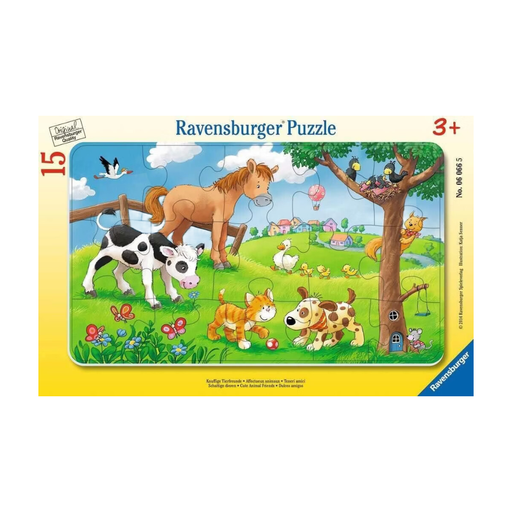
Why this product suits this profile: The 15-piece animal design is aimed at children from age 3 and offers an easy introduction to puzzling. The integrated frame with outline lines makes it easier to match the pieces.
The clearly stated number of pieces and visible outlines prevent children from becoming overwhelmed by an overly complex design.
15 pieces, animal design, frame and mat; according to the product description, made from sturdy cardboard.
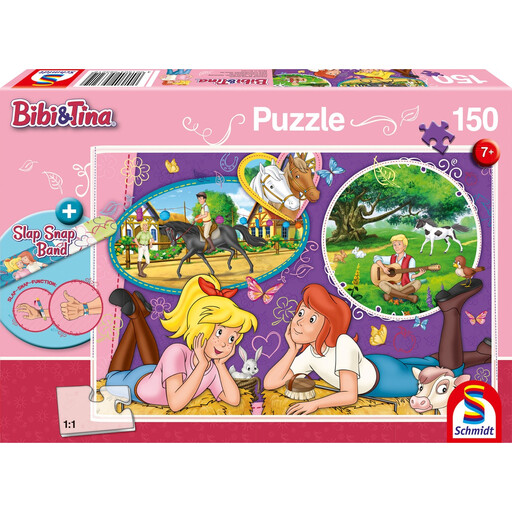
Why this product suits this profile: For children from age 7, this puzzle combines a familiar horse-and-friendship design with 150 precisely cut pieces. A poster with cut lines provides additional guidance.
The poster lowers the barrier to getting started without removing the challenge of the higher piece count and more demanding design.
150 pieces, matt surface with linen texture and poster; suitable for children from age 7.
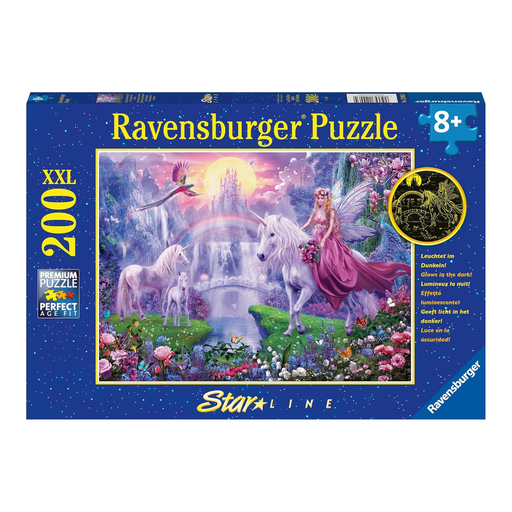
Why this product suits this profile: Children from age 8 get a 200-piece design with a glow-in-the-dark effect. The completed puzzle measures 33 × 21 cm and can be used as a decorative picture once assembled.
The recommended age, number of pieces and finished size are clearly stated. The glow-in-the-dark effect is an additional feature, not the only reason to choose it.
200 XXL pieces, design with glow-in-the-dark effect, finished size of 33 × 21 cm and no batteries required.
We have put together a complete, regularly updated list of products that fully meet these strict selection criteria and the safety regulations applicable in the EU.
The theme can influence whether a child wants to carry on puzzling voluntarily. Animal lovers may enjoy zoo, farmyard or pet designs. Dinosaurs, vehicles and space are suitable for children with a strong interest in factual subjects. A Disney children's puzzle featuring Anna and Elsa, Lilo and Stitch or other characters can make an appealing children's puzzle gift, but it should still be chosen according to age and number of pieces.
For younger children, clear outlines and a small number of picture elements are helpful. Older children may enjoy more detailed scenes, a 200-piece children's puzzle or a puzzle based around riddles. If a children's puzzle includes a story or an additional task, check whether an adult can help with reading and solving it.
This depends on the child's age and previous experience. For beginners from age 3, 15 pieces can be a useful guide. From age 4, 24 to 48 pieces may be suitable. Children aged 7 or 8 and over may be able to manage 150 to 200 pieces, depending on their experience.
A frame with outline lines gives the design a firm boundary and makes it easier to find the right position. This makes a children's frame puzzle particularly suitable for beginners. For older children, a puzzle without a frame may require greater independence and more sorting.
The pieces should be stored somewhere dry and clean, preferably in the original packaging. If there are several designs, it is advisable to keep the pieces separate. Before buying a children's puzzle as a gift, you should also check the packaging size, number of pieces and safety information.