
Lieferung heute & morgen

Qualitätsgarantie

Willkommens-Angebote freischalten: KOSTENLOSE Lieferung | Bis zu 80 % RABATT | Kostenlose 30-Tage-JoyPlus-Testphase
App herunterladen
A children’s puzzle should suit the child’s age, fine motor skills and interests. However, product descriptions do not always make the right choice immediately obvious. Large pictures of the design, for example, can disguise the fact that the pieces are very small. Terms such as “XXL”, “premium” or “educational toy” also reveal little on their own about how practical a puzzle is for everyday use.
A 15-piece puzzle is not automatically easier than a puzzle with 24 pieces. The size of the pieces, the shape of the design and whether a guide is included are also important. A colourful picture with clear outlines may be easier for a child than a design featuring many similar areas of colour.
For young children aged 2 or 3, large, easy-to-grip pieces and a frame are particularly helpful. For older children, a 200-piece puzzle may be more challenging, even if a poster guide makes getting started easier.
The manufacturer’s age recommendation is an important safety and guidance point, but it does not replace an individual assessment. A child with little puzzle experience may still need support with a design suitable for their age. Conversely, an experienced child may quickly become bored with a simple framed puzzle.
A children’s puzzle for ages 3 and up should therefore be selected not only according to age, but also according to previous playing experience. For a children’s puzzle for ages 4 and up, 24 to 40 pieces are often suitable. From the age of 8, 200 pieces or more may be appropriate.
A glow-in-the-dark puzzle, an XXL puzzle or a design featuring popular characters can make a puzzle more appealing. However, the feature should suit everyday use. With a glow-in-the-dark puzzle, check whether the lighting works without batteries and whether the child can still see the design clearly after completing it. With a framed puzzle, the base should be stable enough to prevent the pieces from sliding around during play.
The following stages can serve as a rough guide:
The descriptions 15-piece puzzle, 24-piece puzzle, 40-piece puzzle, 200-piece puzzle and 368-piece puzzle should always be considered together with the age recommendation and dimensions.
A framed puzzle includes a sturdy base with pre-printed outlines. This makes it easier to match the pieces and is particularly suitable for beginners. A traditional puzzle without a frame, on the other hand, requires a clear working surface and more guidance from the picture of the design.
An additional poster guide can be useful with a more complex puzzle for children. The Schmidt Spiele puzzle with 200 pieces includes a poster with cutting lines. According to the product description, the reverse side shows the design without lines and can be used as decoration.
For cardboard puzzles, clean cutting, sturdy pieces and an easy-to-read surface are practical criteria. Descriptions such as “linen-textured surface” or “matt, glare-free print” describe the finish, but they are no substitute for checking the product data.
Particularly important in Germany:
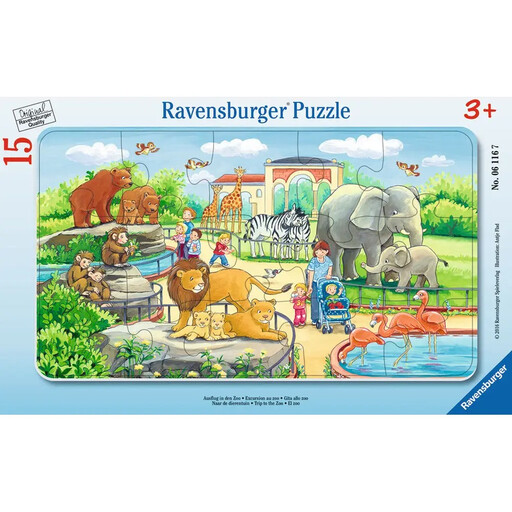
Why this product suits this profile: This framed puzzle is designed for children aged 3 and over and offers an accessible introduction with 15 pieces. The outline markings on the mat help children match the pieces.
The number of pieces and age recommendation are clearly stated. The framed base helps prevent the pieces from sliding around on the table.
15 pieces, zoo design, frame with outline markings and stated suitability from the age of 3.
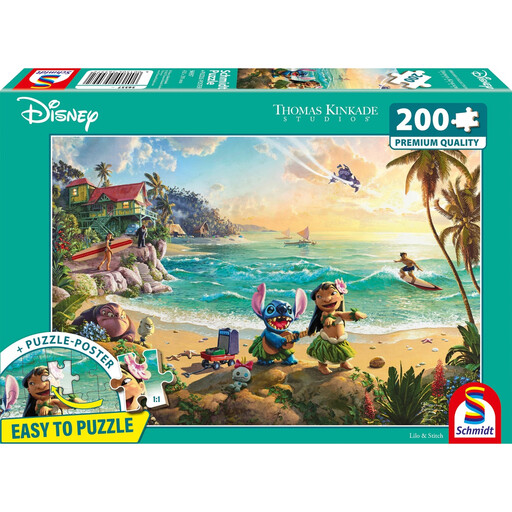
Why this product suits this profile: This Disney puzzle is intended for children aged 8 and over and combines a detailed Thomas-Kinkade-Studios design with a poster guide.
The guide is helpful when the detailed design initially seems difficult to take in. The product data also specifies the material, surface and completed dimensions.
200 precision-cut pieces, a matt linen-textured surface and completed dimensions of 27,5 × 19,1 cm.
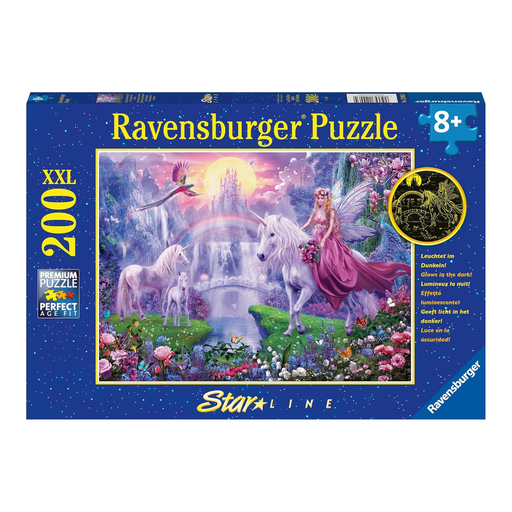
Why this product suits this profile: This unicorn puzzle is designed for children aged 8 and over and features an XXL format with a glow effect for a special design experience after assembly.
The glow effect is stated as a specific product feature and, according to the data, does not require batteries. The dimensions of 33 × 21 cm make planning the playing area easier.
200 XXL-format pieces, unicorn night design, glow effect and no batteries required.
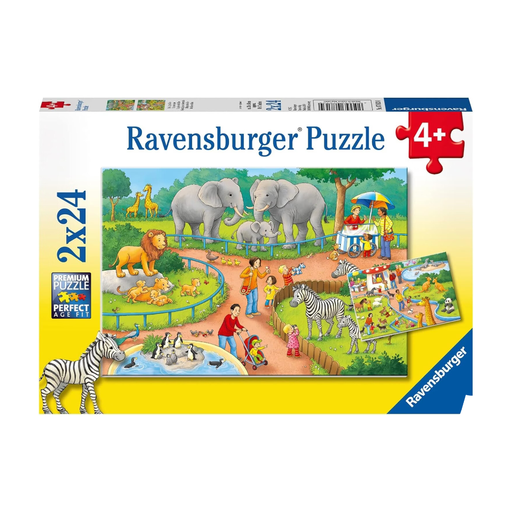
Why this product suits this profile: Two animal designs with 24 pieces each provide variety and, according to the product information, are suitable for children aged 4 and over. The set can also be used by siblings or together with adults.
The two separate designs prevent a single picture from quickly becoming repetitive. Mini posters provide a visual guide.
Two 24-piece puzzles, sturdy cardboard pieces, animal designs and one poster guide for each puzzle.
We have put together a complete, regularly updated list of products that fully meet these strict selection criteria and the safety regulations applicable in the EU.
The design often affects how long a child stays engaged. Clearly recognisable animals, vehicles or everyday scenes are suitable for younger children. A Disney puzzle, a Frozen puzzle featuring Anna and Elsa or a Paw Patrol puzzle may appeal to fans of particular characters. A unicorn puzzle and a Lilo & Stitch puzzle are more likely to appeal to children who prefer imaginative or film-related scenes.
Brands such as Ravensburger and Schmidt Spiele also offer different levels of difficulty. However, the brand alone is not a sufficient selection criterion. The number of pieces, format, frame, age recommendation and design details should all be considered together.
That depends on the specific model. Some “My First Puzzle” sets are suitable from the age of 2. Many framed puzzles with 12 or 15 pieces are designed for children aged 3 and over. Because of the potential presence of small parts, always follow the age recommendation given by the relevant manufacturer.
For a children’s puzzle for ages 4 and up, 24 to 40 pieces can be a useful guide. A frame, outline markings or a mini poster make getting started easier. For more advanced children, a set with two designs may also be a good choice.
Its lifespan depends on the thickness of the cardboard, cutting quality, storage and handling. Puzzles should be stored in a dry place, not bent and returned to their original packaging in full after play. If a puzzle is used frequently, check it regularly for damaged or loose pieces.