
Lieferung heute & morgen

Qualitätsgarantie

Willkommens-Angebote freischalten: KOSTENLOSE Lieferung | Bis zu 80 % RABATT | Kostenlose 30-Tage-JoyPlus-Testphase
App herunterladen
Children’s vehicles range from simple toy cars to remote-controlled off-road trucks and foldable scooters. There’s plenty of choice, but product images and marketing claims don’t always make it clear whether a model is right for your child’s age, the space you have available or how they’ll use it. Check a few technical details to avoid buying the wrong thing and find a children’s vehicle that will actually be used day to day.
A remote-controlled car for ages 6 and up can have lots of features that younger children may not yet be able to use safely. Stunts, quick changes of direction and small parts require attention and a suitable level of coordination. On the other hand, an especially basic toy car can quickly lose its appeal for older children.
The manufacturer’s age recommendation is just a starting point. Parents should also check:
An RC off-road truck with large tyres can be used on flat concrete, grass or firm ground. Sand, mud, snow and water place greater demands on the drive system and electronics, and make cleaning more important. Claims such as “waterproof” or “suitable for all terrains” should therefore be considered alongside the specific product details.
Key points include the drive system, tyre tread, ground clearance and care instructions. When comparing products, also check whether the battery is included and which charger is needed.
A foldable children’s scooter is easy to transport and takes up less space. But that alone tells you nothing about the handlebar height, braking system, maximum rider weight or suitability for different surfaces. LED lights and music can make toy vehicles more fun, but they’re no substitute for sturdy construction and clear safety instructions.
For children’s scooters, check the adjustable handlebar height, maximum rider weight and braking system. A model with 205-mm wheels may be designed for older children, teenagers or adults. Measurements in inches and pounds should be converted into practical values for the German market: 220 lb is around 100 kg.
For small toy cars, the recommended age range is particularly important. A transport truck with small die-cast cars may be designed for playing races together, but because of the potential for small parts, it shouldn’t be used by toddlers without supervision.
For RC models, the product description should distinguish between the vehicle battery, remote control batteries and charging cable. A built-in lithium battery is easy to recharge, but must be handled according to the manufacturer’s instructions. After charging, unplug the vehicle, and don’t open or modify the battery yourself.
Range and radio technology are also worth considering. A 2.4-GHz remote control is handy when several cars are being used at the same time, as it typically allows them to be controlled separately. However, this doesn’t guarantee interference-free use in every environment.
If you’re choosing a children’s vehicle for indoor and outdoor use, check which surfaces the manufacturer recommends. Carpets, wood, tiles, concrete and grass all present different challenges. For scooters, non-slip grips, a rear brake, a secure locking mechanism and regular checks of the wheels and screws are important.
When riding in public places, wearing a suitable helmet and following local traffic rules are essential for safe use. Don’t use RC stunt cars near stairs, glass, pets or other people’s feet.
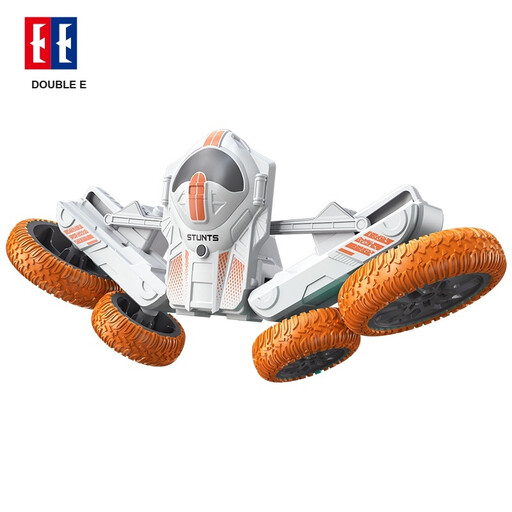
Why this product suits this profile: According to the product details, this model is suitable for children aged 6 and over. It combines remote control, driving on both sides, 360-degree spins, LED lights and music in a compact vehicle.
The age recommendation and rechargeable battery are clearly stated. Before buying, though, check that the stunt features are suitable for your child and the space available for play.
2.4-GHz remote control, driving on both sides, and built-in light and sound effects.
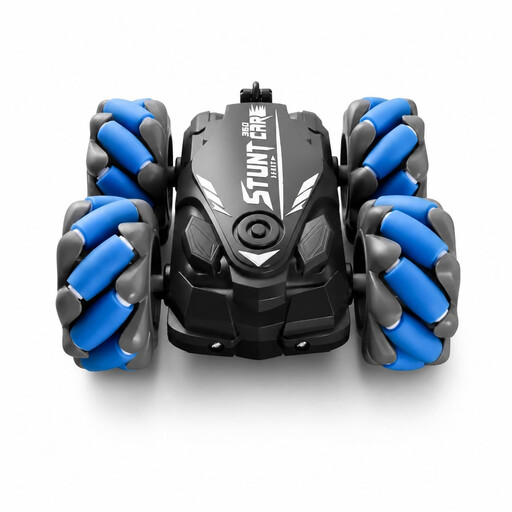
Why this product suits this profile: Designed for children aged 8 and over, this model offers three ways to control it: by remote control, with gesture controls or using both together. It’s aimed at children who want to try out different driving manoeuvres.
The description specifies the recommended age, dimensions of 134 × 130 × 62 mm, battery type and several operating modes. The stated supervision is needed because of small parts, rotating wheels and charging.
Four-wheel drive, sideways drifting, 360-degree spins and a 2.4-GHz signal.
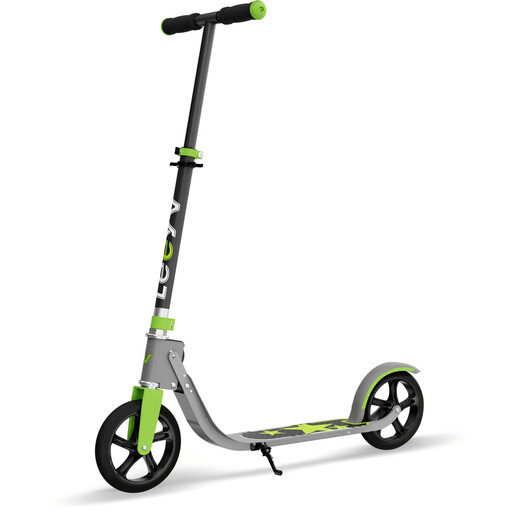
Why this product suits this profile: According to the product details, this foldable children’s scooter is designed for children aged 6 to 12, as well as adults. The adjustable-height handlebar and maximum weight limit of 220 lb make it suitable for longer-term use.
As well as the folding design, the handlebar adjustment, rear brake, non-slip grips and 205-mm wheels are all clearly specified.
Foldable frame, 2 × 205-mm polyurethane wheels and adjustable handlebar.
We’ve put together a complete, regularly updated list of products that meet these strict selection criteria and the safety regulations applicable in the EU.
For children aged around 3 and over, simple toy cars, push-along and transport vehicles, or straightforward race-track sets may be suitable. The key things to consider are the specific age recommendation, the size of individual parts and whether your child can use the vehicle safely. An RC stunt car or a fast scooter isn’t automatically suitable for this age group.
How long it lasts depends on the battery, charging habits, surface and care. After every trip, check the wheels, body and axles for damage. Only charge the battery with the cable provided, and don’t leave it plugged in for long periods. With an RC off-road truck, it’s also important to remove dirt and moisture after use, unless the manufacturer gives different care instructions.
Battery-powered toy cars incur the cost of replacement batteries. Rechargeable RC models use electricity and may eventually need a replacement battery. Children’s scooters don’t usually have running costs, although you may need to replace worn parts such as wheels, brake components or grips. Taking these points into account before buying will help you get a more realistic idea of the ongoing costs.