
Lieferung heute & morgen

Qualitätsgarantie

Willkommens-Angebote freischalten: KOSTENLOSE Lieferung | Bis zu 80 % RABATT | Kostenlose 30-Tage-JoyPlus-Testphase
App herunterladen
The right children’s vehicle should suit your child’s age, height and intended area of use. However, there are clear differences between children’s tricycles, electric vehicles for children, pedal go-karts and detailed toy vehicles. A low price or particularly realistic appearance says little about whether a model is genuinely suitable for everyday family life.
Typical buying mistakes arise from three avoidable pitfalls:
For children aged around 1 to 2 years, a model guided by an adult is often suitable. An adjustable push handle and safety belt can make it easier to maintain control. For a children’s vehicle from 3 years, independently powered models may also be suitable, depending on the child’s stage of development.
A children’s tricycle with a push bar can initially be guided by parents. Later, the child gradually takes over pedalling and steering. With so-called 4-in-1 or 5-in-1 models, check whether the conversion can genuinely be completed without complicated tools and whether the seat, pedals and push bar lock securely into place.
A pedal go-kart does not rely on a battery or charger. Look for:
A model with a load capacity of 30 kilograms is not automatically suitable for every child up to the stated maximum age. Height and seating position must also be right.
For an electric vehicle for children, the key factors are battery voltage, motor power, maximum speed, charging time and range. Range figures depend on weight, surface, temperature and driving style. A 12-volt vehicle should generally be assessed differently from a more powerful children’s motorbike with a 36-volt battery.
A remote control for a children’s vehicle can provide parents with additional control over electrically powered vehicles. However, it should not be regarded as a substitute for supervision. Before use, check the instruction manual, braking function, safety belt and approved surface.
With a vehicle driven independently, the child’s feet should be able to reach the pedals or ground securely. A seat that is too high makes stopping more difficult, while a seating position that is too low can put strain on the knees and affect control. With a children’s motorbike, seat height, handlebar width and weight specification are therefore more important than motor power alone.
Compare your child’s weight with the stated maximum load capacity. For vehicles with trailers, also check the weight they are permitted to tow. The Joybuy 12V Ride-on Tractor, for example, is specified as having 30 kilograms of load capacity, dimensions of 151 × 68 × 70 centimetres and a speed of 3 to 8 km/h. According to the product description, the model features a 2-point safety belt and a 2.4 GHz remote control.
PP wheels may be designed for grass, asphalt or sand, but braking distance and handling still vary depending on the surface. Wet areas, slopes and public road traffic are generally hazardous for toy and children’s vehicles. Also check:
For toy vehicles such as fire engine toys, rubbish truck toys, John Deere tractor toys or Bruder vehicles, the scale, small parts and range of functions are key considerations. A realistic model with a screw system and movable front loader is designed for a different type of use from a large ride-on vehicle.

Why this product suits the profile: The pedal go-kart does not require a battery and is specified for children aged 3 to 8 years, with a load capacity of up to 30 kg. The two-position adjustable seat makes it easier to adapt the go-kart to the child’s height.
Use does not depend on charging times or battery wear. The product specifications list forward and reverse gears as well as a limited steering-angle design.
Pedal-powered, with a metal frame, four wheels and low-wear wheels for hard surfaces.
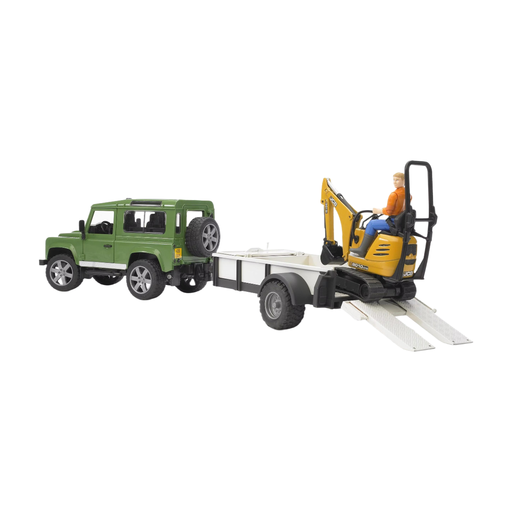
Why this product suits the profile: This 1:16 play set is aimed at children aged 3 and over who enjoy realistic construction-site scenarios. The doors, trailer flap and excavator chassis are movable.
This is a manually operated toy model with no battery or charging requirements. The small-parts age warning should be taken into account before buying.
Multi-part set with Land Rover Defender, trailer, micro excavator and figure; compatible with bworld figures.
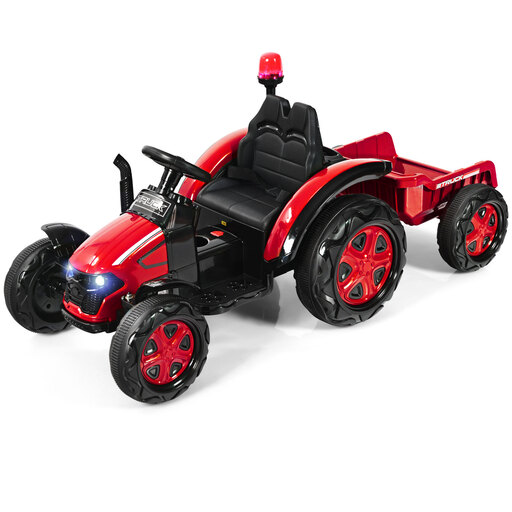
Why this product suits the profile: According to the specifications, this electric ride-on vehicle is designed for children aged 3 to 8 years. The trailer, safety belt and remote control make it suitable for families who want to use the vehicle in the garden or on private, level surfaces.
The product data states the speed, a charging time of 8 to 12 hours, a 12-volt battery and a load capacity of 30 kg. This makes it easier to assess the required space and plan how the vehicle will be used in advance.
Removable trailer, forward and reverse gears, foot pedal, 2-point belt and 2.4 GHz remote control.
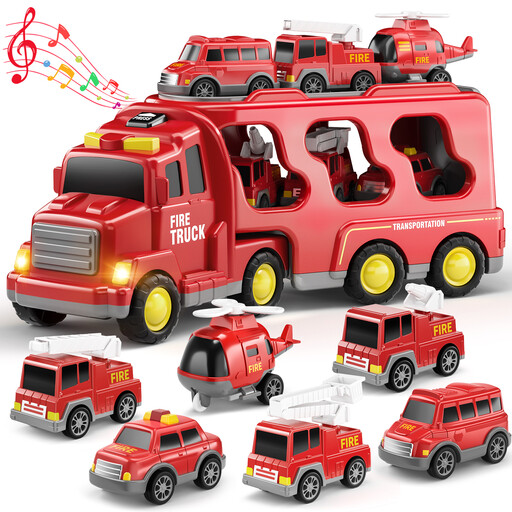
Why this product suits the profile: This 7-in-1 set is specified for children aged 3 and over. It includes a large transport vehicle and several smaller emergency vehicles for fire service role play.
According to the description, the set does not require driving batteries for a large ride-on vehicle. Before buying, parents should still check the listed small parts and dimensions.
Includes a transport vehicle, five smaller vehicles, light and sound functions, and movable components.
We have put together a complete, regularly updated list of products that fully meet these strict selection criteria and the safety regulations applicable in the EU.
That depends on the model. According to the manufacturer’s information, a children’s tricycle with a push bar may be suitable from around 1 year. Many pedal vehicles and toy vehicles are labelled as suitable from 3 years. Height, motor skills, weight and the warnings for the individual product are also important.
Running time depends on factors including battery capacity, driving speed, weight, surface and outdoor temperature. The stated charging time is not the same as the actual running time. For regular use, parents should also plan a dry place to store the vehicle and a suitable charging point.
Toy vehicles and electric ride-on models are generally not intended for use on public roads. Only use them on suitable private surfaces and under direct supervision. For children’s motorbikes with higher speeds, protective clothing, a securely enclosed area and the specific manufacturer’s instructions are particularly important.