
Lieferung heute & morgen

Qualitätsgarantie

Willkommens-Angebote freischalten: KOSTENLOSE Lieferung | Bis zu 80 % RABATT | Kostenlose 30-Tage-JoyPlus-Testphase
App herunterladen
A children’s toy excavator should not only look good in the sandpit, but also work reliably after many hours of play. Moving arms, buckets and seats in particular can often be weak points. A realistic appearance alone says little about everyday usability, safety or durability.
Parents and grandparents should therefore watch out for three common pitfalls before buying:
The manufacturer’s age recommendation is a useful starting point. For a sandpit toy for children aged 3 and over, children should be able to reach the handles safely and move the bucket without using excessive force. Models for younger children, such as the Bruder mobile excavator, are often more compact and can be operated without sitting on them.
With a ride-on excavator for children, the child’s body weight must also be taken into account. Check the following:
The age recommendation does not replace supervision. Particularly with moving arms, buckets and rotating seats, the play area should be free from sharp objects and trip hazards.
A metal excavator for children can offer a different feel and level of stability from a plastic model when used regularly. However, metal is not automatically maintenance-free: painted surfaces should be allowed to dry after playing in damp sand. Plastic models are often lighter and work well indoors and outdoors, provided the manufacturer states that they are suitable for both environments.
Look out for:
For toys sold in the European Union, the required safety markings and warnings should be shown on the product page or packaging. A CE marking indicates that the manufacturer has declared that the relevant EU requirements have been taken into account. However, it is not an independent quality seal.
An excavator with a moving bucket offers more opportunities for digging, role play and building sandcastles. However, when choosing a product, it is important to establish whether only the bucket moves, or whether the arm, upper structure and seat are also mobile.
A rotating upper structure can increase the play radius. At the same time, a children’s excavator vehicle of this type needs plenty of clear space, so that the child does not hit other children, garden furniture or parts of the sandpit while turning. Also measure the available space and compare it with the product dimensions.
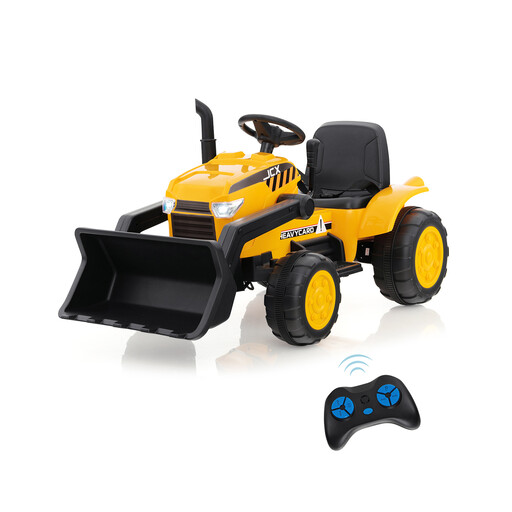
Why this product suits this profile: The stated age range of 3 to 8 years and the adjustable bucket offer a straightforward introduction to sandpit play.
The adjustable bucket is identified as a specific function, rather than being described only through a general construction-site appearance.
Adjustable excavator bucket; designed for children aged 3 to 8.
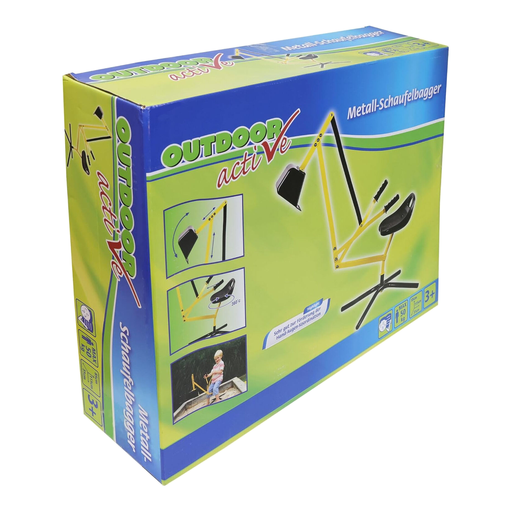
Why this product suits this profile: Anyone looking for a metal construction, a rotating seat and a ready-to-use design will find clearly stated product features for outdoor use here.
The material specification “metal” and the statement “no assembly required” make two important buying criteria easy to verify.
Metal construction; rotating seat with 360-degree movement; product dimensions of 57,61 × 45,21 × 14 cm.

Why this product suits this profile: According to the product information, this compact model is intended for children aged 24 months and over and can be used indoors and outdoors, for example in the sandpit.
The bucket, boom and upper structure are described as moving components. This makes it possible to understand the toy’s actual range of play before buying.
360-degree rotation of the upper structure; moving bucket; height-adjustable blade; plastic construction with a stated weight of 1,3 kg.
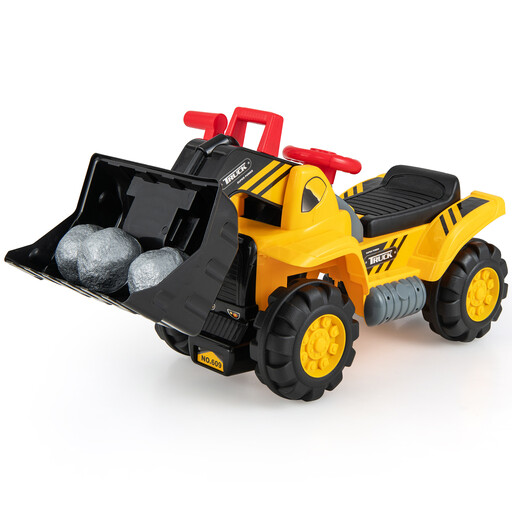
Why this product suits this profile: This ride-on model combines an adjustable bucket with sound effects, making it suitable for children who enjoy role play with additional features.
The product name specifies both the adjustable bucket and the sound effects. Buyers can compare these features directly with their expectations.
Ride-on design; adjustable bucket; integrated sound effects according to the product name.
We have put together a complete, regularly updated list of products that fully meet these strict selection criteria and the safety regulations applicable in the EU.
Before using the excavator for the first time, check it for loose screws, sharp edges and unusual movement in the joints. For a ride-on model, a level, sufficiently large area of sand is advisable. Depending on the design, hard surfaces may place greater strain on the toy.
After playing, it is a good idea to remove sand from the joints and wheels. Metal parts should be allowed to dry when exposed to moisture; electronic models should not be left permanently in the rain or wet sand. If batteries are required, parents should check the information about the battery type, battery compartment cover and range of the sound or driving functions.
This depends on the individual model. According to the product information, the Bruder 03413 is intended for children aged 24 months and over. Other ride-on excavators in this selection are aimed at children aged 3 and over. In addition to the stated age recommendation, the child’s height, reach and ability to operate the toy in a controlled manner are also important.
Many models are designed for outdoor use or the sandpit. However, you should check the product description, dimensions and material specifications before buying. A rotating seat also requires sufficient space to move. The toy should be used under supervision, particularly by younger children.
Its service life depends on the material, level of use, storage and care. A metal model may be an attractive option for regular outdoor play, while a plastic excavator is easier to transport because of its lower weight. Sand, moisture and improper use can place additional strain on joints and surfaces, regardless of the material.