
Lieferung heute & morgen

Qualitätsgarantie

Willkommens-Angebote freischalten: KOSTENLOSE Lieferung | Bis zu 80 % RABATT | Kostenlose 30-Tage-JoyPlus-Testphase
App herunterladen
Choosing a child's bed can quickly become overwhelming. The market offers a wealth of models that promise safety, durability, and appealing design. But not every bed lives up to its advertising. As your Joybuy Product Recommendation Officer, I'll help you identify the essential criteria and avoid common pitfalls, so you can make an informed decision for your child.
Many parents invest in a supposedly practical model, only to find out after a short time that it can't handle the demands of daily life. Three common problems lead to disappointment and unnecessary follow-up costs:
To avoid a bad purchase, you should focus your attention on three crucial aspects. These form the foundation for a safe, durable, and practical child's bed.
Your child's safety is non-negotiable. Therefore, pay close attention to compliance with relevant European safety standards. Two are of particular importance here:
A bed that complies with these standards provides a certified basis for safe sleep.
The choice of material affects the bed's stability, longevity, and ease of care. The most common options are:
Regardless of the material, rounded edges and corners are an important feature to minimise the risk of injury.
A good child's bed adapts to your child's developmental stages. The following functions prove to be particularly useful in everyday life:
Based on the criteria mentioned, we have identified some models that are suitable for different requirements and life stages.
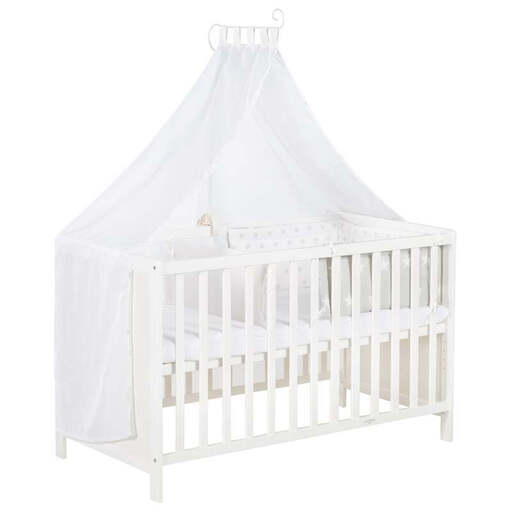
Why this model is a great fit: Ideal for expectant parents looking for a solution for the first few years. It serves as a bedside sleeper, cot, and later as a toddler bed. The included accessories make it a practical complete cot set.
This bed is designed from the outset as a multifunctional system. All necessary parts for the different stages of use are well-thought-out, and the conversion options are an integral part of the design, not an afterthought.
The 6-level height adjustment allows for a perfect fit with the parents' bed. According to the manufacturer, the construction is developed in line with the EN 716–1:2017 + AC:2019 standard.
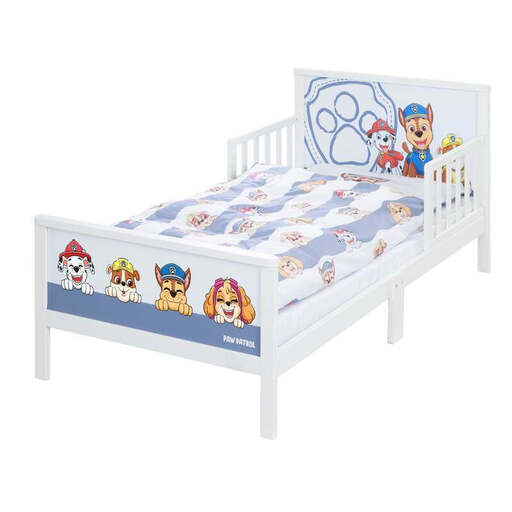
Why this model is a great fit: Perfect for toddlers growing out of their cot. The low entry height, based on the Montessori principle, and the side guard rail promote independence and provide security.
This bed directly solves the problem of missing functionality: the guard rail is already integrated, so no additional parts need to be purchased. The child-friendly design eases the emotional transition from a baby cot to a child's bed.
It is delivered as a complete package with a slatted frame and matching bedding. According to the manufacturer roba, the construction complies with the current safety standard EN 716-1/-2:2008 + A1:2013.

Why this model is a great fit: This functional bed in a 90x200 cm format is a smart solution for smaller children's rooms. It combines sleeping space, a work area, and storage, creating a tidy and functional environment for school-age children.
Instead of buying multiple separate pieces of furniture, this bed offers an integrated solution. The two large drawers and additional storage space under the bed help maintain order and make optimal use of space from the start.
The construction of solid pine wood and MDF promises stability. The integrated desk provides a dedicated spot for homework or creative activities.
We have compiled a complete, up-to-date list of products that fully meet these strict selection criteria and German safety regulations.
Switching to a bed without bars generally makes sense when your child starts to climb out of the cot on their own. This usually happens between the ages of two and three and poses a safety risk. A low toddler bed, ideally a child's bed with a guard rail, is a good choice then to prevent falls and promote independence.
Before buying, check whether all the parts needed for conversion are included or if there will be additional costs. Read the product description carefully to ensure that the conversion is straightforward and that the converted bed has a stable and secure construction. A typical convertible cot measures 70x140 cm and accompanies your child from a baby cot to preschool age.
For babies and toddlers, the most common mattress sizes are 60x120 cm or 70x140 cm. These fit most cots and convertible beds. For school-age children, the standard size is usually 90x200 cm, which is also common for youth beds. For safety reasons, always use the exact mattress size recommended by the bed manufacturer to avoid gaps between the mattress and the bed frame.