
Lieferung heute & morgen

Qualitätsgarantie

Willkommens-Angebote freischalten: KOSTENLOSE Lieferung | Bis zu 80 % RABATT | Kostenlose 30-Tage-JoyPlus-Testphase
App herunterladen
A Chinese chef's knife, often called a Chinese cleaver, is an impressively versatile tool in the kitchen. Its wide, rectangular blade isn't just for slicing and dicing; it's also perfect for crushing garlic or scooping and transferring chopped ingredients. But the market can be overwhelming, and many buyers fall into common traps that lead to frustration and poor investments. As your Joybuy Product Recommendation Officer, I'm here to help you cut through the noise and find a knife that truly meets your needs.
Before we dive into the key features, let's look at the typical pitfalls that often lead to a bad purchase.
To avoid these mistakes, focus on the following three objective parameters. They will help you identify a suitable professional chef's knife.
This is the most important distinction. Before you buy, clarify what you will primarily use the knife for.
The quality of the steel determines how sharp the blade can get and how long it stays sharp. Look for specific details:
The tang is the extension of the blade that reaches into the handle. A full-tang construction means the steel runs through the entire handle. This is a clear sign of quality that provides superior stability, durability, and a well-balanced feel—essential if you want to buy a Chinese cleaver that sits securely in your hand.
Based on the criteria above, we have selected a few models from our collection that suit different user profiles.
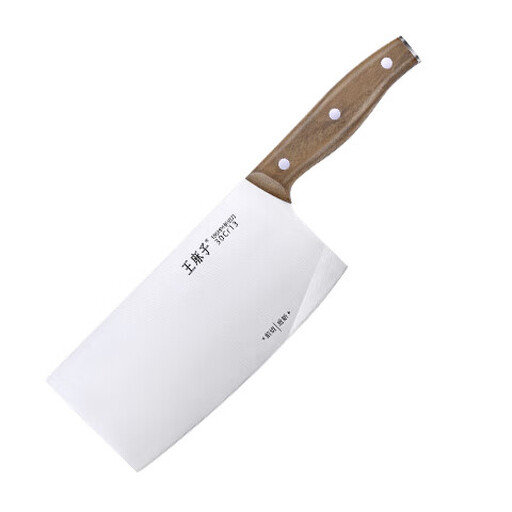
Why This Fits Their Persona: Ideal for home cooks who want to learn the technique of a Chinese chef's knife without making a major investment. A solid all-rounder for vegetables and boneless meat.
The knife is labelled a "Chopping Knife" but is, by design, more of a versatile slicer. It avoids vague claims by specifying its 400-series stainless steel and walnut wood handle.
Excellent value for money. The traditional wood handle offers a comfortable feel and a classic look.
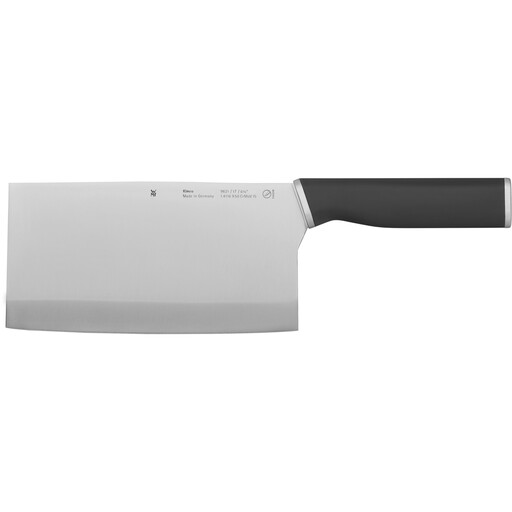
Why This Fits Their Persona: For cooks who prepare fresh meals daily and want a reliable, high-performance tool from an established brand. Its modern design fits well in Western kitchens.
WMF provides concrete performance specs: The blade, made of hardened special blade steel with "Performance Cut" technology and a hardness of 55-58 HRC, avoids vague material promises. The ergonomic design addresses balance.
Proven long-lasting sharpness through WMF technology. The ergonomic synthetic handle is low-maintenance and provides a secure grip.

Why This Fits Their Persona: For anyone who wants to buy a true kitchen cleaver for regularly breaking down bones or processing large, hard vegetables like squash. A pure workhorse built for power and efficiency.
This knife is unmistakably positioned as a "Chopping Knife" for heavy tasks. The full-tang construction provides the necessary stability, sidestepping the "one-knife-for-all" myth and preventing material failure.
High durability and weight for maximum chopping power. The resilient steel is designed for heavy-duty use.
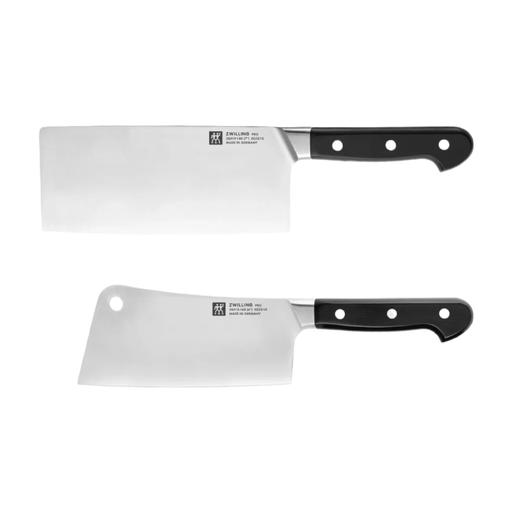
Why This Fits Their Persona: Perfect for discerning cooks who want to equip their kitchen in one go for all Chinese and general culinary tasks. It offers a specialised solution for every job.
This set perfectly solves the "slicer vs. chopper" dilemma by including both specialists: a Chinese chef's knife (slicer) and a cleaver (chopper). The material specifications (FRIODUR, SIGMAFORGE) are precise and represent the highest quality.
A complete solution from a premium manufacturer. The ice-hardened blades offer exceptional durability and corrosion resistance.
We have compiled a complete, up-to-date list of products that fully meet these strict selection criteria and rigorous quality standards.
Due to the wide blade, using a whetstone is the recommended method. A honing steel is less effective. Hold the blade at a constant angle of about 15-20 degrees to the stone and draw it across the entire length in a smooth motion. Thinner slicers require a more acute angle than robust choppers.
In general, this is strongly discouraged. Harsh detergents, high temperatures, and contact with other dishes can damage the sharp edge, lead to surface rust, and attack handles, especially those made of wood or other natural materials. Clean your knife by hand with warm water and dry it thoroughly immediately.
Although they look similar, their primary functions are different. The typical Chinese chef's knife (Cai Dao), despite its size, is an agile, all-purpose knife, similar to a Western chef's knife but with a wider blade. It is used for slicing, dicing, and chopping vegetables and meat. A Western-style cleaver is almost exclusively a heavy, thick tool designed to split bones with force.