
Lieferung heute & morgen

Qualitätsgarantie

Willkommens-Angebote freischalten: KOSTENLOSE Lieferung | Bis zu 80 % RABATT | Kostenlose 30-Tage-JoyPlus-Testphase
App herunterladen
A Chinese chef's knife, also known as a Cai Dao, is a remarkably versatile tool in the kitchen. Its wide, rectangular blade is perfect not only for slicing and chopping vegetables, herbs, and boneless meat, but also for crushing garlic and scooping ingredients from the cutting board to the pan. However, the market is flooded with models whose differences are barely noticeable at first glance. This often leads to purchasing mistakes that only become apparent during use.
Before you make a decision, you should be aware of the most common pitfalls that lead to frustration and unnecessary expense:
To find a suitable and durable Chinese chef's knife, you should focus on objective, technical parameters rather than marketing promises.
The steel used is crucial for sharpness, edge retention, and maintenance effort. Most Chinese chef's knives are made of stainless steel (e.g., 7Cr17MoV, 40Cr13, or the special blade steel used by WMF and Zwilling). These steels offer a good compromise between sharpness, durability, and corrosion resistance.
An important indicator of quality is the steel's hardness, measured in Rockwell (HRC).
A forged chef's knife made from a single piece of steel (like the models from Zwilling or Victorinox) often provides greater stability and better balance than stamped blades.
The classic Chinese cleaver is not a tool for heavy-duty work, but rather a precise knife for chopping vegetables. There are two main types:
A weight between 300 and 500 grams is considered comfortable and easy to control by most users. Models that are significantly heavier are usually designed as a kitchen cleaver for bones.
A full tang, where the steel of the blade runs through the entire handle, is a clear sign of quality. It ensures excellent balance and durability, as the blade and handle form a solid unit.
There are several options for handle materials:
Here are some recommendations tailored to different needs and budgets, which take the aforementioned quality criteria into account.
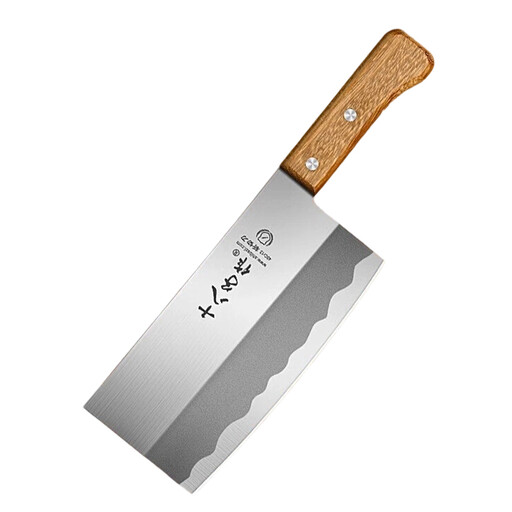
Why This Fits Their Persona: Ideal for anyone who wants to try out a Chinese chef's knife without a significant investment. It's a functional and straightforward tool for everyday cutting tasks in the kitchen.
This knife is clearly positioned as an all-purpose household chef's knife, not a heavy-duty cleaver. Its value for money protects against overpriced purchases based on purely aesthetic features.
Easy-to-maintain stainless steel blade. Lightweight for easy handling.
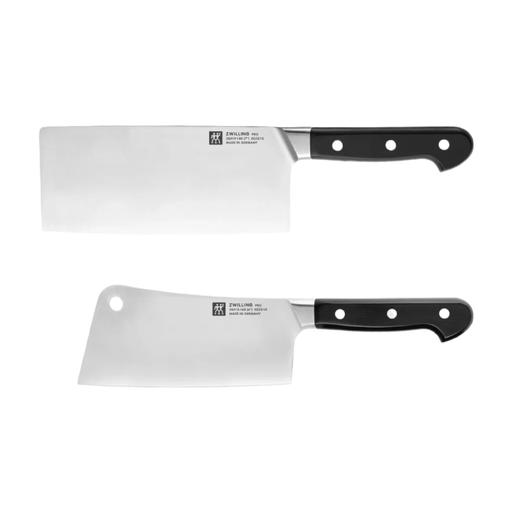
Why This Fits Their Persona: For cooks who value the highest quality, durability, and precision engineering. This set from Zwilling offers two specialized tools for demanding tasks in the home or professional kitchen.
This set directly addresses the main pitfall by including a Chinese chef's knife for vegetables and a separate, robust Zwilling cleaver for bones. The quality is verifiable through the brand and the materials used (FRIODUR blade, SIGMAFORGE).
Blades forged from a single piece of steel for excellent balance and stability. Ice-hardened special formula steel for exceptional durability and corrosion resistance.

Why This Fits Their Persona: For home cooks seeking an authentic cooking experience with a traditionally designed, forged knife. It's a robust all-purpose knife, excellent for preparing large quantities of vegetables and meat.
This knife is designed as a "chopping knife" for vegetables and meat, not a bone cleaver. The forged blade offers real structural advantages, not just superficial aesthetics. The full tang construction ensures good balance.
Forged blade made of wear-resistant steel for good edge retention. Ergonomic Shenmu wood handle for a secure grip.
We have compiled a complete, up-to-date list of products that fully meet these strict selection criteria and relevant safety standards.
1. How do you properly sharpen a Chinese chef's knife? Most Chinese chef's knives have a very fine edge and a thin blade. It's best to use a whetstone for sharpening. Maintain a shallow angle of about 15–20 degrees to the stone's surface and draw the blade evenly across the stone. Using a honing steel or a pull-through sharpener is not recommended, as they can damage the fine cutting edge.
2. Is a Chinese chef's knife suitable for beginners? Yes, after a brief adjustment period. The wide blade offers good protection for your knuckles and can be conveniently used to scoop and transport chopped ingredients. For starters, a lighter model is recommended to get used to the specific cutting technique (usually a pushing or chopping motion from above).
3. Can you chop bones with a Chinese chef's knife? Generally, no. Most models sold as "Chinese chef's knives" are designed for vegetables, herbs, and boneless meat. Their blades are too thin and would be damaged by contact with bones. To break down bones, you need a dedicated cleaver (also called a bone cleaver or butcher's axe), which has a much thicker, heavier, and more robust blade. Pay close attention to the manufacturer's product description.