
Lieferung heute & morgen

Qualitätsgarantie

Willkommens-Angebote freischalten: KOSTENLOSE Lieferung | Bis zu 80 % RABATT | Kostenlose 30-Tage-JoyPlus-Testphase
App herunterladen
A Chinese chef's knife, often called a Chinese cleaver, is a remarkably versatile tool in the kitchen. Its wide, rectangular blade is not only perfect for slicing vegetables and meat but also for mincing herbs, crushing garlic, and even transferring ingredients into the pan. However, several pitfalls await the uninformed buyer, quickly turning a useful helper into a poor investment. Many shoppers choose the wrong type of knife or overlook critical material weaknesses.
This guide will help you separate the wheat from the chaff. We'll highlight the most common mistakes and show you which objective criteria truly matter, so you can find a suitable and durable Chinese chef's knife for your kitchen.
Before we dive into the details, let's clear up the two biggest misconceptions that often lead to disappointment and unnecessary expense.
To avoid the mistakes mentioned above, you should carefully examine three technical features. These define the function, durability, and safety of your knife.
The most important distinction is the intended use, which is determined by the blade geometry.
For most home cooks looking to prepare authentic Asian dishes, a high-quality Slicer is the right choice.
The quality of the steel determines how long your knife stays sharp and how resistant it is to rust.
A well-balanced knife sits securely in your hand and allows for fatigue-free work. The weight should be distributed so that the center of gravity is near the transition from blade to handle. The handle itself should be comfortable and non-slip, even with wet hands.
Here are some recommendations tailored to different needs and preferences.

Why This Fits Their Persona: A successful fusion of German brand quality and traditional Asian blade design. Ideal for anyone seeking a reliable and versatile entry-level slicing tool without compromising on hygiene and handling.
This knife is clearly designed as a slicer. The special blade steel used prevents rust and rapid dulling, while the seamlessly riveted handle avoids hygiene issues.
The wide blade surface (8 cm) makes it easy to scoop and transport chopped ingredients. The ergonomic handle ensures safe handling.

Why This Fits Their Persona: For chefs who already appreciate the precision of German knives and are looking for a professional tool for Asian cuisine. This German-made knife combines high-quality materials with thoughtful ergonomics.
According to Zwilling, the blade is forged from a single piece of steel and ice-hardened (FRIODUR), ensuring high edge retention and corrosion resistance. It is designed as a robust slicing knife that can handle demanding tasks.
The SIGMAFORGE technology ensures precise geometry and balance. The ergonomic synthetic handle with a three-rivet design offers control and comfort.
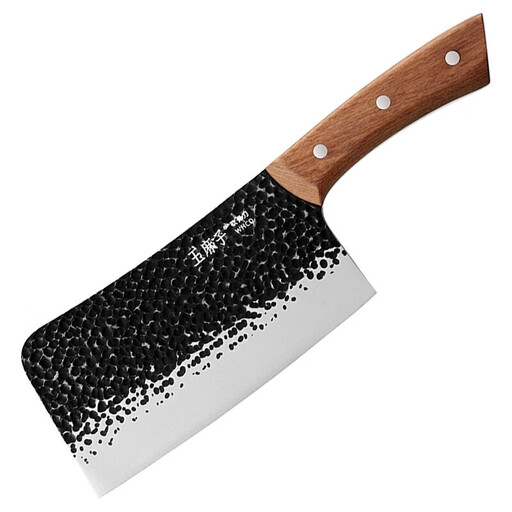
Why This Fits Their Persona: For home cooks seeking an authentic tool with traditional character. This knife from the renowned Chinese brand Wang Ma Zi is designed for pure functionality and precise cutting performance.
This knife is a classic slicer for vegetables and boneless meat. The focus is on an extremely sharp carbon steel edge that allows for high precision but requires careful maintenance.
The full tang construction ensures excellent balance and durability. It represents a piece of culinary heritage and is renowned for its sharpness.
A Chinese chef's knife is the traditional tool for making Knife-Cut Noodles (刀削面, Dāo Xiāo Miàn). This technique involves shaving strips of noodle directly from a block of dough into boiling water. The result is noodles with an irregular thickness and a wonderfully chewy, al dente texture.
If you want the authentic experience without the effort of making noodles from scratch, you can turn to high-quality ready-made products. Here are some options if you want to buy Asian noodles that are well-suited for this type of dish:
We have compiled a complete, up-to-date list of products that fully meet these strict selection criteria and German safety regulations.
It depends on the type. A standard chef's knife (slicer) with a thin blade is unsuitable and will be damaged. Only a designated Chinese chopper with a thick, heavy blade should be used for breaking down bones. Always check the product description for its intended use before purchasing.
Due to the straight blade, whetstones (sharpening stones) are the best tool. Maintain a consistent angle of about 15-20 degrees and draw the blade across the stone in sections. Honing steels are also suitable for daily use to maintain sharpness but cannot replace a true sharpening on a stone.
Yes, for many users in Germany, this is an excellent choice. These knives combine the proven ergonomics and high material quality of German manufacturers like WMF chef's knives or Zwilling chef's knives with the versatile blade shape of Chinese cuisine. They offer high durability, good hygiene properties, and reliable performance.