
Lieferung heute & morgen

Qualitätsgarantie

Willkommens-Angebote freischalten: KOSTENLOSE Lieferung | Bis zu 80 % RABATT | Kostenlose 30-Tage-JoyPlus-Testphase
App herunterladen
A Chinese chef's knife, also known as a Cai Dao, is an impressively versatile tool in the kitchen. Its wide, rectangular blade is outstanding for slicing, chopping, and even transferring ingredients from the cutting board to the pan. However, the market is flooded with models, and their differences in quality are nearly invisible to the untrained eye. Before you make a purchase, it's crucial to understand the most common pitfalls that can lead to disappointment and unnecessary expense.
As your Joybuy Product Recommendation Officer, I'll help you separate the wheat from the chaff and find a knife that truly meets your needs.
Many buyers focus on superficial features, overlooking crucial technical details. You should avoid these three mistakes:
To avoid a bad purchase, you should focus on objective and verifiable criteria. These three parameters are crucial for the performance and longevity of your knife.
The steel used determines how sharp a blade can get and how long it holds that sharpness. Hardness is measured in Rockwell (HRC).
Brands like Zwilling or WMF often use specially formulated German steels, manufactured in Solingen or to German standards, which offer a balanced compromise between hardness and toughness. A Zwilling chef's knife, for example, often uses an ice-hardened FRIODUR blade that improves corrosion resistance and edge retention.
Not all Chinese chef's knives are the same. There are two main types:
For everyday use in most home kitchens, the slicer is the far more practical and versatile choice.
A good knife should feel like an extension of your hand. Balance is key to this. A knife is well-balanced if its centre of gravity is where your index finger grips the transition from blade to handle. A full tang construction, where the blade's steel runs through the entire handle, is a sign of high quality, stability, and good balance. Also, look for a seamless transition between the handle material and the steel to prevent the build-up of bacteria.
Here are a few recommendations based on the objective criteria above, suitable for different user profiles.
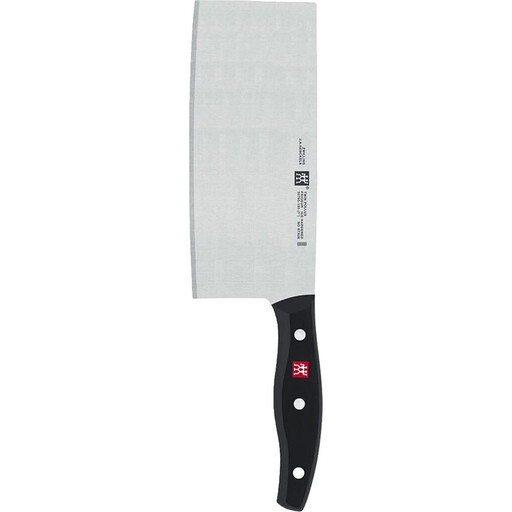
Why This Fits Their Persona: Ideal for home cooks who want to discover the versatility of a Chinese chef's knife without making a premium investment. It offers the proven ergonomics and brand quality of Zwilling at an accessible price point.
This knife is clearly declared as a slicer for vegetables and meat, thus avoiding the "cleaver" trap. The special formula steel used is a good compromise between sharpness and robustness for beginners.
The ice-hardened FRIODUR blade offers good edge retention and corrosion resistance in this price class. The ergonomic three-rivet design ensures secure and comfortable handling.
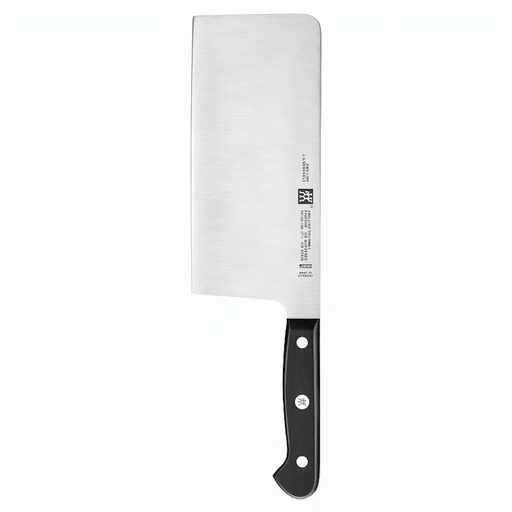
Why This Fits Their Persona: For cooks who value superior craftsmanship and are willing to invest in a durable tool. The "Made in Germany" seal represents the renowned precision of the Solingen knife tradition.
This knife avoids the trap of vague "stainless steel." It is made from a defined special formula stainless steel and is precision-ground, which guarantees verifiably high quality.
The Solingen-made FRIODUR blade offers exceptional corrosion resistance and edge retention. The lightweight construction and ergonomic handle allow for fatigue-free work.

Why This Fits Their Persona: Perfect for the modern home cook seeking a functional and aesthetically pleasing tool from an established German brand. The WMF chef's knife combines an Asian blade shape with German engineering.
The seamlessly riveted handle construction directly addresses the problem of hygiene and lack of stability. The product description makes it clear that this is a precision tool for slicing.
The special blade steel ensures long-lasting sharpness. The wide 8 cm blade surface is especially practical for easily transferring large quantities of chopped ingredients, e.g., for wok dishes.
A Chinese chef's knife is not just a tool, but a piece of culinary culture. It is inextricably linked with dishes like Dao Xiao Mian, the famous knife-cut noodles. In this traditional technique, dough is shaved directly from a block into boiling water using a special knife.
For anyone who wants to experience the authentic, satisfyingly chewy texture of these noodles without learning the demanding technique themselves, there is an excellent alternative: you can buy high-quality, pre-made Asian noodles. These products simulate the irregular shape and firm texture of the handmade originals.
A great option is the You Ni Yi Mian Hand-Made Sun-Dried Knife-Cut Noodles. They are sun-dried and not fried, making them a healthy choice. Their wide, thick shape with irregular edges provides an authentic, chewy texture.
We have compiled a complete, real-time list of products that fully satisfy these strict selection criteria and UK safety regulations.
1. Can I chop bones with a Chinese chef's knife? Generally, no. Most models available on the market are slicers with a thin, sharp blade designed for vegetables and boneless meat. For chopping bones, you need a special, heavier Chinese cleaver (chopper) with a thicker blade, such as the Zwilling Pro Cleaver.
2. How do I properly sharpen a Chinese chef's knife? Due to the typically straight blade, whetstones (sharpening stones) are most suitable. Maintain a consistent angle of about 15-20 degrees and draw the blade across the stone in sections. Honing steels are better for realigning the edge on softer steels. For high-quality knives from brands like Zwilling or WMF, you should follow the manufacturer's recommendations.
3. Is a more expensive knife from Zwilling or WMF worth the price? A higher price often correlates with better steel quality, more precise craftsmanship, and superior ergonomics. A WMF chef's knife or a Zwilling chef's knife from a higher-end series will typically offer superior edge retention and better balance. For ambitious home cooks who use their tools frequently, the investment can pay off through durability and greater enjoyment in the kitchen.