
Lieferung heute & morgen

Qualitätsgarantie

Willkommens-Angebote freischalten: KOSTENLOSE Lieferung | Bis zu 80 % RABATT | Kostenlose 30-Tage-JoyPlus-Testphase
App herunterladen
A Chinese chef's knife, often recognisable by its wide, rectangular blade, is a remarkably versatile tool in the kitchen. It can precisely slice vegetables, chop herbs, and effortlessly portion meat. However, the market is flooded with models whose differences are barely noticeable at first glance. This often leads to purchasing decisions that are later regretted. As your Joybuy Product Recommendation Officer, I'll help you understand the crucial features and avoid common purchasing traps.
Many buyers are guided by marketing promises instead of fundamental product characteristics. This often leads to disappointment. Pay special attention to these three points to avoid a bad purchase.
To find the right Asian chef's knife for your needs, you should focus on verifiable technical specifications rather than vague marketing claims.
The blade material is crucial for sharpness, durability, and maintenance.
The shape and weight of the blade determine its intended use. A wide chef's knife that is also thin is excellent for scooping chopped ingredients directly from the board into the pot or pan. The weight should suit your own strength and working style. A heavier knife can be advantageous for chopping tasks, while a lighter model reduces fatigue during long slicing sessions. Check the blade thickness to ensure you are getting the right tool for the job—a thin knife for vegetables and meat, or a thick one for chopping.
The handle should feel secure and comfortable in your hand, even when wet.
Here are some recommendations tailored to specific user profiles and the quality criteria mentioned above.
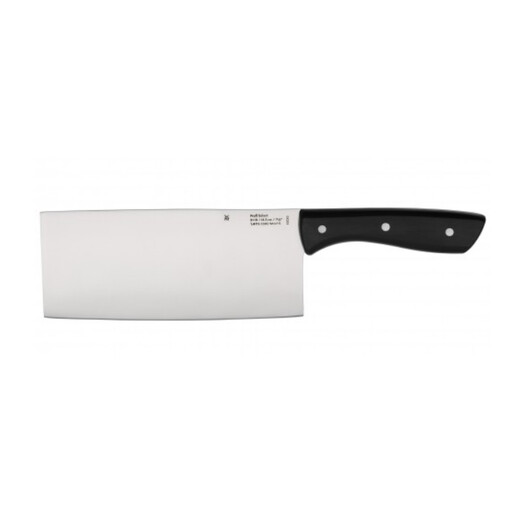
Why This Fits Their Persona: Ideal for home cooks looking for a reliable and versatile Chinese chef's knife from an established brand without spending a fortune. It is designed for daily slicing of vegetables and meat.
This knife is clearly positioned as a slicer. The seamlessly riveted handle meets high hygiene standards and offers good balance, which is often neglected in cheaper models.
Made from special stainless blade steel for good edge retention and corrosion resistance. The ergonomic safety handle and wide blade make it very practical for everyday use.
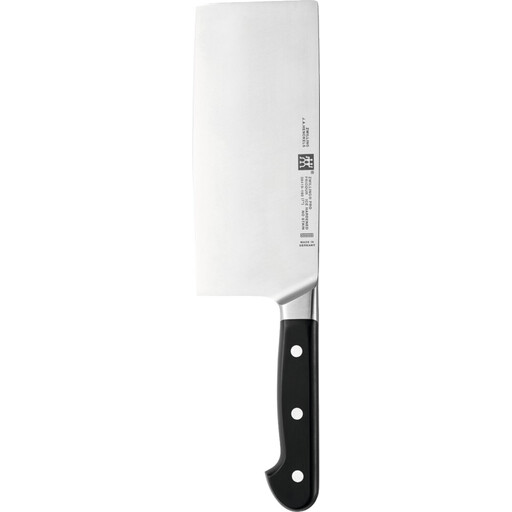
Why This Fits Their Persona: For ambitious home cooks and professionals who value the highest quality, durability, and precise "Made in Germany" craftsmanship. A robust tool for intensive use.
This knife uses precisely defined materials and processes. The ice-hardened FRIODUR blade steel offers demonstrably high edge retention and corrosion resistance. Being forged from a single piece ensures excellent balance.
SIGMAFORGE knife, forged from a single piece. Zwilling's special formula stainless steel is robust and durable. The ergonomic synthetic handle with a three-rivet design offers control and comfort.
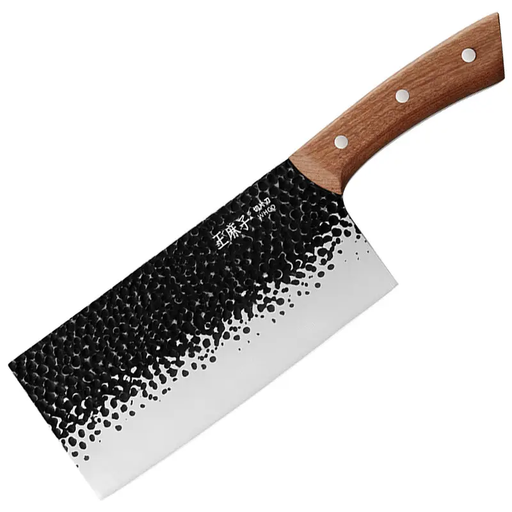
Why This Fits Their Persona: For cooks who need a true kitchen cleaver to break down bones and perform demanding chopping tasks. This knife is not an all-rounder, but a specialised tool for power and efficiency.
This is explicitly a "Chopping Knife," not a slicer. Its robust construction and heavy weight are designed for chopping through bone, thus avoiding the most common form of misuse and damage.
The full tang construction ensures maximum stability and balance. The wear-resistant steel is designed for durability under high stress. The ergonomic wooden handle provides a secure grip.
We've compiled a complete, up-to-date list of products that fully meet these strict selection criteria and rigorous safety standards.
1. What is the difference between a Chinese chef's knife and a cleaver? The main difference lies in the blade thickness and intended use. A Chinese chef's knife (slicer) has a thin blade (approx. 2-3 mm) for slicing vegetables and boneless meat. A cleaver (chopper) has a much thicker, heavier blade (5 mm+) that is stable enough to cut through bones.
2. How do you properly sharpen a Chinese chef's knife? Due to the mostly straight blade, whetstones (sharpening stones) are most suitable. Maintain a constant angle of about 15-20 degrees and draw the blade across the stone. For knives with a very high HRC value, a ceramic honing rod or a professional sharpening service may be advisable. Honing steels are more for realigning the edge rather than actual sharpening.
3. Can I put my Chinese chef's knife in the dishwasher? This is strongly discouraged. The aggressive detergents, high temperatures, and contact with other dishes can damage the blade, make it dull, and harm the handle (especially wooden ones). Always clean your knife by hand with warm water and dry it thoroughly immediately.