
Lieferung heute & morgen

Qualitätsgarantie

Willkommens-Angebote freischalten: KOSTENLOSE Lieferung | Bis zu 80 % RABATT | Kostenlose 30-Tage-JoyPlus-Testphase
App herunterladen
For many ambitious home chefs, a Chinese chef's knife is the ultimate tool for versatility in the kitchen. Its wide, rectangular blade can process vegetables, herbs, and meat with impressive efficiency. However, the vast selection and misleading product descriptions can make purchasing one difficult. Many knives that look identical at first glance have crucial differences that can mean the difference between joy and frustration in your kitchen prep.
Before you make a decision, it's important to understand the most common pitfalls that can lead to a bad purchase:
To ensure your new knife can handle the demands of your kitchen, you should closely examine three core features. These define the performance, durability, and handling of any Chinese chef's knife.
The chef's knife stainless steel used is the foundation of a sharp kitchen knife. Pay attention to precise steel specifications. Common steel types offer different properties:
The hardness level is measured in HRC (Rockwell C). For a versatile Chinese chef's knife, a value between 55 and 58 HRC is a good sweet spot. Harder blades (over 60 HRC) are extremely sharp but also more brittle and prone to chipping. Softer blades are more robust but need to be sharpened more frequently.
The shape and thickness of the blade determine its intended use. There are two main types:
A professional chef's knife is distinguished by its excellent balance. The crucial feature here is the full tang. This means the steel from the blade extends through the entire length of the handle. This not only provides maximum stability but also ensures an optimal balance that allows for controlled, fatigue-free work. Handles secured to the tang with three rivets are considered particularly durable and secure.
Based on these objective criteria, we have identified several models suitable for different user profiles and their specific needs.
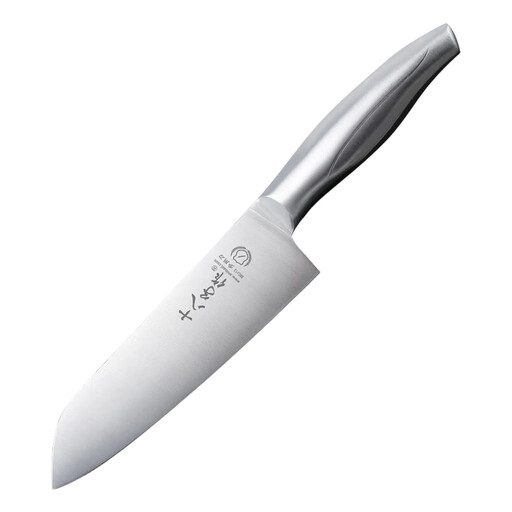
Why This Fits Their Persona: Ideal for daily use when a functional and straightforward tool is needed for slicing vegetables and meat. It focuses on the core function without costly extras.
This knife is clearly positioned as a versatile slicer. It doesn't create the false impression of being a heavy cleaver, thus meeting the expectations for a classic Chinese chef's knife for slicing tasks.
Focused on the basic slicing function; lightweight and easy to handle for quick kitchen tasks.
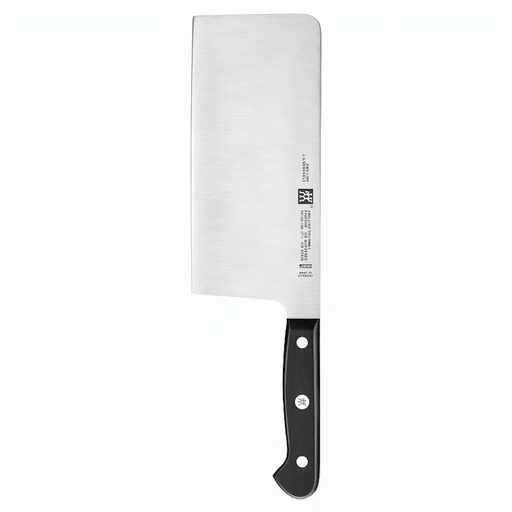
Why This Fits Their Persona: Perfect for users who value German engineering, durability, and precise cutting performance. An investment in a tool designed for years of intensive use.
Zwilling bypasses vague material claims by specifying its FRIODUR ice-hardened blade made from a special formula steel. The riveted, ergonomic handle ensures excellent balance, avoiding the poorly-balanced knife trap.
Exceptional corrosion resistance and edge retention due to ice-hardening; lightweight design and ergonomic handle for fatigue-free work.

Why This Fits Their Persona: For chefs who regularly process large cuts of meat or need a robust tool for chopping poultry bones and ribs. This knife is designed for power and stability.
This model clearly resolves the "slicer vs. chopper" confusion by being explicitly described as a "Chopping Knife" for heavy tasks, including bones. The full-tang construction delivers the necessary robustness that light slicers lack.
Engineered for high-impact use and chopping bones; full-tang construction for maximum stability and power transfer.
We have compiled a complete, up-to-date list of products that fully meet these strict selection criteria and German safety regulations.
1. Can I chop bones with a Chinese chef's knife? That depends on the type of knife. A thin, lightweight Chinese chef's knife (slicer) is intended exclusively for slicing vegetables and boneless meat. Attempting to chop bones with it will likely damage the blade. For chopping poultry or smaller bones, you need a model explicitly designated as a chopper or cleaver, which has a thicker, more stable blade.
2. How do I properly sharpen a Chinese chef's knife? Due to the wide and mostly straight blade, a whetstone is the best tool. Place the blade on the stone at a shallow angle (approx. 15–20 degrees) and draw it across the entire length in a smooth motion. Repeat this on both sides to achieve a symmetrical edge. A honing steel is less effective for this blade shape.
3. What is the difference between a Chinese chef's knife and a Santoku knife? Although both originate from Asian cuisine, they differ in shape and function. The Chinese chef's knife has a tall, rectangular blade and is used with a chopping and pushing cutting motion. The Santoku knife has a shorter, wider blade with a slightly curved down tip ("Sheep's Foot"). It is optimized for rocking and pulling cuts. A key advantage of the Chinese chef's knife is its wide blade surface, which acts as a scoop for transporting chopped ingredients.