
Lieferung heute & morgen

Qualitätsgarantie

Willkommens-Angebote freischalten: KOSTENLOSE Lieferung | Bis zu 80 % RABATT | Kostenlose 30-Tage-JoyPlus-Testphase
App herunterladen
A Chinese chef's knife, often called a Chinese cleaver or mistakenly referred to as a butcher's cleaver, is a remarkably versatile tool in the kitchen. Its wide blade is excellent for slicing vegetables, breaking down boneless meats, and even transferring ingredients from the cutting board to the pan.
However, the market is crowded and confusing. Many buyers choose the wrong model and are quickly disappointed. Before you make a decision, you should be aware of the two most common and costly pitfalls that await you during the selection process.
This guide will help you navigate these pitfalls and find a knife that meets your needs for both function and durability.
To make an informed decision, you should examine three core parameters. These features determine the sharpness, durability, and handling of your future knife.
The stainless steel used is the heart of any knife. Vague descriptions like "high-quality stainless steel" are not very informative. The crucial factors are the type of steel and its hardness, measured in Rockwell (HRC).
As mentioned, the blade shape is crucial for its intended use. For most home cooks looking for a versatile Asian-style chef's knife, a slicer type (thin blade) is the right choice. Look for a blade length between 18 and 21 cm (7-8 inches)—this is a good standard for most tasks. The weight should be balanced so that the knife feels comfortable in your hand without being too heavy. A weight between 300 and 450 grams (10-16 oz) is a common range here.
A well-constructed handle ensures safety and fatigue-free work.
Here are some recommendations tailored to different needs and budgets, all of which meet the quality criteria mentioned above.
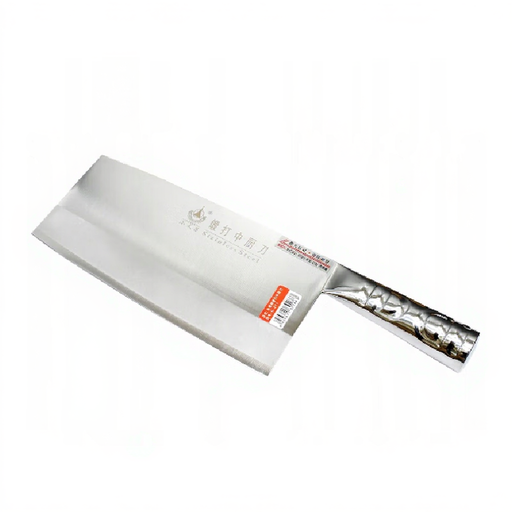
Why This Fits Their Persona: Ideal for anyone wanting to experience the form and function of a Chinese chef's knife without a large investment. It's a sturdy, all-purpose tool for basic slicing tasks with vegetables and boneless meat.
The one-piece metal handle provides a solid construction, avoiding the balance trap of a cheap, lightweight plastic handle. It is clearly positioned as a slicer and doesn't tempt users to chop bones.
The HRC 53 stainless steel blade is low-maintenance and easy to resharpen. Its robust all-metal construction is durable and hygienic.
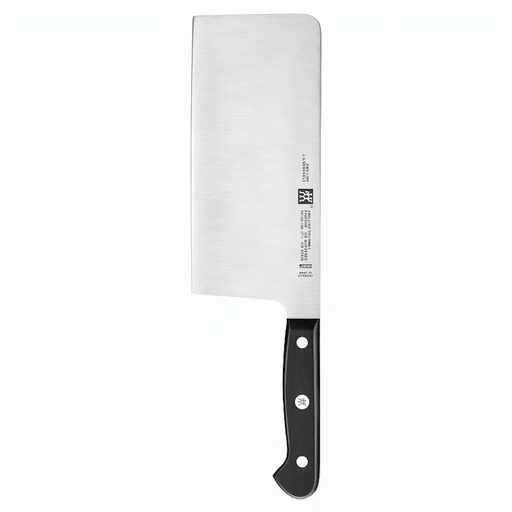
Why This Fits Their Persona: For home cooks who value brand quality, durability, and precise "Made in Germany" craftsmanship. This knife is an investment in a reliable kitchen tool that will last for years.
According to the manufacturer, Zwilling, the ice-hardened FRIODUR blade made from a special formula steel ensures exceptional edge retention and corrosion resistance. The ergonomic, triple-riveted handle guarantees excellent balance.
The V-Edge sharpening technology provides outstanding initial sharpness. Its low weight allows for fatigue-free work, even with large quantities of food.
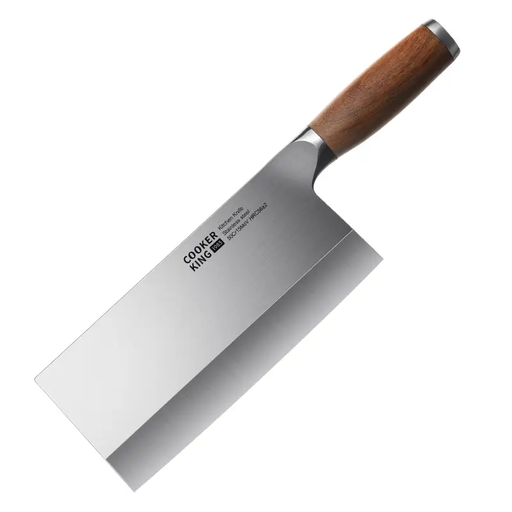
Why This Fits Their Persona: For users who cook frequently and are looking for a true workhorse. This knife combines high hardness for long-lasting sharpness with a robust build designed for intensive use.
With a hardness of 58±2 HRC and 7Cr17MoV steel, it offers clearly defined high performance. The full-tang construction ensures maximum stability and superb balance, avoiding the balance trap.
The moisture-resistant Pakkawood handle is ergonomically shaped and provides a secure grip, even during extended use. The high hardness ensures above-average edge retention.
We have compiled a complete, up-to-date list of products that fully meet these strict selection criteria and safety standards.
No, not with most models. The typical Chinese chef's knives sold for home use as a wide chef's knife are slicers with a thin blade (approx. 2-3 mm). They are designed exclusively for slicing vegetables, herbs, and boneless meat. Attempting to chop bones will almost certainly lead to chipping or bending the edge. For bones, you need a true chopping cleaver (Gu Dao), which has a much thicker and heavier blade.
A Chinese cleaver is ideally sharpened on a whetstone. Due to the thin blade, the sharpening angle is usually slightly lower than that of European knives, often between 15 and 20 degrees per side. Guide the blade over the stone with even pressure and at the correct angle. The wide blade surface makes it easier to maintain a consistent angle. For high-quality knives like a Zwilling chef's knife, the manufacturer's recommendations should always be followed.
It's not better, just different. Each type of knife has its strengths:
The choice depends on your personal cooking habits and preferences.