
Lieferung heute & morgen

Qualitätsgarantie

Willkommens-Angebote freischalten: KOSTENLOSE Lieferung | Bis zu 80 % RABATT | Kostenlose 30-Tage-JoyPlus-Testphase
App herunterladen
A Chinese chef's knife, often called a Chinese cleaver, is an impressively versatile tool in the kitchen. Its wide, rectangular blade can slice vegetables, mince herbs, and even crush garlic cloves. However, the market is flooded with models whose marketing promises often create more confusion than clarity. Many buyers invest in a knife that is unsuitable for their needs or loses its sharpness and stability after a short time.
This guide will help you identify the crucial features and avoid the most common purchasing pitfalls. We focus on the objective criteria that define a good Chinese chef's knife, enabling you to make an informed decision.
Before you make a purchase, you should be aware of the most common misconceptions that often lead to disappointment.
To make the right choice, focus on the following three technical aspects. These determine the performance, safety, and durability of your knife.
The most important distinction is the intended use, which is directly reflected in the blade's thickness.
The steel used is the heart of any knife. Look for clear information about the material and its hardness.
The balance is largely determined by the tang's construction.
Based on the criteria above, we have identified a few models suitable for different needs and budgets.
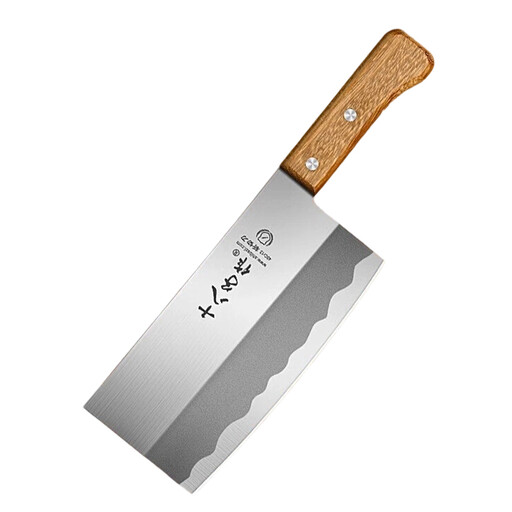
Why this model is a good fit: Ideal for anyone who wants to try the shape and function of a Chinese chef's knife without a large investment. It's a solid household knife for everyday slicing of vegetables and meat.
This knife clearly positions itself as an all-purpose slicer for home use and doesn't create the false impression of being a heavy-duty cleaver. The focus is on functionality at a fair price.
Made from stainless steel, it is easy to care for and robust enough for daily use. A functional tool without unnecessary and expensive extras.
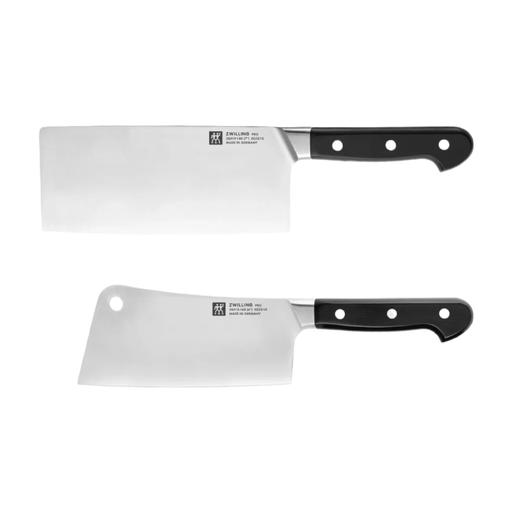
Why this model is a good fit: This set is designed for cooks who value brand quality and specialized tools. It offers a complete solution for almost all tasks in Asian and international cuisine.
It elegantly solves the "one-knife-for-everything" trap by providing two specialized knives: a Chinese chef's knife for slicing and a robust cleaver for bones. This ensures the right tool is available for every task.
The blades are crafted from Zwilling's special formula steel and ice-hardened (FRIODUR), ensuring high corrosion resistance and edge retention. The forged SIGMAFORGE quality stands for precision and stability.

Why this model is a good fit: This knife is explicitly designed as a robust chopper. It is the right choice for cooks who regularly break down poultry or portion ribs and need a heavy, resilient tool for the job.
It's not an all-rounder, but a specialist. The product description highlights its suitability for heavy-duty tasks and chopping bones. The full-tang construction provides the necessary stability to withstand the stress.
The wear-resistant steel blade is designed for durability under high stress. The ergonomic wooden handle provides a secure grip and good control, even during forceful work.
We have compiled a complete, up-to-date list of products that fully meet these strict selection criteria and safety regulations.
1. How do you properly sharpen a Chinese chef's knife? Most Chinese chef's knives are best sharpened on a whetstone. The sharpening angle is typically slightly wider than that of Japanese knives, often between 15 and 20 degrees per side. Guide the wide blade over the stone with even pressure. Due to the blade's height, it's relatively easy to maintain a consistent angle. If you're unsure, a sharpening guide can be helpful.
2. Can I put a Chinese chef's knife in the dishwasher? This is strongly discouraged. Aggressive detergents, high temperatures, and contact with other dishes can damage and dull the blade. Knives with wooden handles are particularly susceptible to swelling or cracking. Clean your knife by hand with warm water and mild soap, and dry it thoroughly immediately afterward.
3. What is the difference between a Chinese chef's knife and a Japanese Santoku? Although both are considered versatile kitchen knives, there are clear differences. The Chinese chef's knife has a tall, wide, and rectangular blade. It is generally heavier and used with a chopping motion. The Santoku is lighter, has a shorter blade with a curved tip (a "sheep's foot" shape), and is excellent for precise slicing, dicing, and mincing.