
Lieferung heute & morgen

Qualitätsgarantie

Willkommens-Angebote freischalten: KOSTENLOSE Lieferung | Bis zu 80 % RABATT | Kostenlose 30-Tage-JoyPlus-Testphase
App herunterladen
A Chinese chef’s knife combines a broad, rectangular blade with a wide range of uses. It can slice vegetables, chop herbs and—depending on the blade’s design and the manufacturer’s guidance—portion meat. The broad blade is also useful for scooping up chopped ingredients. If you’re looking to buy a Chinese chef’s knife, however, don’t be swayed by a large blade or terms such as ‘professional chef’s knife’ alone.
A Chinese chef’s knife and a Chinese cleaver may look similar, but they aren’t necessarily designed for the same tasks. Thin, finely sharpened blades are generally suited to vegetables, herbs, boneless meat and precise slicing. These models are often unsuitable for bones or frozen food. Hard materials can damage the edge or cause it to chip.
Before you buy, check whether the product is described as a cleaver for vegetables and meat, a slicing knife or a genuinely reinforced cleaver.
The term stainless steel kitchen knife initially tells you only what the blade is made from. Blade thickness, hardness, grind and care instructions also matter. Even corrosion-resistant steel can develop stains or lose its cutting performance if cleaned incorrectly. Carbon steel blades, on the other hand, often need more care and should be dried straight after use.
Even a kitchen knife with a moderate weight can feel unwieldy if its balance and handle don’t suit your hand. For longer food-preparation sessions, a secure grip, a smooth join between blade and handle, and controlled handling matter more than simply choosing the heaviest knife.
The Chinese chef’s knives featured here have blades measuring approximately 18 to 21 cm. A blade height of around 8 to 9 cm gives you plenty of surface area for scooping up ingredients, but it also needs enough room on your chopping board.
An Asian chef’s knife is generally used with a straight, vertical cutting motion. Depending on the model, its shape may be less suited to a rocking motion than a classic European chef’s knife.
With a stainless steel kitchen knife, corrosion resistance and easy cleaning are practical benefits. According to the product description, the WMF ProfiSelect Chinese Chef's Knife uses specialist stainless steel for its blade. The ZWILLING Pollux Chinese Chef's Knife is made from special stainless steel, according to the manufacturer, and features FRIODUR ice-hardening with a stated hardness of 55 to 58 HRC.
Carbon steel can offer a different cutting feel, but it needs to be dried more carefully. Whatever the material, follow these guidelines:
A plastic handle can be easy to care for, while a wooden handle offers a different feel and is generally not suitable for the dishwasher. A riveted join between the handle and tang can improve stability. A smooth transition is particularly hygienic, as fewer food residues can collect there.
Store the knife in a dry, safe place, such as a knife block, on a suitable magnetic strip or with a blade guard. For folding or compact knives, also check the rules on carrying and transporting knives.
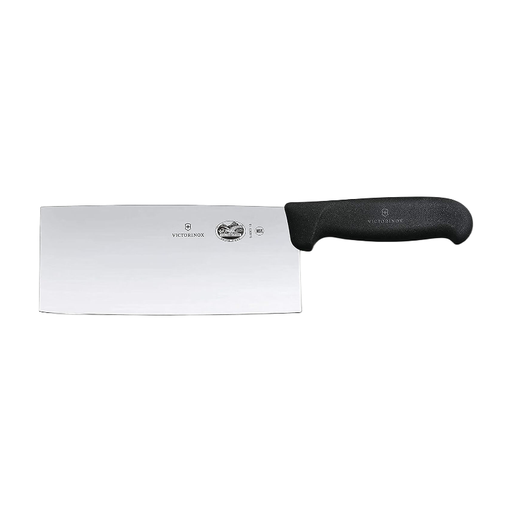
Why it suits this profile: The 18 cm blade has an extra-wide, Chinese-inspired design for everyday slicing and chopping. The ergonomic plastic handle is easy to clean.
The product description specifies stainless steel, an 8 cm-high blade and an ergonomic design. This means you can check the key details before buying.
Broad 18 cm blade, corrosion-resistant stainless steel according to the product details, and stated dishwasher suitability.
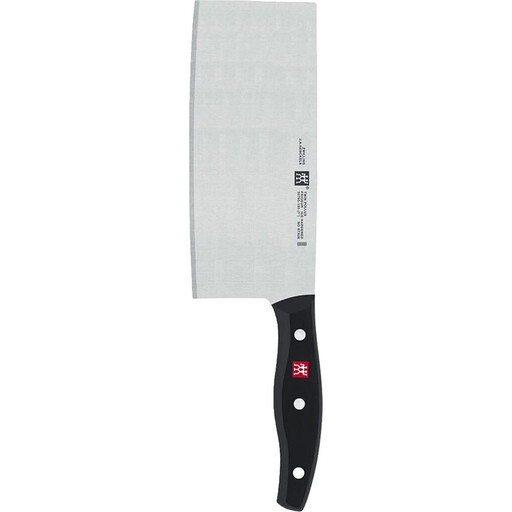
Why it suits this profile: This model is for buyers who want to consider technical details about the steel, hardness and handle construction when choosing a knife.
The specifications include an 18.5 cm blade, 55 to 58 HRC hardness, FRIODUR treatment and a triple-riveted POM handle. The product also specifically advises against cutting bones and frozen food.
Broad blade for slicing and transferring ingredients, plus specific material and care details, including hand-washing instructions.

Why it suits this profile: The 18.5 cm-long, 8 cm-high blade is designed for vertical cutting motions and for preparing vegetables, herbs and boneless meat. At 268 g, the knife remains relatively easy to handle.
The description focuses on precise slicing, dicing and chopping herbs, rather than making broad claims about cutting hard materials. The smooth, riveted handle join is designed for hygienic cleaning.
Specialist blade steel according to the product details, an 8 cm blade height and a broad surface for scooping up chopped ingredients.
We’ve put together a complete, regularly updated list of products that meet these strict selection criteria and fully comply with the safety regulations in force in the EU.
A Chinese chef’s knife will stay in good working order for longer if you avoid putting unnecessary strain on the edge. Use controlled pressure and a forgiving chopping board. Glass, stone and metal can blunt the edge more quickly. After rinsing the knife, dry it completely.
If the edge starts to become blunt, use a suitable whetstone or sharpening tool. The sharpening angle needs to suit the blade. If you’re unsure, follow the manufacturer’s care instructions. Storing the knife loose in a kitchen drawer isn’t recommended, as it can cause injuries.
No. They can have a similar shape, but their blades differ in thickness, grind and intended use. A thin Chinese chef’s knife is generally designed for vegetables, herbs and boneless meat. A reinforced Chinese cleaver may be suitable for tougher tasks. Check the manufacturer’s information before buying.
It depends on the model. The Victorinox Fibrox model is stated to be dishwasher-safe. According to the product description, the ZWILLING Pollux Chinese Chef's Knife should be washed by hand. Hand-washing is generally the sensible choice for knives with wooden handles. Always follow the care instructions for the specific product.
There’s no reliable way to give a fixed lifespan. It depends on the steel, grind, chopping board, cutting technique and care. Avoiding hard materials, storing the blade dry and having it sharpened properly when needed can help it stay in good working order for longer. Don’t rely on claims such as ‘stays sharp for good’ as a buying criterion unless they’re backed up by specific technical details.