
Lieferung heute & morgen

Qualitätsgarantie

Willkommens-Angebote freischalten: KOSTENLOSE Lieferung | Bis zu 80 % RABATT | Kostenlose 30-Tage-JoyPlus-Testphase
App herunterladen
With its broad, rectangular blade, a Chinese chef’s knife is incredibly versatile: you can slice and dice vegetables, chop herbs, and then use the flat of the blade to scoop up your ingredients. However, not every Chinese chef’s knife is automatically suited to every task. If you only look for terms like “extra sharp”, “professional chef’s knife” or “robust”, you can easily overlook important differences.
The appearance often resembles a Chinese cleaver or a meat cleaver. However, a broad blade does not necessarily mean the model is suitable for bones, frozen food or hard shells. Some Chinese chef’s knives are designed primarily for slicing, dicing and chopping vegetables, as well as cutting boneless meat.
So pay attention to the specific intended use. A fine blade edge can chip or deform when used on hard materials. This is especially true for thinly ground blades.
“Stainless steel” only describes a group of materials. When buying a stainless steel chef’s knife, you also need to consider blade thickness, hardness rating, corrosion resistance and care instructions. A specific HRC rating, like the 55–58 HRC on the ZWILLING Pollux, makes it easier to assess. It describes the hardness of the steel, but not automatically the actual sharpness or the overall quality of the knife.
Coatings should also be evaluated objectively: they can make cleaning easier, but they don’t replace a suitable chopping board or safe storage.
A 190 mm knife can feel very different in the hand depending on the blade height, steel and handle construction. A tall, heavier Chinese cleaver offers stability for straight cuts, but can become tiring during longer prep sessions. A lighter model is often more agile to handle.
So check the balance of blade length, blade height, weight and handle material. For many kitchens, a chef’s knife of 18 cm to 20 cm is a well-balanced range. Larger models are better suited to big chopping surfaces and extensive preparation work.
A broad blade around 8 cm high can not only cut, but also transport chopped ingredients from the board to the pan. For Asian dishes, this function is very practical, for example with vegetable stir-fries, wok dishes or dumpling fillings.
Distinguish between:
A Chinese chef’s knife should not automatically be used like a meat cleaver. Information about bones, frozen food and hard objects is crucial before you buy.
Stainless steel is practical for many households because it offers good resistance to rust under normal use. Nevertheless, a sharp kitchen knife should be dried immediately after washing. Acidic foods like tomatoes or citrus fruits should not be left on the blade for long.
With more sensitive or carbon-containing steels, more intensive care may be required. Always use a wooden or plastic chopping board. Glass, stone and ceramic can put significantly more strain on the edge.
Follow the manufacturer’s instructions for cleaning. The ZWILLING Pollux and the Victorinox models in this selection come with different care guidelines; hand washing is expressly recommended for the Pollux. Even if a knife is labelled as dishwasher-safe, hand washing will protect the edge and handle better in the long run.
A secure handle should feel stable in the hand, even during longer prep sessions. Plastic handles are often easy to care for, while wooden handles require dry storage and careful drying. A seamless connection between the blade and handle can make cleaning easier.
Never store a chef’s knife loose in a drawer. A knife block, blade guard, magnetic strip or protective sheath prevents contact with other objects and reduces the risk of injury.
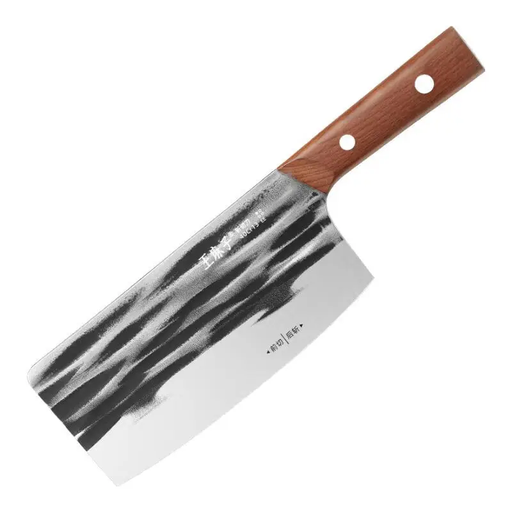
Why this product fits the profile: This model is described as a household knife made from stainless steel and is suitable for everyday cutting tasks if you are looking for a straightforward Chinese chef’s knife.
The stainless steel specification is clearer than a purely marketing claim about sharpness. Nevertheless, check the specific dimensions and care instructions on the product page before buying.
Stainless steel blade and focus on household use.
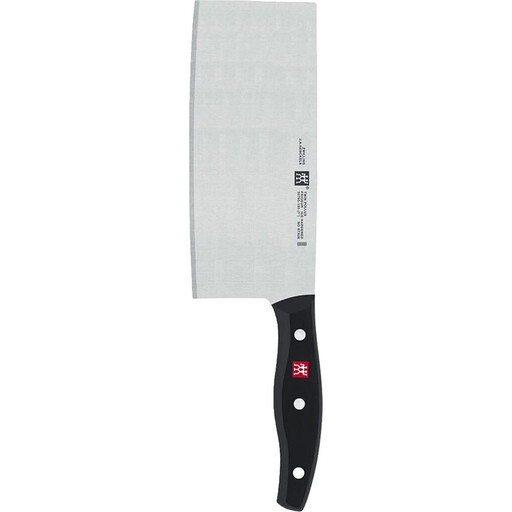
Why this product fits the profile: The 18.5 cm blade, the stated hardness of 55–58 HRC and the broad Chinese shape provide verifiable technical specifications for versatile kitchen work.
The product description defines the scope of use: the knife is not intended for heavy chopping, bones or frozen food.
18.5 cm blade length, FRIODUR processing and triple-riveted POM handle.

Why this product fits the profile: The 190 mm blade is aimed at users who prefer a larger cutting surface for daily slicing of vegetables, herbs and meat.
The blade length and handle are specified concretely. This helps buyers better assess whether the size suits their work surface and grip.
190 mm blade and, according to the product description, a secure, comfortable handle.
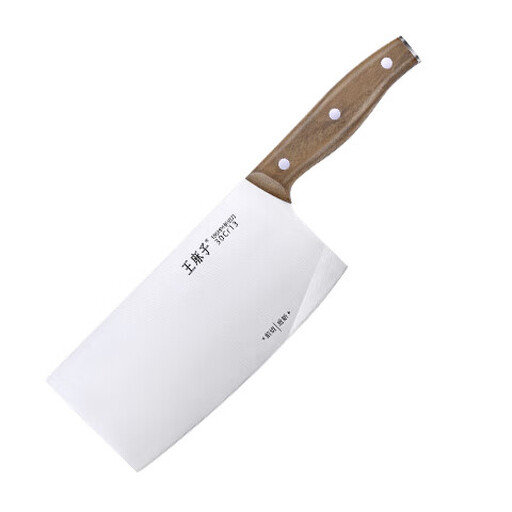
Why this product fits the profile: This model is specified with 400-series steel and a walnut wood handle, and is aimed at users looking for a classic-style Chinese cleaver.
The material and handle specifications help distinguish this knife from vague “professional” promises. For bones or hard ingredients, the manufacturer’s instructions should be followed.
400-series steel and walnut wood handle according to product specifications.
We have put together a complete, regularly updated list of products that fully meet these strict selection criteria and the safety regulations in force in the EU.
Not as a rule. Some robust models are described for certain hard ingredients, while others are expressly not intended for bones or heavy chopping. The manufacturer’s specifications for each knife are decisive. If in doubt, choose a special meat and vegetable cleaver or a model that is approved for that purpose.
Blades between 18 cm and 20 cm often offer a practical compromise between cutting surface and control. An 18 cm chef’s knife fits well on smaller work surfaces. Longer blades, such as 21 cm or more, can be helpful with large ingredients, but they need more space and safe handling.
Use a suitable chopping board, wash the knife by hand, dry it immediately and store it protected. Avoid lateral pressure on the edge and do not cut frozen food, hard shells or bones unless the model is expressly designed for that purpose.