
Lieferung heute & morgen

Qualitätsgarantie

Willkommens-Angebote freischalten: KOSTENLOSE Lieferung | Bis zu 80 % RABATT | Kostenlose 30-Tage-JoyPlus-Testphase
App herunterladen
A Chinese chef’s knife might look like a cleaver at first glance: a broad, rectangular blade, a sturdy silhouette and plenty of surface area for scooping up chopped ingredients. In reality, Chinese chef’s knives differ significantly in blade thickness, steel, weight and intended use. A finely ground Chinese kitchen knife is ideal for vegetables, herbs and boneless meat. A heavy cleaver, on the other hand, is designed for tougher tasks.
If you only focus on getting the sharpest blade or the most eye-catching design, you can easily overlook important details. The points below will help home cooks, fans of Asian cuisine and frequent users choose the right model.
The large blade surface is handy for sweeping chopped vegetables straight into the wok or pan. However, it tells you little about whether the knife is suitable for bones, frozen food or hard ingredients. A Chinese cleaver with a thin edge can be damaged during rough chopping. For bone work, you should only use a cleaver specifically designed for the job.
The term hand-forged chef’s knife sounds premium, but it doesn’t automatically tell you about steel quality, hardness or edge geometry. Before buying, you should have details on blade material, blade length, weight and handle construction. With carbon steel, you also need to check whether extra care is required, as moisture and acids can cause discolouration or corrosion.
Some stainless steel kitchen knives are marketed as dishwasher-safe. However, heat, detergents and contact with other cutlery can still put more strain on the edge than gentle hand washing. For delicate or finely ground blades, drying them immediately after cleaning is the more controlled solution.
For everyday cutting tasks, Chinese chef’s knives typically have a blade length of around 17 to 21 cm. Shorter blades are easier to control in small kitchens and on smaller chopping boards. Longer versions offer more surface area but can feel heavier.
Blade thickness is also crucial:
A model labelled as a Chinese cleaver should therefore be chosen based on the manufacturer’s specific specifications, not just its shape.
Stainless steel is low-maintenance in daily use and more resistant to moisture. A stainless steel kitchen knife is therefore a good choice for households that don’t want to do extensive aftercare immediately after each use. Carbon steel can offer a finely ground edge, but requires careful drying and occasional oiling.
Terms like FRIODUR, SIGMAFORGE or a Rockwell hardness rating are product-specific technical features. They should be considered in the context of the overall construction. A higher hardness doesn’t automatically mean a knife is suitable for hard materials. The edge can chip or deform under the wrong kind of stress.
A non-slip handle, a secure connection to the blade and a well-controlled balance are important for longer preparation sessions. A full tang – where the blade extends all the way through the handle – can support the stability of the construction. Three rivets are another feature you can check, but they don’t replace an ergonomic fit.
For safe use: keep your fingers and hands away from the edge, make sure your chopping board is stable, and only use the knife for food. Bones, frozen products and hard shells should only be tackled with a cleaver that is expressly designed for the purpose.

Why this product fits the profile: The 18.5 cm long and 8 cm wide blade is designed for versatile preparation work and can scoop up chopped ingredients. The ergonomically shaped plastic handle is seamlessly bonded to the tang.
The product details list blade dimensions, material and a weight of 268 g. This makes it easier to match the design to your own cutting style.
Wide 8 cm blade, rust-resistant special steel and a handle with a hygienically smooth transition.
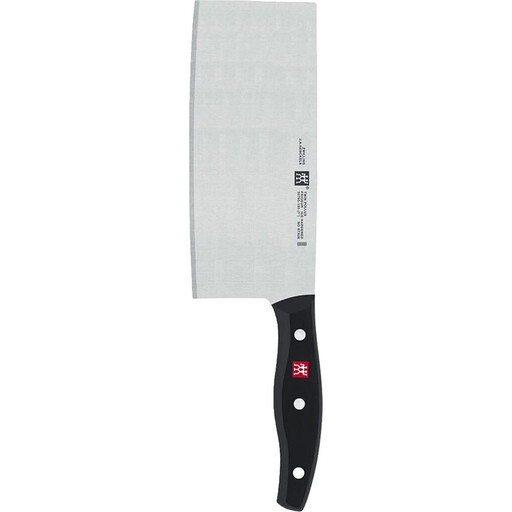
Why this product fits the profile: This model combines an 18.5 cm blade made from special-formula stainless steel with FRIODUR hardening and a POM handle with three rivets.
The stated hardness of 55–58 HRC and the material specification provide concrete comparison data instead of vague sharpness claims.
Wide blade for slicing and scooping ingredients; handle with three rivets and certified FRIODUR craftsmanship.
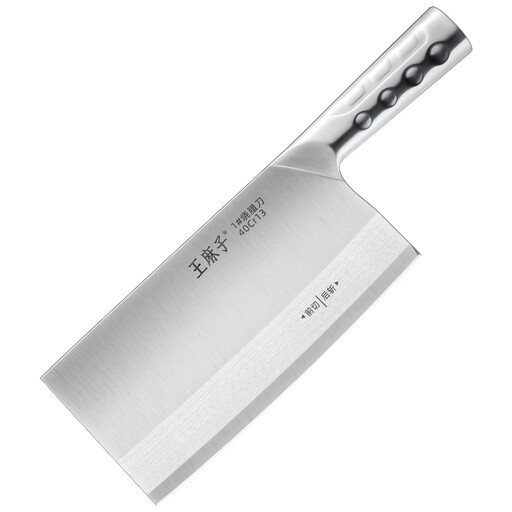
Why this product fits the profile: The 210 mm version in carbon steel is aimed at users who want a longer Chinese cleaver for various cutting and chopping tasks.
The material and blade length are clearly stated. Buyers can therefore plan for the higher maintenance needs of carbon steel and the space required on the chopping board.
Long 210 mm blade, carbon steel and a wooden handle for classic slicing and chopping applications.
A single knife is enough if you already have a good paring or santoku knife and simply want to add a Chinese chef’s knife. A Chinese knife set can be worthwhile if you need to cover several cutting tasks. The ZWILLING Pro 2-piece set, for example, includes a Chinese chef’s knife with an 18 cm blade and a 16 cm cleaver. For households that also need smaller knives, the ZWILLING Pro 5-Piece Knife Block Set with a bamboo block, Chinese chef’s knife, santoku, paring and cleaver knife is an option. The product description notes that no scissors are included.
We have compiled a complete, regularly updated list of products that fully meet these strict selection criteria and the safety regulations in force in the EU.
Not generally. Thin Chinese kitchen knives are usually intended for vegetables, herbs and boneless meat. For bones, you should use a model that is specifically labelled as a cleaver or bone knife. Even then, the manufacturer’s instructions are key.
The edge retention depends on the steel, hardness, edge angle, chopping board and usage. Glass boards, hard materials and twisting the blade sideways will shorten it. Regular, correct resharpening and hand washing help maintain a consistent working life, but they don’t guarantee a fixed lifespan.
Stainless steel is more straightforward for many British households because it is less sensitive to moisture. Carbon steel can appeal to users who are willing to dry the knife thoroughly after every use and care for it as needed. The right choice therefore depends mainly on the level of care you’re prepared to give, the cutting tasks and your personal usage.