
Lieferung heute & morgen

Qualitätsgarantie

Willkommens-Angebote freischalten: KOSTENLOSE Lieferung | Bis zu 80 % RABATT | Kostenlose 30-Tage-JoyPlus-Testphase
App herunterladen
A Chinese cleaver, often called a Chinese chef's knife, is a versatile tool that belongs in every well-equipped kitchen. However, the vast selection on the market can be overwhelming. Many buyers invest in a knife that looks impressive but quickly falls short in practice. Two common pitfalls often lead to disappointment and unnecessary expense: confusing a lightweight slicing knife with a heavy-duty cleaver, and overlooking the knife's construction, which is critical for its longevity.
This guide will help you understand the key characteristics. This way, you can select an Asian chef's knife that is perfectly tailored to your needs and will provide years of reliable service.
Before making a decision, you should examine three technical aspects. These determine whether a knife is suitable for your purposes or if it will turn out to be a bad purchase.
Not every Chinese knife is made for every task. The most important distinction lies in the profile and weight of the blade.
kitchen cleaver, have a significantly thicker and heavier blade. They are specifically designed as a bone-chopping knife and for portioning large cuts of meat. The knife's own weight assists the chopping motion and reduces the effort required.The steel used is crucial for edge retention, durability, and maintenance.
forged chef's knife. Carbon steel can be sharpened to an extremely fine edge and holds that sharpness longer. However, it is more prone to rust and requires meticulous care: the blade must be cleaned immediately and dried thoroughly after each use.The tang is the part of the blade that extends into the handle. Its design is an indicator of the entire knife's stability.
Choosing the right knife depends on your cooking habits. Here are some models tailored to different user profiles.
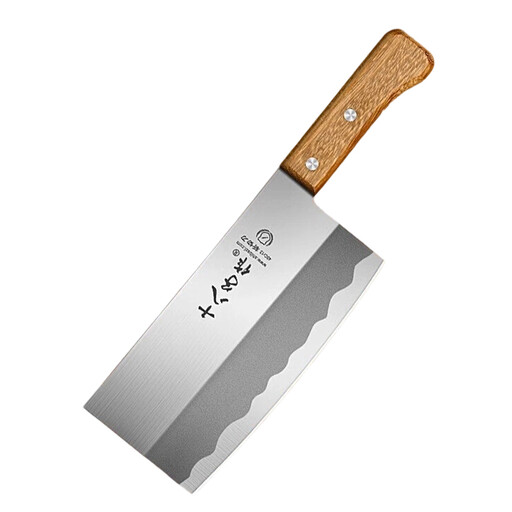
Why it's a great fit: Ideal for home cooks looking for a straightforward and versatile tool for daily cutting tasks. It combines the wide blade shape with the low-maintenance properties of stainless steel.
This knife is designed as an all-rounder, not a heavy-duty cleaver. It avoids the trap of buying a tool that is too specialized or high-maintenance for everyday use.
The stainless steel blade is corrosion-resistant and easy to clean. The seamless stainless steel handle ensures hygiene and a modern look.
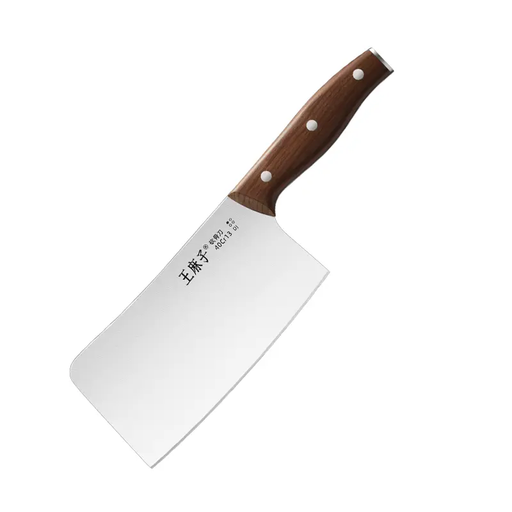
Why it's a great fit: For anyone who regularly processes ribs, bone-in poultry, or other tough ingredients. This knife is explicitly designed for heavy chopping tasks.
It is a true cleaver (Gu Dao) with a thick, heavy blade. This eliminates the risk of using an unsuitable slicing knife and damaging its blade.
The robust, forged blade made of hardened steel is designed for maximum resilience. The full-tang construction provides the necessary stability and balance for chopping.

Why it's a great fit: For chefs who value traditional craftsmanship, high-quality materials, and excellent balance. A tool that combines performance and aesthetics.
This knife avoids the pitfall of unstable construction. The full-tang design ensures superb balance and durability, which is often lacking in cheaper models.
The forged, wear-resistant steel blade offers high edge retention. The ergonomic Shenmu wood handle provides a secure grip and excellent control.
We have compiled a complete, up-to-date list of products that fully meet these strict selection criteria and comply with rigorous safety regulations.
The main difference is the blade shape. A Chinese cleaver has a tall, rectangular blade, whereas a European chef's knife has a pointed tip and a curved belly designed for rocking cuts. The flat profile of the Chinese knife is used for chopping, slicing, and also for transferring chopped ingredients from the board to the pan.
Clean the blade immediately after use with warm water and mild dish soap. Then, dry it very thoroughly. To prevent rust, a thin layer of food-safe mineral oil can be applied to the blade. It should never be cleaned in the dishwasher.
No. Only heavy cleavers (Gu Dao type) with a thick blade spine are suitable for chopping bones. Using a thin slicing knife (Cai Dao type) for this task will very likely result in damage to the blade. Always check the manufacturer's specifications for the intended use.