
Lieferung heute & morgen

Qualitätsgarantie

Willkommens-Angebote freischalten: KOSTENLOSE Lieferung | Bis zu 80 % RABATT | Kostenlose 30-Tage-JoyPlus-Testphase
App herunterladen
A Chinese kitchen knife can slice vegetables, chop herbs and portion meat. However, not every model is suitable for every task. The broad blade of a Chinese cleaver is often confused with a European chef’s knife or a Santoku knife. Descriptions such as “extra sharp”, “professional” or “for meat and bones” also reveal little about its actual suitability on their own.
Anyone buying a kitchen knife or kitchen knife set in Germany should therefore avoid three common pitfalls:
The classic Chinese kitchen knife has a broad, rectangular blade. Depending on its design, it is suitable for slicing, dicing, chopping and mincing. The broad surface can also make it easier to lift and transfer chopped ingredients.
It is important to distinguish between the different blade types:
Always check the manufacturer’s usage instructions. Even a sturdy kitchen knife should not be used for prising, twisting the blade or cutting frozen food.
With a stainless steel kitchen knife, easy cleaning and comparatively good corrosion resistance are the main benefits. However, the exact steel designation, heat treatment and blade grind have a greater influence on cutting performance than the word “stainless steel” alone.
Carbon steel knives are valued for their potential sharpness and ease of resharpening. However, they are more sensitive to moisture and acidic foods. After every use, they should be cleaned by hand and dried immediately. A light patina may develop on carbon steel and is not automatically a material defect; rust spots should nevertheless be avoided.
Also pay attention to:
A hard glass or stone board can put greater strain on the cutting edge. For a sharp kitchen knife, a sufficiently yielding wooden or plastic board is generally more suitable. Cut with controlled movements and avoid twisting the blade sideways.
The knife should be completely dry after cleaning. A knife block protects the cutting edge and reduces the risk of the blade lying loose in a drawer. With a kitchen knife set, you should also check which knives are actually included and whether the block accommodates every piece.
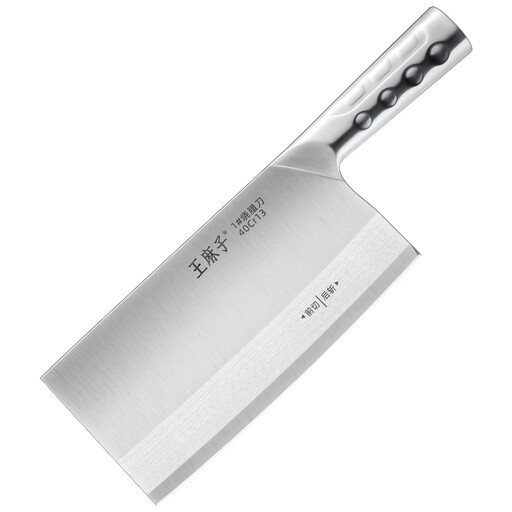
Why this product suits this profile: The stainless steel design is appealing to shoppers looking for a single Chinese kitchen knife for everyday slicing and chopping, while keeping maintenance to a minimum.
The product name specifies stainless steel and its intended kitchen use. This makes it easier to assess the model objectively rather than relying solely on marketing claims about sharpness.
A single knife rather than an extensive set; stainless steel construction and a broad cutting shape for versatile kitchen tasks.
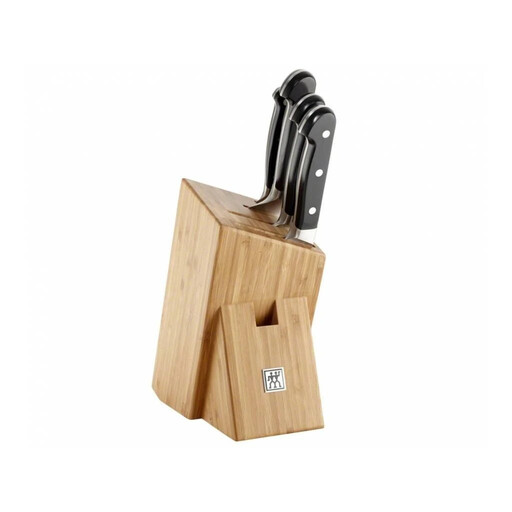
Why this product suits this profile: The set combines a Chinese chef’s knife, Santoku knife, paring knife and cleaver with a bamboo block for a range of food-preparation tasks.
The individual blade lengths and set contents are specified. This allows shoppers to check whether four knives meet their needs; scissors are not included in the block.
FRIODUR ice-hardened speciality steel, SIGMAFORGE construction, full tang with three rivets and a bamboo block.
Why this product suits this profile: The 210 mm blade is designed for passionate home cooks who often prepare larger quantities of vegetables or portion boneless meat.
Its suitability is assessed based on the blade length and its described use as a Chinese chopping and slicing knife, rather than a blanket claim that it is suitable for every type of bone.
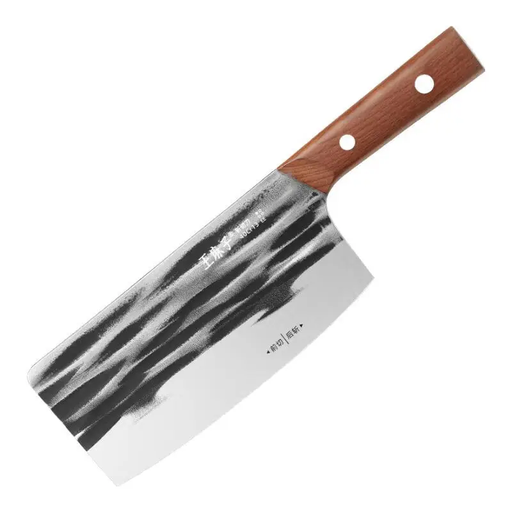
210 mm blade, carbon steel construction according to the product description, and a wooden handle for classic kitchen tasks.
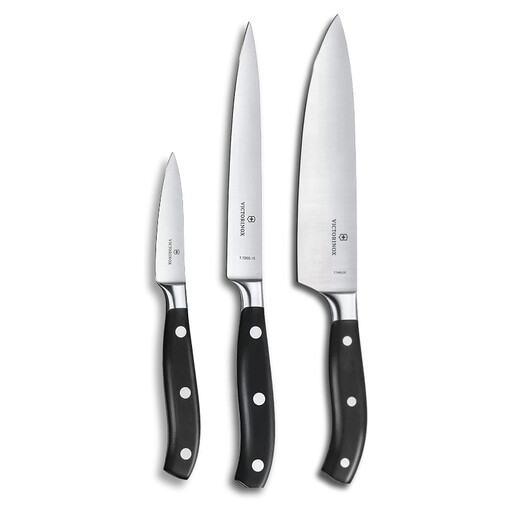
Why this product suits this profile: With a chef’s knife, cleaver and paring knife, this three-piece set covers key tasks involving meat, fish, fruit and vegetables.
The specific set contents, including three blades and their stated lengths, make it easier to check whether it meets your needs. The cleaver should nevertheless only be used for its intended purpose.
Three forged stainless steel knives, blade lengths of 8, 20 and 20 cm, and an ergonomic handle.
We have put together a complete, regularly updated list of products that fully meet these strict selection criteria and the safety regulations applicable in the EU.
A sharp knife does not necessarily need frequent sharpening if it is used appropriately. Use a suitable honing rod or whetstone in accordance with the manufacturer’s instructions. With a carbon steel knife, drying it afterwards is particularly important. A stainless steel model may be easier to maintain, but it should not be left damp for extended periods either.
Simple ground rules apply for safe work in the kitchen:
Not every model. Lightweight Chinese chef’s knives are typically designed for vegetables, fish and boneless meat. Only sturdy cleavers specifically intended for the purpose are suitable for bones. As a general rule, frozen food should only be cut if the manufacturer expressly permits it.
Use a suitable chopping board, avoid sideways twisting movements and wash the knife by hand wherever possible. Dry the blade after every wash. Regular, material-appropriate sharpening preserves the cutting edge better than heavy material removal carried out occasionally.
A set is worthwhile if you need to cover several tasks and will actually use the blades included. If you mainly prepare vegetables and boneless meat, a suitable Chinese kitchen knife may be all you need. Before buying, check the set contents, blade lengths, storage options and care instructions.