
Lieferung heute & morgen

Qualitätsgarantie

Willkommens-Angebote freischalten: KOSTENLOSE Lieferung | Bis zu 80 % RABATT | Kostenlose 30-Tage-JoyPlus-Testphase
App herunterladen
By the Joybuy Product Recommendation Officer, July 28, 2026
For many people living in Germany who appreciate authentic Chinese cuisine, finding the right pickled vegetables can be a challenge. It's an essential component in many dishes, from morning congee to spicy noodle soups. But buying them online is fraught with pitfalls. Products advertised as authentic often turn out to be versions adapted for Western palates, while unclear labeling can lead to the wrong purchase. This guide will help you separate the wheat from the chaff and find products that deliver truly traditional flavor.
To ensure you get a product that is both authentic and suitable for your needs, you should check three key criteria.
Chinese cuisine features an enormous variety of pickled vegetables that differ greatly by region. The type of vegetable and its region of origin are the most important indicators of the expected flavor profile.
A look at the ingredient list reveals a lot about quality and authenticity. Traditional recipes are based on simple ingredients: vegetables, salt, water, spices, and sometimes vinegar or alcohol for preservation.
To find the right product for your taste and your dish, use the flavor profile description as your guide. Spicy Chinese side dishes are often enriched with chili oil, Sichuan pepper, and ginger. Sour-pickled varieties are excellent for balancing rich dishes, while purely salty products are often used as Chinese condiments during cooking.
Here are a few recommendations tailored to different needs and preferences.
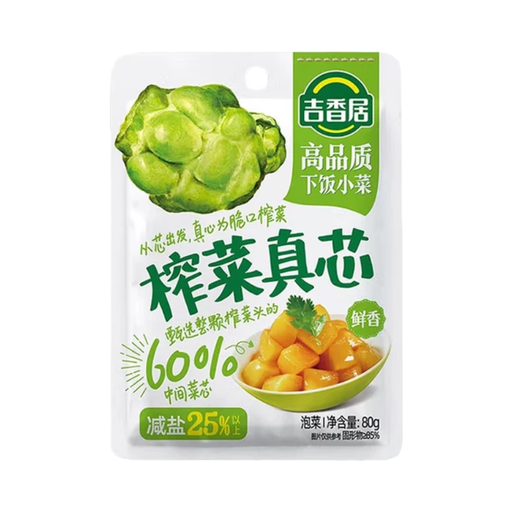
Why This Fits Their Persona: This product offers a mild, fresh, and salty flavor with a crisp texture. It is not overly spicy or sour, making it an ideal entry point for getting acquainted with the classic taste of pickled mustard tuber. Perfect as a simple side dish for rice or noodles.
It avoids the "Westernized" flavor pitfall by offering an authentic yet accessible profile instead of diluting the flavors. The clear "Mustard Tuber" designation helps with identification.
Ready-to-eat and versatile. The small portion size is convenient for trying it out.

Why This Fits Their Persona: Anyone looking for the bold, spicy flavors of Hunan cuisine will find it here. The combination of crunchy radish, fiery chili, and aromatic camellia oil (tea seed oil) is intense and authentic. It's more than just a side dish—it's a condiment that elevates any simple meal.
This product makes no compromises on spiciness. The use of camellia oil is a clear sign of an authentic, regional recipe, not a simplified export version.
Intense, complex aroma from the special oil. The crunchy texture holds up even in warm dishes.
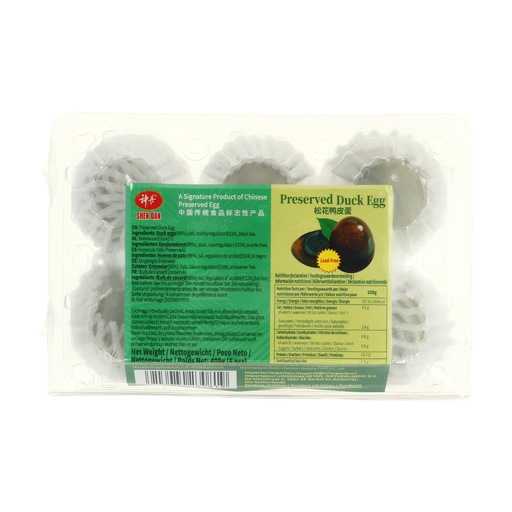
Why This Fits Their Persona: For those specifically seeking traditional delicacies like Thousand-Year Eggs, quality is paramount. This product from ShenDan, a well-known brand for egg products, delivers the expected characteristics: a dark, creamy yolk and firm, amber-colored whites with the characteristic "songhua" (pine flower) pattern.
It bypasses the pitfall of vague labeling by being explicitly declared as a "Preserved Duck Egg." The ShenDan brand stands for reliable quality, which is especially important for this particular product.
Ready-to-eat and ideal for classic dishes like congee or cold tofu with pídàn. The quality is evident in the typical pine-branch pattern.
We have compiled a complete, up-to-date list of products that fully meet these strict selection criteria and comply with German food regulations.
1. How long do Chinese pickled vegetables last after opening? Most products should be refrigerated after opening and consumed within a few days to a week. Always use clean utensils to remove the product from the jar or package to avoid contamination. Always refer to the specific storage instructions on the packaging.
2. What is the difference between Thousand-Year Eggs and Salted Duck Eggs? Although both are preserved duck eggs, they differ fundamentally in their production and taste. Salted Duck Eggs are cured in a salt brine, which results in a firm egg white and a very salty, oily yolk. They are often cooked and eaten as a side dish with rice porridge. Thousand-Year Eggs undergo an alkaline curing process in a mixture of ash, lime, and salt. This gives them a gelatinous texture, a dark color, and a complex, sulfuric umami flavor. They are served raw in dishes like salads or as an appetizer.
3. What is pickled mustard tuber (Zha Cai) traditionally eaten with? Pickled mustard tuber is extremely versatile. In its simplest form, it is eaten directly as a small, salty-spicy side dish with rice or congee. However, it can also be finely chopped and used as a flavorful component in noodle soups (e.g., Dan Dan noodles), stir-fries with minced pork, or as a filling for dumplings. Its crunchy texture and intense flavor add depth to many dishes.