
Lieferung heute & morgen

Qualitätsgarantie

Willkommens-Angebote freischalten: KOSTENLOSE Lieferung | Bis zu 80 % RABATT | Kostenlose 30-Tage-JoyPlus-Testphase
App herunterladen
Chinese pickled vegetables are a practical addition to rice, noodles, congee or steamed dumplings. Depending on the variety, the selection ranges from mildly tangy side dishes to spicy pickled vegetables with chilli and Sichuan pepper. However, when shopping online, you should look beyond product images and flavour claims. The ingredients list, salt content, allergens and pack size all determine whether a product suits your everyday needs.
A crisp texture can be an important feature of bamboo shoots, radish or mustard stems. However, it does not tell you whether the product is intended as a side dish, snack or cooking ingredient. Some packs are ready to eat, while others need to be soaked or heated first.
Look out for terms such as “ready to eat”, “ready to serve” or specific preparation instructions. Hand-roasted bamboo shoots such as the Fanpixiongdi variety, for example, are more suitable for cooking in a pan and should not be confused with ready-to-eat Chinese side dishes.
Terms such as “Mala”, “Pickled Pepper” or “Sichuan Style” suggest a particular seasoning profile, but they do not indicate a standard level of heat. Chilli, Sichuan pepper, garlic, fermented black beans and oil can all significantly alter the flavour.
If you are sensitive to strong seasoning or are looking for a mild Asian side dish for several people, check the ingredients list. A product without chilli is not automatically low in salt or sugar-free.
Individual portions are convenient for lunchboxes, the office or eating on the go. However, if you eat them regularly, several 60- to 90-gram packs may cost more than a larger jar or an 800-gram pouch. Compare the price per 100 grams and consider how quickly you will use the pack after opening.
The ingredients list shows which type of vegetable defines the flavour. Zhacai usually consists of pickled mustard stem or mustard tuber. Other Chinese pickles are based on bamboo shoots, radish, cucumber or beans.
The following are important when choosing:
If you have a sulphite allergy, products carrying the relevant warnings should not be purchased without checking them carefully first. The information on the product packaging is authoritative.
Pickled vegetables are often preserved with salt. The products in this selection show clear differences: according to the nutritional information, Zhuxin Bamboo Shoot Strips contain 3.2 grams of salt per 100 grams, Wu Jiang Original Flavor Pickled Mustard Stem contains 5.4 grams, and UJ Mala Zha Cai contains 5.5 grams.
Salt content is not a judgement of quality, but it helps you compare products. If you want to eat pickled vegetables with rice or congee every day, you may prefer a lower figure or serve a smaller portion.
Individual pouches are hygienic and help reduce leftovers. Larger packs are suitable for families, regular Sichuan-style side dishes or use in several different meals. After opening, many products need to be refrigerated and consumed promptly.
Check the following before buying:
Swollen, damaged or leaking packaging should not be consumed.
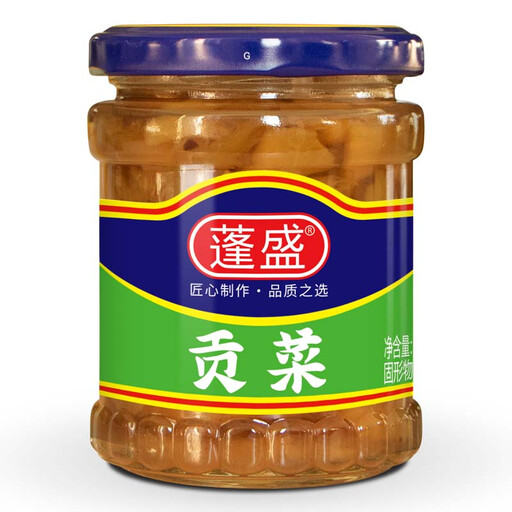
Why this product suits the profile: The 200-gram pack offers an approachable introduction to pickled mustard stem. According to the product information, its mild, sweet and savoury Chaozhou flavour is not spicy and pairs well with rice and everyday meals.
The product description explicitly states that the seasoning is mild and not spicy. This makes it easier to assess the flavour profile before buying.
200 g contents, ready to eat, 60% mustard stem content according to the product information, and storage at room temperature before opening.
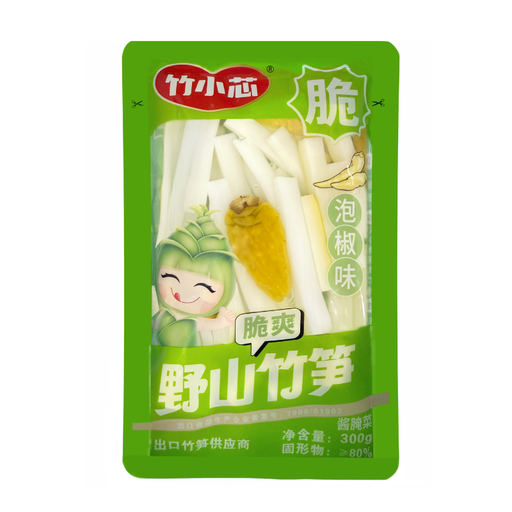
Why this product suits the profile: Hand-cut bamboo shoots with pickled chilli combine a clearly defined strip shape with tangy, spicy seasoning. The 300-gram pack is suitable as a side dish for several meals.
The information clearly states the cut, ingredients, calorie content and salt content. This makes it easier to compare the texture with your intended use.
23 kcal and 0 g fat per 100 g according to the nutritional information; ready to eat with rice, noodles and congee, or as a snack.
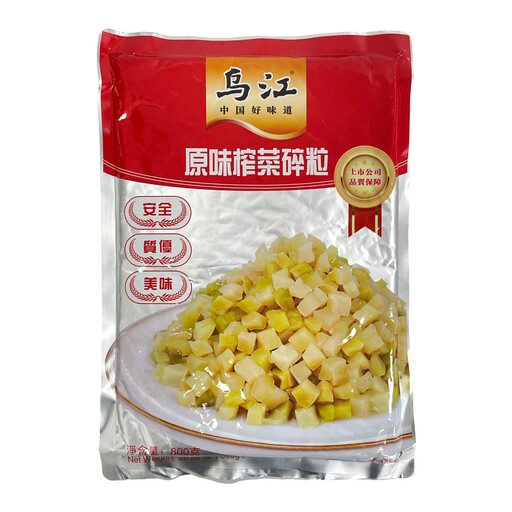
Why this product suits the profile: The 800-gram pack is aimed at households that regularly serve Zhacai with rice, noodles or congee, or want to use it as a filling.
The large fill quantity is stated clearly. Its salt content of 5.4 g per 100 g should be taken into account when planning portions.
94% pickled mustard tuber according to the QUID declaration; no declared allergens; suitable as a side dish or bun filling.
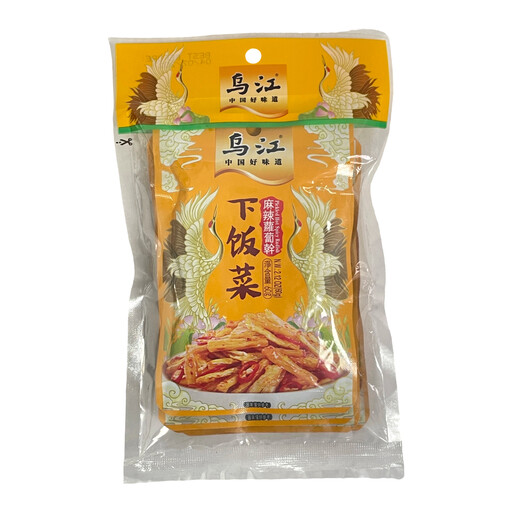
Why this product suits the profile: Four individual 60 g packs make portioning easy. Chilli and Sichuan pepper create a spicy, aromatic flavour with a distinctive tingling sensation.
The individual portions mean that a large pack does not need to be stored for a long time after opening. The ingredients list states the radish content, chilli and spices.
240 g total contents, 93% radish according to the QUID declaration, and ready to eat with rice, noodles or congee.
For small snacks, packs such as Fansaoguang Crispy Vegetables 65 g or the Sichuan pepper variety are suitable. If you are looking for sweet and tangy seasoning without pronounced heat, consider pickled mustard stem in the Chaozhou style. Pickled radish often pairs well with congee and noodles, while pickled bamboo shoots can also be used in soups, stir-fries or cold dishes.
Not every product containing vegetables in a jar or pouch is automatically a Chinese pickle. Japanese pickled radish and traditional cucumber sticks can also be served as Asian side dishes, but they differ in their seasoning, ingredients and suggested uses.
We have put together a complete, regularly updated list of products that fully meet these strict selection criteria and the safety regulations applicable in the EU.
Many products are ready to eat straight from the pouch. They can be served with rice, noodles, congee or steamed dumplings. Some varieties are also suitable as ingredients in stir-fries, soups or fillings.
This depends on the product and its packaging. The general advice is to refrigerate them after opening and consume them as soon as possible. For UJ Mala Zha Cai, the recommended consumption period is within three to five days of opening. The instructions on the relevant packaging remain the definitive guidance.
No. Pickled mustard stem can be mild, sweet and tangy, or savoury and aromatic. Hotter varieties usually contain chilli, while Sichuan pepper adds the characteristic tingling sensation. The ingredients list and product description can help you choose.