
Lieferung heute & morgen

Qualitätsgarantie

Willkommens-Angebote freischalten: KOSTENLOSE Lieferung | Bis zu 80 % RABATT | Kostenlose 30-Tage-JoyPlus-Testphase
App herunterladen
Chinese plum snacks often combine sweet, sour, salty and spicy notes. Depending on how they are prepared, they are available as preserved plums, dried plums, salted plums or sweet-and-sour plums. Variants with liquorice and honey, ume plums, and mixes of Chinese dried fruits are also part of this snack category.
When shopping in Germany, however, taste and pack size are not the only considerations. Ingredients, sweeteners, allergens and the intended use all determine whether a plum snack is suitable for a tea break, eating on the go, sharing or serving as a small accompaniment after a meal.
A product may contain no sugar according to its labelling and still use several sweeteners. If you are choosing sugar-free plums, you should therefore check the ingredients list. Aspartame, saccharin, sucralose, cyclamate and steviol glycosides all have different properties. Products containing aspartame must also carry a statement that they contain a source of phenylalanine.
Chinese dried fruits can taste considerably saltier or spicier than classic European dried plums. In huamei, preserved green plums and dark plums, salt, acidity regulators and sometimes liquorice are among the defining ingredients. If you are looking for a mild plum snack to enjoy with tea, you should not choose based on the product image alone.
A 454-g or 500-g pack can be practical for families and regular consumers. However, if the contents are opened only occasionally, their texture and flavour may deteriorate. After opening, store the products in a dry place as stated on the packaging, reseal them securely and consume them promptly.
Pay attention to the order of the ingredients and the quantitative indication, where provided. Recipes vary considerably among products containing dried plums, sugar, salt, liquorice and honey. According to the product information, Tong Xiang Jiu Zhi Dried Plums contain at least 76% dried plums, as well as sugar, salt, liquorice, honey, sweeteners and preservatives.
For a variant with liquorice and honey, you should also note the warning: people with high blood pressure should avoid excessive consumption. This is labelling information and not a statement about any therapeutic effect.
Nutritional values per 100 g allow for an objective comparison. For example, the products in the selection range from 0.79 g of salt per 100 g for LiUM Green Plum to 9.39 g of salt per 100 g for Tong Xiang Jiu Zhi Dried Plums. Sugar content also varies considerably: UME HOUSE Green-Style Ume Plums are listed as containing 57.6 g of sugar per 100 g, while Jia Jian Cheng Chu Preserved Plums contain no sugar according to the product information, but do contain sweeteners.
If you want to reduce your sugar intake, always check both details: sugar in the nutrition table and sweeteners in the ingredients list.
Small bags between 60 and 130 g are suitable for personal supplies, the office or eating on the go. Individually wrapped pieces are practical for sharing and transport. Larger packs such as 454 g or 500 g are better suited to families, regular snack breaks or use in drinks and recipes.
Some products are not intended only for eating straight from the pack. According to the product description, Liu Liu Prune Dark Plum can also be soaked in hot or cold water. Salted plums such as Sunlee Salted Plum 454 g are also intended for use as an ingredient, garnish or flavour component in drinks.
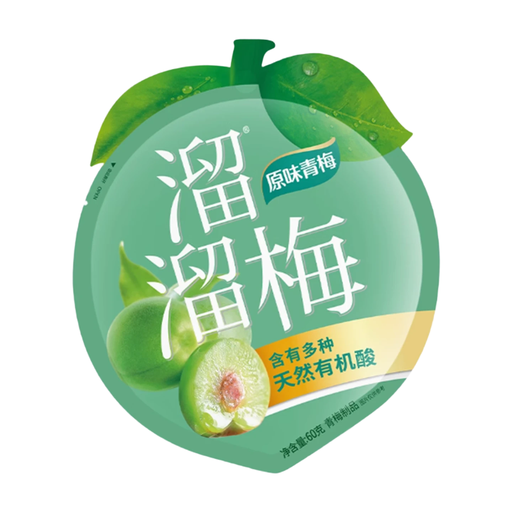
Why this product suits this profile: The 60-g pack offers an accessible introduction to classic sweet-and-sour plums with a soft, chewy texture.
The small pack reduces the risk of storing a large quantity of an unfamiliar flavour that goes unused.
60 g contents, 30 g of sugar and 0.86 g of salt per 100 g according to the product information; ready to eat.
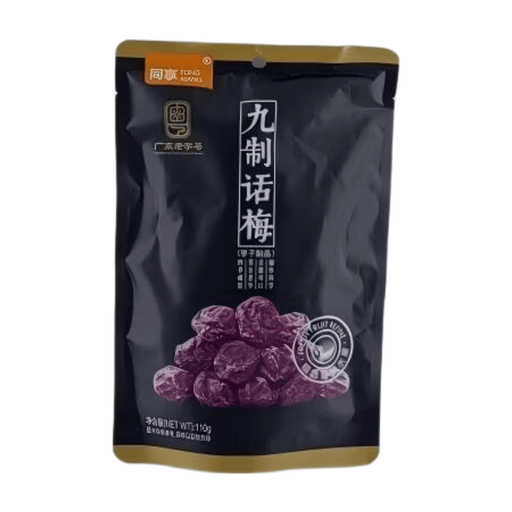
Why this product suits this profile: The declared composition of at least 76% dried plums and its multi-layered seasoning will appeal to shoppers who compare ingredients and flavour profiles closely.
The ingredients and warnings make it clear that, alongside sugar and salt, the product also contains liquorice, honey and several sweeteners.
110-g pack, individually wrapped pieces, plus 11.7 g of sugar and 9.39 g of salt per 100 g according to the product information.
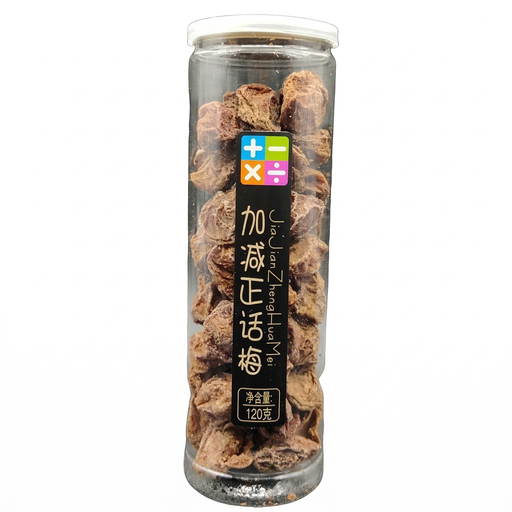
Why this product suits this profile: The 120-g pack is suitable for individual snack breaks, eating on the go or sharing and, according to the product information, is formulated without sugar.
The labelling specifically identifies sweeteners and aspartame as a source of phenylalanine. This makes it easier to tailor your choice to your personal requirements.
230 kcal and 5.0 g of salt per 100 g according to the product information; firm, chewy texture and ready-to-eat format.
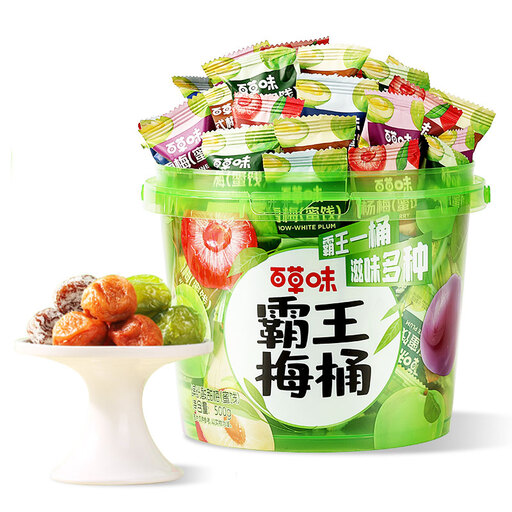
Why this product suits this profile: Five different varieties in one tub make it ideal for sharing and tasting together, while also suiting larger households or regular tea breaks.
The variety of flavours reduces reliance on a single flavour profile. At the same time, check the sulphites, sweeteners and E124 colouring before buying.
500 g contents, five flavours and a salt content of 2.46 g per 100 g according to the product information.
Most products are ready to eat and can be enjoyed straight from the pack. Plums served with tea can be offered as a small accompaniment. Some salted plums can also be soaked in hot or cold water. Always follow the relevant instructions on the packaging.
The best-before date is printed on the packaging. Unopened products should be stored in a cool, dry place away from direct sunlight. After opening, it is important to seal the pack tightly so that the plums retain their intended texture. If there are changes in smell, appearance or consistency, do not consume the product further.
Pay particular attention to sweeteners, sulphites, colourings and liquorice. Some products carry a warning that certain colourings may affect children’s activity and attention. A mixed selection may be suitable for a shared snack bowl; for specific dietary requirements, a small pack with a clear ingredients list is often easier to assess.