
Lieferung heute & morgen

Qualitätsgarantie

Willkommens-Angebote freischalten: KOSTENLOSE Lieferung | Bis zu 80 % RABATT | Kostenlose 30-Tage-JoyPlus-Testphase
App herunterladen
Wide Chinese noodles are a staple ingredient in many Asian dishes. They are characterised by their flat, broad shape and a texture that can range from soft to firm to the bite. They are typically made from wheat flour, water, and salt. Their texture makes them an ideal vehicle for sauces and a hearty component in a Chinese noodle soup or wok-fried dishes. Selecting the right product depends on the specific requirements of the dish and personal preferences for texture.
When choosing wide Chinese noodles, several objective parameters should be considered, as they influence the cooking properties and the final result.
The noodle's dimensions are a crucial factor. Wider, flat noodles offer a large surface area that absorbs sauces well. In contrast, thick noodles or thick strips provide a more substantial, chewier texture, which is well-suited for hearty stews or dishes where the noodle itself is the main feature. Some noodles, like Wenzhou noodles, are made with alkaline water (lye water), which gives them a characteristic yellowish hue and a uniquely elastic, springy consistency.
The ingredients list reveals the product's purity and character. A basic recipe of wheat flour, water, and salt is the standard for many Asian wheat noodles. The presence of sodium carbonate (baking soda) indicates the production of alkaline noodles. The quality of the wheat flour directly affects the protein content and, consequently, the noodle's firmness after cooking.
The available pack sizes cater to different user groups. Standard packs of around 1 kg are suitable for regular home use. A bulk pack of noodles of 2 kg or more offers better value and is a practical solution for families, passionate home cooks, or small-scale food service needs. Dried noodles have a long shelf life when stored correctly, which facilitates bulk purchasing.
The following selection is based on an analysis of product specifications and their suitability for various culinary applications.
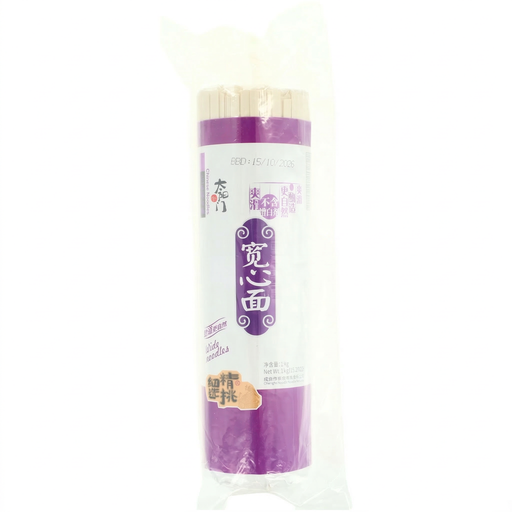
Why We Recommend It: Taiyangmen Dried Wide Noodles are based on a minimalist recipe of wheat flour, water, and salt. This simplicity makes them a versatile base for a wide range of dishes where the flavour of the sauce or broth is intended to be the focus. Their classic, wide shape ensures a traditional noodle experience.
Pros:
Who It's For: This product is ideal for cooks looking for an all-purpose, authentic Chinese noodle without specific textural properties. It serves as a reliable staple ingredient for daily use in the home kitchen.
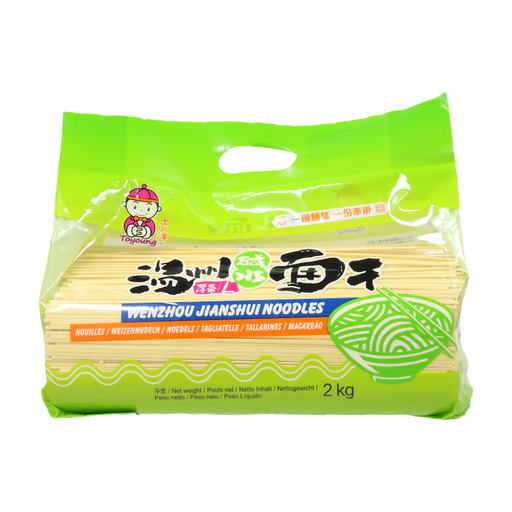
Why We Recommend It: These noodles are a regional speciality from Wenzhou, made using the traditional method with alkaline water (食用碱). This process gives the thick noodle strips a distinctly springy and chewy texture, as well as a slightly yellowish colour. The high wheat flour content of 98.7% ensures a pure wheat flavour.
Pros:
Who It's For: This product is aimed at connoisseurs of Chinese regional cuisine who are specifically looking for the unique texture of Wenzhou noodles. It is also an excellent choice for preparing hearty wok noodles and soups, and for users who prefer a bulk pack of noodles.
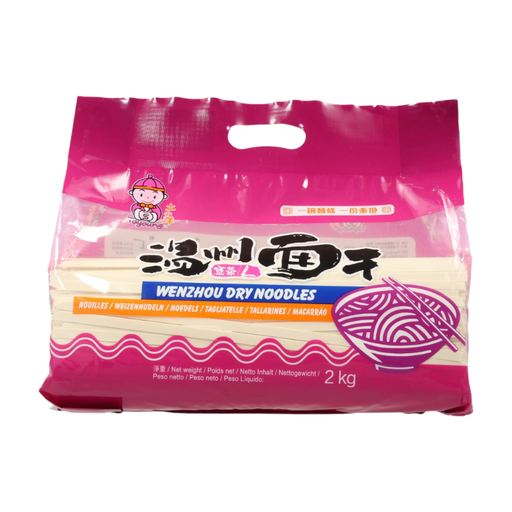
Why We Recommend It: This version of Wenzhou noodles from Toyoung focuses on a wide, flat shape and a firm texture. The recipe, consisting of wheat flour and salt, is traditional and free from additives. The noodles are designed to maintain a stable structure during cooking and not become mushy.
Pros:
Who It's For: These noodles are designed for cooks who prefer a firm, chewy noodle texture. The 2 kg bulk pack makes them an economical choice for frequent use or for stocking up.
If the featured products don't perfectly match your needs, or if you're looking for other noodle varieties like thinner vermicelli or special shapes, you can find more options in our dried pasta range.
1. How do you properly cook dried wide Chinese noodles? Fill a large pot with plenty of water and bring it to a boil. Add the desired amount of noodles and stir occasionally to prevent them from sticking together. The cooking time varies between 5 and 8 minutes, depending on the thickness of the noodles. It is recommended to taste the noodles to achieve your desired firmness. After cooking, drain and proceed according to your recipe.
2. What is the difference between regular wheat noodles and Wenzhou lye water noodles? The main difference lies in the ingredient sodium carbonate (lye water), which is added to Wenzhou noodles. This alkaline component alters the protein structure in the wheat flour. The result is a noodle with a noticeably more elastic, springy, and chewy texture, as well as a slightly yellowish colour compared to conventional Asian wheat noodles.
3. What is the best way to store a bulk pack of dried noodles? Dried noodles should be stored in a cool, dry place, away from direct sunlight. After opening the original packaging, it is advisable to transfer the remaining noodles into an airtight container. This protects them from moisture and foreign odours, preserving their quality over a long period.