Strength trainers focused on protein
If you want your chocolate snack after strength training to contribute mainly to your protein intake, focus on the amount in the bar you’ll actually eat. The protein content per 100 g alone won’t tell you this.


The right chocolate bar after a workout depends on whether you’re mainly looking for protein per serving, carbohydrates after a longer session or the lowest possible sugar content. ‘No added sugar’ doesn’t mean ‘sugar-free’, so check the nutritional information per bar and per 100 g, as well as the ingredients and allergen information.
If you want your chocolate snack after strength training to contribute mainly to your protein intake, focus on the amount in the bar you’ll actually eat. The protein content per 100 g alone won’t tell you this.
After a longer or more intense workout, the carbohydrates per serving may also be important when choosing a snack. The German Nutrition Society describes carbohydrates as an important part of fuelling exercise, so a bar with no added sugar doesn’t necessarily have to be low in carbohydrates.
If you’re looking for a low-sugar option or need to avoid certain ingredients, compare the claims on the front of the pack with the nutrition table and ingredients list. For sweeteners and allergens, the information on the specific pack is also essential.
First, decide which nutritional detail matters most for your post-workout snack. Then compare the figures per bar: low sugar, plenty of protein and a suitable amount of carbohydrates are different criteria to consider.
| Criteria | What to check | Who it matters to |
|---|---|---|
| Protein per bar | Compare the protein content with the weight of an individual serving, rather than looking only at percentages or figures per 100 g. | After strength training, I want to know how much protein my individual snack actually contains. Protein is the main focus when choosing for around 36% of shoppers. |
| Carbohydrates per serving | Consider the carbohydrate content and serving size; don’t assume ‘no added sugar’ means ‘low in carbohydrates’. | After a longer endurance session, I’m interested in the carbohydrates as well as the sugar content. Carbohydrates are the deciding factor for around 29% of shoppers. |
| Sugar content | Know the difference between ‘sugar-free’ and ‘no added sugar’, and check the ‘of which sugars’ figure per 100 g in each case. | If I want to limit sugar as much as possible, a claim that no sugar has been added isn’t enough. Around 21% of shoppers put the sugar content first when choosing. |
| Ingredients and allergens | Check the pack for sweeteners, warnings, highlighted allergens and precautionary allergen statements. | If I have a sensitive digestive system or an allergy, I need to check the ingredients before considering the protein and sugar content. This check comes first for around 14% of shoppers. |
A bar with no added sugar can still contain sugar. For example, Lindt Germany lists 9 g of sugar per 100 g for its milk chocolate bar with no added sugar.
If sugar content is your main criterion, check the nutritional information per 100 g as well as the product name.
A figure per 100 g doesn’t tell you how much protein is in an individual bar. REWE says that the Barebells Caramel Choco Chip Vegan contains 15 g of protein per 55 g bar; for other serving sizes, you’ll need to check the individual figure.
Compare the bar’s weight with its protein per serving before using a percentage as a guide to your choice.
The consumer advice centre warns that large amounts of sweeteners can have a laxative effect. This is worth bearing in mind, particularly when comparing several reduced-sugar snacks.
Read the ingredients list and warnings; if you have a sensitive digestive system, check the serving size too.
A vegan label or a claim that no sugar has been added doesn’t tell you which allergens a bar contains or which traces it may contain.
If you have an allergy, check the ingredients and precautionary allergen statements on the current packaging of the specific product.
These examples show different types of chocolatey snacks. The figures quoted relate to the specific product range mentioned, not every bar from that brand.
The milk chocolate bar with no added sugar is a chocolate bar, not a protein bar.
The Caramel Choco Chip Vegan is a vegan-labelled protein bar with no added sugar.
Nuts & Protein Chocolate combines nuts with a stated amount of protein per serving.
The Peanut chocolate bar Zero vegan is a small, vegan-labelled chocolate and peanut bar.
This selection includes chocolatey protein products and a chocolate muesli bar, to suit different post-workout priorities. Use the information for the specific bar to decide whether protein per serving, carbohydrates or sugar content matters most to you.
 No image available
This 50 g bar could be a good option for a chocolatey snack after strength training if you want to compare the protein content per serving.
The words ‘Sugar Free’ in the product name don’t replace checking the ‘of which sugars’ figure per 100 g. Check the ingredients and allergen information on the pack too.
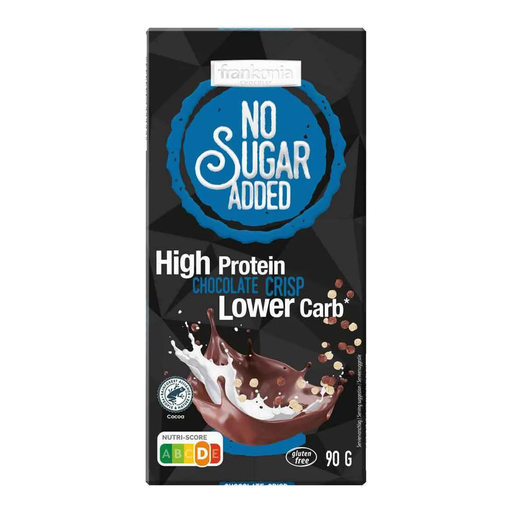 No image available
This Chocolate Crisp version is for shoppers looking for a chocolatey snack with no added sugar and a stated protein content.
The pack contains 90 g. When comparing bars after a workout, consider the pack size and the protein, carbohydrate and sugar content per serving you’ll eat; check the ingredients and warnings too.
 No image available
This chocolate muesli bar is an alternative to a protein bar if, after a longer session, you’re mainly looking to check the carbohydrate content per snack.
The pack contains six 20 g bars. ‘No added sugar’ doesn’t mean the bar is sugar-free or tell you how many carbohydrates a serving contains; check the nutritional information for that.
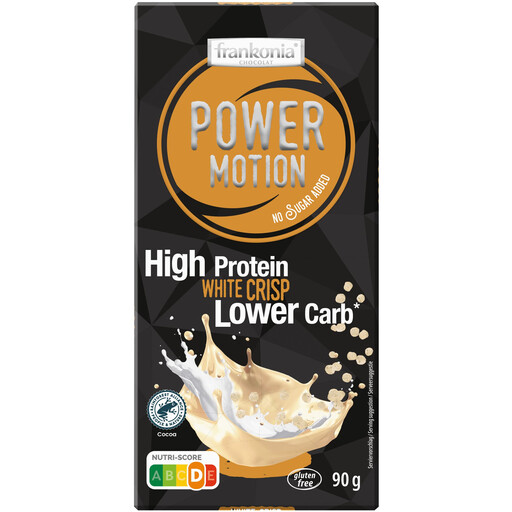 No image available
The White Crisp version is worth considering if you’re choosing a chocolatey snack with no added sugar and want to take the protein content into account too.
The pack contains 90 g. Compare the nutritional information per 100 g with the portion you plan to eat, and check the sugar content separately.
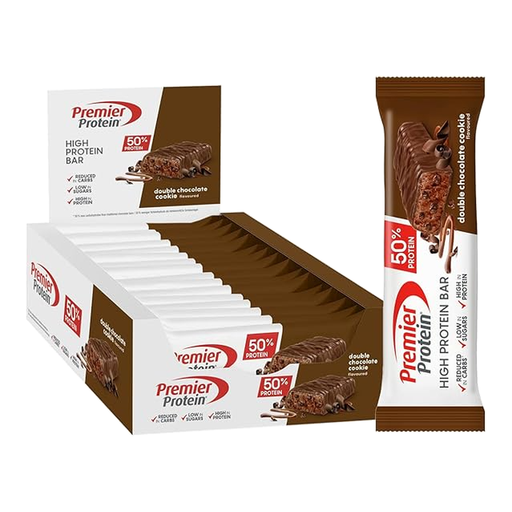 No image available
This Double Chocolate Cookie version may suit shoppers who put protein first when choosing a chocolatey post-workout snack.
The product name states 50% protein, and the pack contains 16 bars of 40 g each. To help you decide, also check the protein and sugar content of an individual bar in the nutrition table, along with the ingredients.
No. Under EU Regulation (EC) No 1924/2006, a product labelled ‘sugar-free’ can contain no more than 0.5 g of sugar per 100 g or 100 ml; ‘no added sugar’ doesn’t mean a product contains no sugar. Lindt Germany lists 9 g of sugar per 100 g for its milk chocolate bar with no added sugar. So check the ‘of which sugars’ figure in the nutritional information for the specific product.
Not every workout calls for the same kind of snack. The German Nutrition Society describes carbohydrates as an important part of fuelling exercise, so they may be relevant when choosing a snack after a longer session. If protein matters to you after strength training, also compare the amount per bar. Don’t interpret a sugar or protein claim as a promise of recovery benefits.
Check the ingredients list, serving size and any warnings. The consumer advice centre warns that large amounts of sweeteners can have a laxative effect. This is particularly important if you’re sensitive to them or eat several products containing these sweeteners.
Yes, if the amount of protein per bar suits what you’re looking for in a snack. REWE lists 15 g of protein per 55 g bar for the vegan-labelled Barebells Caramel Choco Chip Vegan, and 4.5 g per 28 g bar for the NEOH Peanut chocolate bar Zero vegan. For both products, the vegan label doesn’t replace checking the ingredients and allergen information.