Parents planning a treat
You want to set aside a small amount of treats rather than offering chocolate throughout the day. The consumer advice centre also recommends against snacking continuously throughout the day.


A chocolate bar is no substitute for a snack when a toddler is hungry. The Healthy Start – Young Family Network recommends regular meal times and keeping treats to a minimum. If parents choose to include chocolate as a treat, they should limit the amount offered and check the ingredients, allergens and any hard pieces of nut beforehand.
You want to set aside a small amount of treats rather than offering chocolate throughout the day. The consumer advice centre also recommends against snacking continuously throughout the day.
For these families, the ingredients in the specific variety and the texture of any pieces of nut matter more than the name or packaging. If your child has a known allergy, follow the advice specific to them.
If your child is hungry, they need something other than a portioned treat. The Healthy Start – Young Family Network recommends smaller snacks as part of a regular meal routine, and advises offering treats sparingly.
If: Your toddler is hungry and needs something to tide them over until the next meal.
The trade-off: This option skips the treat and follows the Healthy Start – Young Family Network’s advice to keep treats to a minimum.
If: You want to offer a small treat independently of hunger, and the ingredients and texture are suitable for your child.
The limit: Individually wrapped bars can make it easier to manage portions, but that doesn’t make them a regular between-meal snack.
| What matters | What to check when buying | Who it matters most to |
|---|---|---|
| Between-meal snack or treat | Check whether your child is hungry or whether you’re planning a treat. If they’re hungry, choose an age-appropriate snack rather than a chocolate bar. | If my child is hungry, I’m looking for a snack, not just something sweet. For around 31% of consumers, this distinction is the main consideration. |
| Amount and frequency | Decide how much you’ll actually offer and avoid spreading treats throughout the day; don’t automatically assume that a whole pack is one portion. | I want to set a clear limit on treat time, so one bar doesn’t turn into repeated snacking. Around 31% of consumers focus first on amount and frequency. |
| Allergens and texture | Read the current ingredients list and allergen information; consider fillings and hard pieces of nut. | If my child has an allergy or is not yet confident chewing, I need to know exactly what’s in the product and what its texture is like. For around 25% of consumers, this is their main concern. |
| Bar size and format | Compare the weight and number of pieces with the amount you have in mind; a mini bar may contain several stated portions. | For a planned treat, I want to be able to portion it out without guesswork. Around 13% of consumers put the format first. |
An individually wrapped bar makes it easier to portion, but it’s still a treat. According to Kinder, a kinder chocolate bar weighs 12.5 g and contains 6.7 g of sugar.
Decide how much to offer before serving it, and don’t plan to use the bar as a substitute for a snack when your child is hungry.
The Milka Alpine Milk bar described by REWE weighs 45 g and is made up of twelve pieces, with two stated portions of 22.5 g each. A manufacturer’s stated portion is not a guideline for how much a toddler should have.
Check the weight and number of pieces in the specific bar, and only serve the amount you decided on beforehand.
Chocolate products reviewed list milk, soya and nuts among their ingredients or as possible traces. Whole nuts and pieces of nut can also pose a choking risk for toddlers.
Read the current ingredients list and the information on the pack; avoid products with hard pieces of nut for toddlers.
The no-added-sugar milk chocolate described by Lindt contains maltitol. The manufacturer warns that excessive consumption may have a laxative effect. The consumer advice centre generally does not consider products containing sweeteners or sugar substitutes a suitable alternative for children.
Don’t base your decision on this claim alone; limit both how often you offer it and the amount.
The brands mentioned here relate to specific bar and chocolate block formats. The information on the pack you choose is what matters.
Kinder is relevant here because of its individually wrapped kinder chocolate bars.
The Milka Alpine Milk product considered here is a 45 g bar that can be divided into pieces, not an individual bar for toddlers.
Ritter Sport is relevant for comparing specific chocolate bar varieties and their ingredients, rather than for an individual bar for toddlers.
The Lindt milk chocolate without added sugar considered here is an example of a product made with sweeteners, not a blanket alternative for toddlers.
The pre-divided chocolate block can make it easier to count out an amount you’ve decided on beforehand.
REWE is relevant here as the retailer of a specific own-brand chocolate bar.
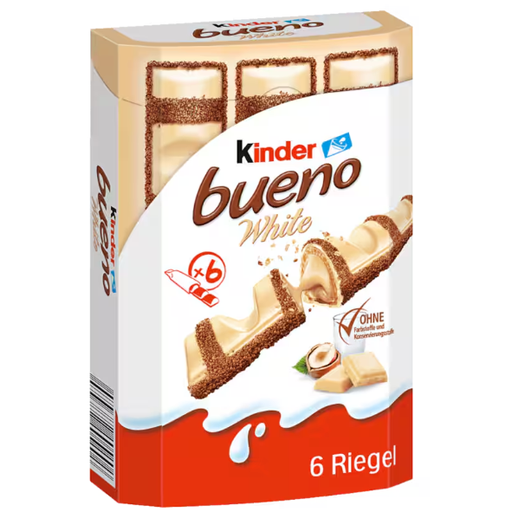
The Kinder Bueno White shown here is an individually wrapped chocolate wafer bar that could be considered for a planned treat, but not as a snack when your child is hungry. Before offering it, check the ingredients on the current pack and the texture of the filling in particular.
 No image available
The individual bars can be taken out separately for a planned treat; 19.5 g per bar is not a recommended portion for a toddler.
Before offering it, check the current ingredients and allergen information, as well as the texture of the filling. If your child is hungry, this bar is no substitute for a between-meal snack.
Not as a regular between-meal snack when they’re hungry. The Healthy Start – Young Family Network recommends regular meal times and keeping treats to a minimum; a bar could only be considered as a treat with a clear limit.
A family rule could allow a small treat with a meal or at a clearly planned snack time, rather than spreading treats throughout the day. The German Dental Association points out that how often sugar is consumed also affects the risk of tooth decay, so good dental care remains important.
Check the ingredients and allergen information on the current pack for the specific variety. Lebensmittelklarheit explains the labelling of allergens deliberately added to food; possible traces should be considered separately. If your child has a diagnosed allergy, follow the advice specific to them.
Not necessarily. The consumer advice centre generally does not consider sweeteners and sugar substitutes a suitable alternative for children. The Lindt variety considered here contains maltitol and carries a warning that excessive consumption may have a laxative effect.
Toddlers should not be given hard whole nuts or pieces of nut because of the choking risk. Check the specific filling and ingredients; if your child has a nut allergy, follow the advice specific to them.