Runners planning fuel for long runs
You want to factor a serving of chocolate into your running fuel based on its carbohydrate content, rather than treating a single bar as all the fuel you need.


A individually portioned chocolate bar can be a familiar snack before or after a training session. But a small serving of chocolate is not a reliable source of fuel on its own for a long, intense run. What matters is the carbohydrate content of the portion you actually eat, the rest of your running fuel and how well you have tested it in training. Also check the ingredients and allergen information for the specific variety.
You want to factor a serving of chocolate into your running fuel based on its carbohydrate content, rather than treating a single bar as all the fuel you need.
You’re looking for a familiar bar before or after training, or a portion you can divide up yourself, and want to know how much you’re actually eating.
You check the information for each variety because of lactose, gluten or allergens. A brand name alone doesn’t tell you which ingredients or potential traces a product contains.
First decide whether you’re looking for a small snack or fuel for a long run. Then you can check the portion size, carbohydrate information and ingredients for the specific variety.
A good fit if: You’d like a small, familiar snack before or after training.
The limit: A clearly defined portion isn’t the same as a complete running fuel plan. Kinder Deutschland lists 6,7 g of carbohydrates and 4,4 g of fat for a 12,5-g kinder Chocolate bar.
A good fit if: You want to break off pieces for a snack and work out the amount from the nutritional information.
The limit: Figures per 100 g don’t automatically tell you what’s in the piece you’ve broken off. Schogetten lists 55 g of carbohydrates and 35 g of fat per 100 g for Edel-Alpenvollmilch.
A good fit if: You’re planning a set amount of carbohydrates per hour for long, intense sessions and practising your fuelling strategy in training.
The limit: With gels and drinks, too, your portions, hydration and personal tolerance all need to work together. The Verbraucherzentrale advises drinking enough water when using gels.
| Criterion | What to check | Who it matters to |
|---|---|---|
| Carbohydrates per portion | Compare the carbohydrates in the bar or piece you eat with your planned fuel for long runs. | If I’m fuelling a long, intense session, I want to know how much a bar contributes to my planned carbohydrate intake. For around 42 % of consumers, this need to plan is the main consideration. |
| Portion size | Check whether the nutritional information is per bar or per 100 g, and whether you’ll need to break off a portion yourself. | Before or after a run, I want to be able to eat a small amount without getting the portion size wrong. Around 33 % of consumers prioritise being able to portion it easily. |
| Ingredients and allergens | Read the ingredients, highlighted allergens and ‘may contain’ information for the specific variety. | If particular ingredients matter to me, I need to check the variety I’ve chosen before deciding based on taste or portion size. For around 25 % of consumers, checking the ingredients comes first. |
For context on long, intense exercise: a research paper published in 2015 and available through the National Library of Medicine recommends 30–60 g of carbohydrates per hour for activity lasting 1 to 2,5 hours. This doesn’t mean that chocolate should provide that amount on its own, or that it should be used for every run.
According to Kinder Deutschland, one kinder Chocolate bar contains 6,7 g of carbohydrates. So the carbohydrates in a single portion can’t be treated as your entire planned intake for a long, intense run.
Work out the amount you’ll actually eat and decide what role chocolate should play alongside the rest of the fuel you’ve tested in training.
According to its variety-specific information, Ritter Sport Vollmilch labelled lactose-free still contains milk products. So the label doesn’t tell you whether it’s suitable if you have a milk protein allergy.
Check the current ingredients list, allergen information and possible traces for each variety. If you have an allergy, don’t choose a product based only on the ‘lactose-free’ label.
You can’t tell from the pack size alone whether a portion, solid food and drinks will work well together for you while running.
Try your planned portion and work out how to carry and eat it during training runs, rather than relying on it for the first time on race day.
Melted chocolate can be harder to handle and portion on the go. The product information for Ritter Sport Alpenmilch and ja! Alpenvollmilch advises protecting them from heat and moisture.
Before your run, think about how you’ll carry your portion. If it’s warm, use a method you’ve already tried out.
Brands offer different portion formats and varieties. When choosing, check the information for the specific product rather than relying on the brand name alone.
100-g bars, including Alpenmilch and a whole milk variety labelled lactose-free.
REWE stocks Milka Alpenmilch in formats including a 90-g bar.
According to Lindt, the EXCELLENCE range includes bars with different cocoa percentages, as well as varieties with additional ingredients.
According to Kinder Deutschland, kinder Chocolate comes in individually portioned 12,5-g bars.
Chocolate divided into pieces, rather than individually wrapped bars.
ja! is REWE’s own brand. The Alpenvollmilch chocolate checked comes as a 100-g bar.
These bars could work as pre-portioned chocolate snacks around your training. Pack sizes vary; for running fuel, you’ll also need to check the nutritional information for the portion you eat and factor in the rest of your plan.
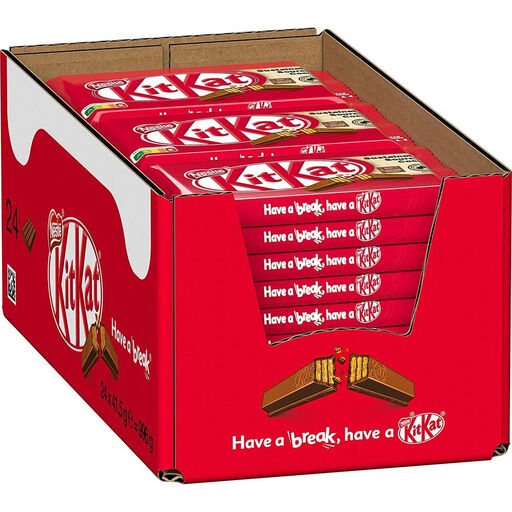 No image available
If you’re looking for a chocolate wafer bar as a pre-portioned snack, the 41,5-g bar gives you a clear starting point. Check the nutritional information per bar and the current ingredients and allergen information when planning your intake.
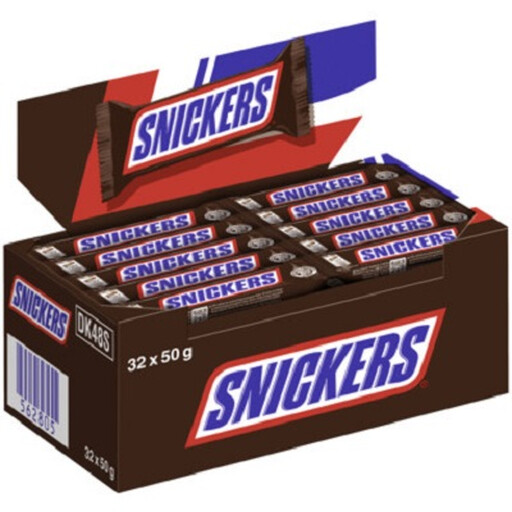 No image available
If you’re planning to have a 50-g bar as a snack, compare its nutritional information with the amount you actually want to eat. Check the ingredients and allergen information; if the wrapper matters when carrying it, check how each bar is packaged, too.
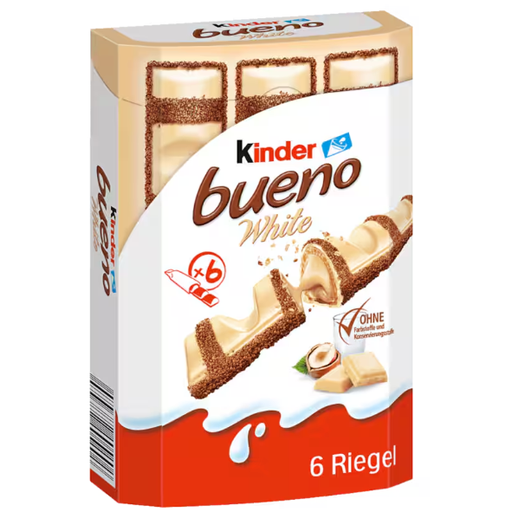 No image available
For a small chocolate wafer snack, you can plan around one 19,5-g bar. Whether it works as part of your running fuel depends on the nutritional information for the specific pack and the rest of your plan. Check the ingredients and allergens, too.
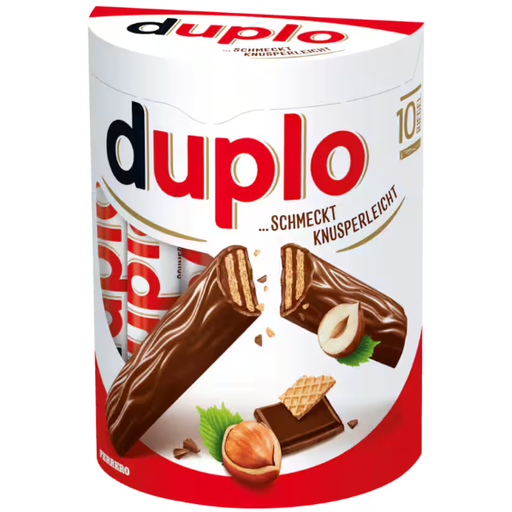 No image available
If you prefer a small, easy-to-count snack portion, you can start with one 18,2-g bar. Check the information on the specific pack for the carbohydrates in that portion and any potential allergens. Don’t rely on the bar as your only fuel for a long run.
One small chocolate bar isn’t automatically enough fuel for a long, intense run. A research paper published in 2015 and available through the National Library of Medicine recommends 30–60 g of carbohydrates per hour for activity lasting 1 to 2,5 hours. By comparison, Kinder Deutschland lists 6,7 g of carbohydrates for one kinder Chocolate bar. Plan your total intake and test your choices in training.
A small, familiar portion of chocolate can work as a snack before or after a run. For fuel during longer, more intense sessions, it’s the planned amount of carbohydrates, drinks and a fuelling strategy you’ve tested that matter.
No. A ‘lactose-free’ label doesn’t mean a product is suitable if you have a milk protein allergy. The lactose-free Ritter Sport Vollmilch listed by REWE contains a maximum of 0,1 % lactose, but still contains milk ingredients. Always check the ingredients and allergen information on the specific pack.
Protect it from heat and moisture, and check whether it’ll still be easy to handle on the go. The storage advice for the Ritter Sport Alpenmilch and ja! Alpenvollmilch bars listed by REWE recommends doing so. If you’re running in warm weather, try your planned way of carrying it in advance.