
Lieferung heute & morgen

Qualitätsgarantie

Willkommens-Angebote freischalten: KOSTENLOSE Lieferung | Bis zu 80 % RABATT | Kostenlose 30-Tage-JoyPlus-Testphase
App herunterladen
A chocolate cake glaze should spread evenly, suit your recipe and be easy to use. But attractive packaging and big promises don’t always mean a product is right for you. What matters most is the ingredients, how it’s prepared, the amount you need and what you plan to use it for.
A ready-made chocolate cake glaze isn’t necessarily the same as couverture chocolate for decorating. Glazes made with vegetable fats are often designed to be melted in their packaging. Couverture, on the other hand, typically contains cocoa butter and needs more precise temperature control to set with a glossy finish.
Chocolate pearls, chocolate sprinkles and chocolate decorations are mainly for decoration. They won’t replace a full coating, but you can use them on a surface while the glaze is still soft.
75 to 100 grams may be enough for a small cake or a few cupcakes. For a large cake or several baking trays, a 125 to 150-gram pack is more practical. If you don’t use enough glaze, the surface may end up uneven. Use too much, and you may have some left over once it has cooled.
Chocolate and glaze may contain milk, soya, nuts, gluten or egg, or traces of these ingredients. If you have allergies in your family or follow a particular diet, always check the ingredients and allergen information on the packaging. Nutritional values also vary. For example, Dr. Oetker Chocolate Pearls & Sprinkles Cake Decor is listed as containing 482 kcal and 59 grams of sugar per 100 grams. Check the information on the packaging before buying and eating the product.
A meltable glaze is a good choice for covering a surface with chocolate. Products containing cocoa powder, cocoa mass or cocoa butter vary in flavour, colour and firmness. Glazes made with vegetable fats can often be used without tempering. If you’re aiming for a particularly smooth finish or delicate chocolate decorations, check the manufacturer’s instructions.
For a white finish, you could use icing or a white glaze. One example is Dresdner Krönchen White Sugar Cake Glaze. According to the product description, it is mixed with water and contains ingredients including sugar, milk protein and egg white. This means it may not be suitable for every allergen-conscious kitchen.
Many ready-made glazes are warmed in a bain-marie or in the microwave. The recommended power and heating time vary between products. For example, Ruf Cocoa Cake Glaze 100g is described as suitable for heating in a microwave at a low setting of no more than 240 watts for around three to four minutes. In a bain-marie, the sachet should be warmed for about ten minutes.
Excessive heat can affect the consistency. Follow the heating instructions, knead the glaze gently and apply it only to completely cooled bakes. For fine lines, it can help to snip a small opening in the packaging.
Dry cake decorations such as chocolate sprinkles or chocolate pearls are easy to store, as long as you keep them somewhere cool and dry. Liquid dessert chocolate sauce, on the other hand, is better suited to ice cream, fruit, desserts or adding decorative touches. Schwartau Dessert Chocolate Sauce 125 ml is recommended to be kept tightly sealed in the fridge after opening.
Before you buy, decide what you need:
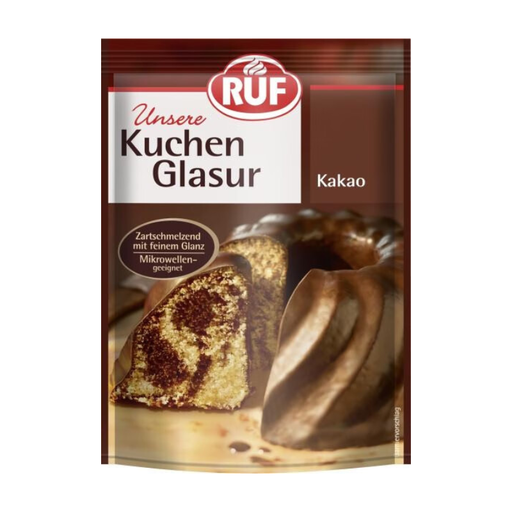
Why it suits this need: The 100-gram pack is designed for individual cakes, biscuits, éclairs or doughnuts. The instructions describe two ways to prepare it: in a bain-marie or in the microwave.
The specific heating instructions help you avoid excessive heat and the effect it can have on the glaze’s consistency.
100 grams of glaze in a pre-portioned sachet; described as gluten-free. Contains milk and may contain traces of nuts.
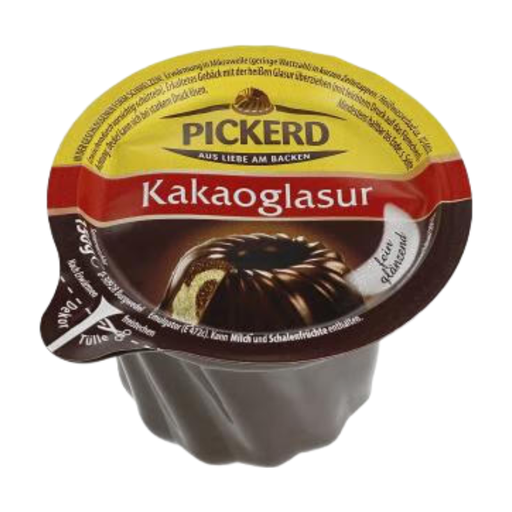
Why it suits this need: The 150-gram pack is a good option for larger cakes, gateaux or several bakes. According to the product description, the packaging has an opening for decorating.
The instructions say to heat it in its sealed packaging, reducing direct contact with water and making it easier to control how much you use.
150 grams of glaze, with 20 per cent low-fat cocoa powder according to the description, and a built-in opening for decorating.
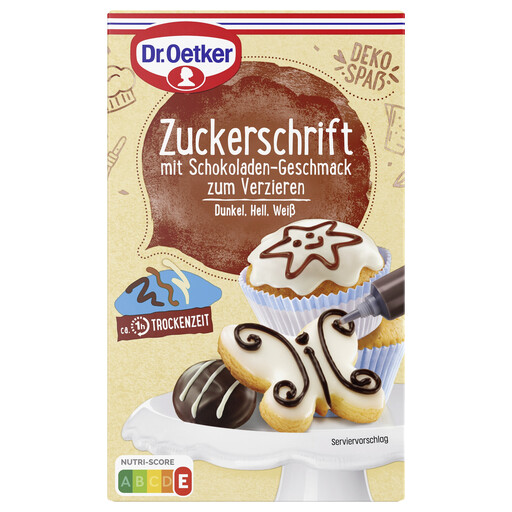
Why it suits this need: This ready-to-use writing icing is designed for messages, lines and small patterns on cakes, biscuits and other bakes.
As the product description says it doesn’t need heating, there’s no need to worry about choosing the right microwave setting.
The product description lists three varieties: dark, milk and white chocolate. Ready to use.
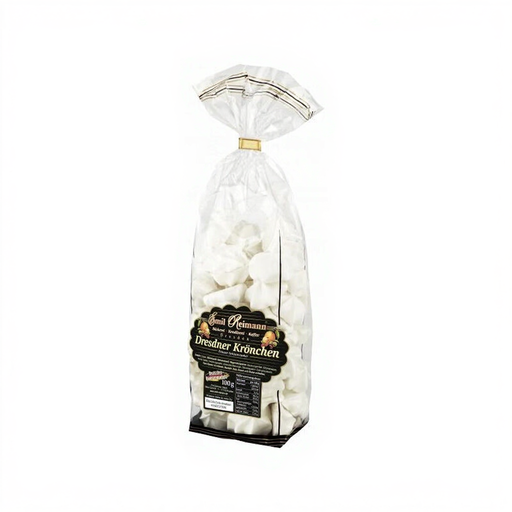
Why it suits this need: This white icing offers an alternative to dark chocolate glaze. Mix it with water to achieve your preferred consistency.
The instructions specify how much water to add, making preparation clearer than with products whose consistency changes only when heated.
100 grams in a white finish. According to the description, it contains egg, milk and soya and may contain traces of other ingredients.
We’ve put together a complete, regularly updated list of products that meet these strict selection criteria and the safety regulations in force in the EU.
Around 75 to 100 grams may be enough for a small sponge cake. For a large ring cake, a gateau or several bakes, 125 to 150 grams is a better choice. The amount you need depends on the surface area, how thick you want the coating to be and whether you’re also using chocolate sprinkles or chocolate pearls.
It depends on the product. Often, the sealed packaging is heated in a bain-marie or at a low microwave setting. Always follow the wattage and heating time stated on the packaging. Once heated, spread the glaze carefully while it is still liquid. Make sure your bake has cooled completely first.
Store unopened products according to the best-before date on the packaging. Many dry and fat-based glazes can be kept at room temperature in a cool, dry place. Dessert chocolate sauce may need to be refrigerated after opening. Always follow the storage and shelf-life instructions provided by the manufacturer.