Parents who are mindful of breakfast routines
You want to weigh up chocolate cereal against bread or porridge, rather than make a sweet option part of the daily breakfast without comparing the alternatives.


For a regular toddler breakfast, a bulk pack of chocolate cereal isn’t an obvious go-to choice: the Verbraucherzentrale recommends bread or porridge with dairy products instead of sweetened cereal. If you buy chocolate cereal occasionally, check the sugar per 100 g, ingredients and allergens, and choose a pack size that matches how much you’ll actually use.
You want to weigh up chocolate cereal against bread or porridge, rather than make a sweet option part of the daily breakfast without comparing the alternatives.
For you, it matters whether a larger pack will actually be used up and stored properly once opened.
You pay attention to the specific type of grain and other ingredients, as well as separately listed warnings about possible traces.
For a regular toddler breakfast, the Verbraucherzentrale recommends bread or porridge with dairy products instead of sweetened cereal. If you’d like a chocolate option now and then, check the labelling first, then choose a pack size that suits your needs.
| What matters | What to check when buying | Especially important for |
|---|---|---|
| Sugar and breakfast routine | Compare the sugar per 100 g on the current pack; also consider bread or porridge as the basis for breakfast. | If breakfast is much the same each day, I don’t want to make a sweet option a habit. Around 50% of consumers rank this as their main concern. |
| Pack size and how much you use | Compare the pack weight with how much you actually use; follow the storage instructions after opening. | A large pack only works for me if we use it up before any leftovers lose their quality. For around 30% of consumers, this need to stock up is the main consideration. |
| Allergens and ingredients | Check the type of grain and other ingredients on the specific pack; check any possible traces separately. | If I need to check ingredients, the main thing is knowing what the product may contain. This is the top concern for around 20% of consumers. |
A comparative claim doesn’t replace checking the nutrition information. Kölln Zauberfleks Schoko’s nutrition table on the REWE product page lists 13 g of sugar per 100 g, while the description on the same page says 15 g.
Check the sugar content on the current pack. For your regular breakfast routine, also consider whether an unsweetened option would suit you better.
If you only have chocolate cereal occasionally, a large pack could leave you with leftovers that lose their crunch after opening.
Choose an amount that matches your household’s consumption and follow the storage instructions on the pack.
The examples listed differ in their ingredients and warnings about possible traces. A sugar content that suits you doesn’t tell you whether a product meets your individual ingredient requirements.
Read the full ingredients list on the current pack and distinguish between ingredients that are included and possible traces. If you have medically defined restrictions, follow the relevant professional advice.
The REWE information for Nestlé Cookie Crisp lists wholemeal wheat flour and added nutrients, but also 22.4 g of sugar per 100 g. One claim on a pack doesn’t answer the question of whether it suits your breakfast routine.
Consider the ingredients and nutrition information together, rather than basing your decision on a single claim on the pack.
Options to compare include chocolate oat muesli and Zauberfleks Schoko; the information applies to each specific product.
Cookie Crisp is one example of chocolate cereal with a wholegrain claim; it doesn’t represent the entire range.
Trésor Milk Choco is an example of filled chocolate cereal pillows; its product information doesn’t apply to other Kellogg's products.
This selection includes chocolate muesli in packs ranging from 400 g to 750 g. Muesli and other chocolate cereals aren’t the same type of product; for a toddler’s breakfast, the labelling on each pack and how much you’ll actually use remain the key considerations.
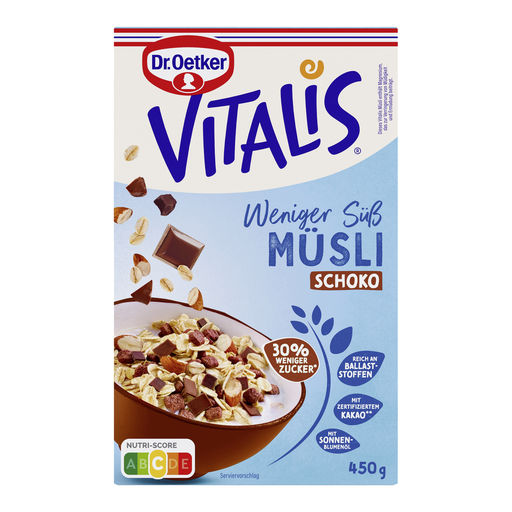 No image available
For households that enjoy chocolate crunchy muesli occasionally and can use up a 450-g pack.
“Less Sweet” doesn’t replace comparing the sugar content per 100 g. If you have ingredient requirements, check the current pack.
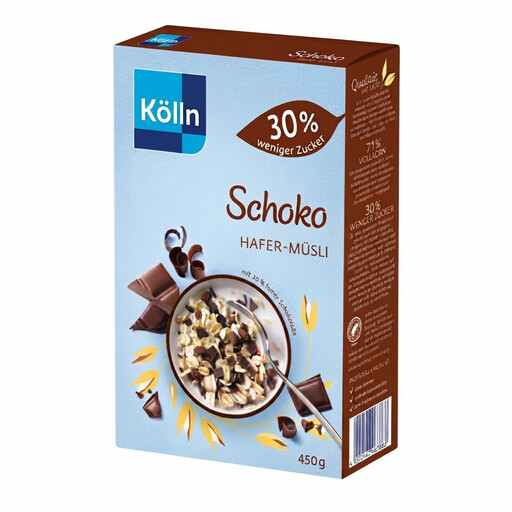 No image available
For households considering a 450-g pack of chocolate oat muesli.
The “30% Less Sugar” claim doesn’t mean the muesli is unsweetened. The product description also warns of a possible choking hazard for young children. Before buying, check the age guidance and serving instructions on the specific pack.
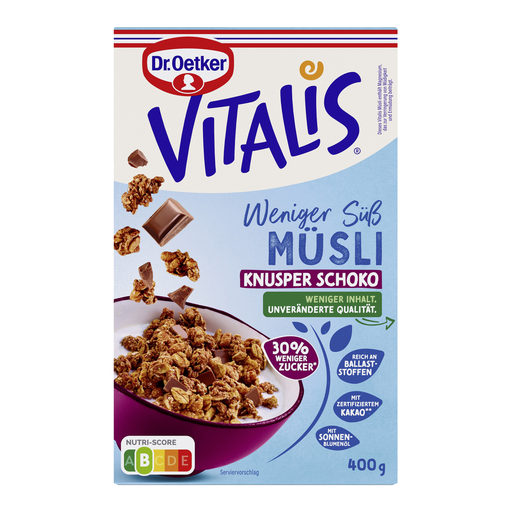 No image available
For households that enjoy chocolate crunchy muesli occasionally and prefer a 400-g pack.
Compare the nutrition information on the specific pack. Allergen information is also important if you have ingredient requirements.
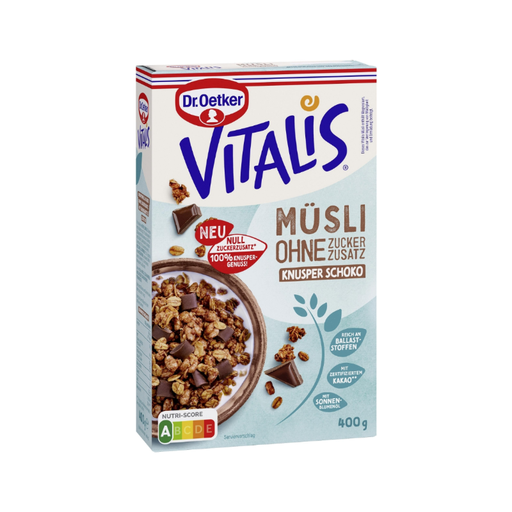 No image available
For households looking at a 400-g pack of chocolate crunchy muesli.
Don’t judge it on the “No Added Sugar” claim alone: also check the polyols and the warning that excessive consumption may have a laxative effect. Check whether it’s suitable for your toddler by reading the specific product labelling.
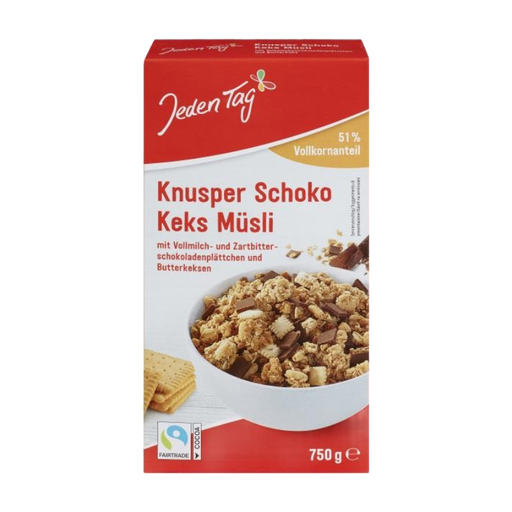 No image available
The 750-g pack may suit households that will genuinely use that much chocolate cookie muesli.
For a toddler’s breakfast, check the sugar content, ingredients and warnings about possible allergen traces on the current pack.
For a regular breakfast, the Verbraucherzentrale recommends bread or porridge with dairy products instead. An occasional serving of chocolate cereal is different from making it part of your daily breakfast routine.
A large pack is a good fit if you’ll use it up within your usual timeframe and store it according to the pack instructions once opened. If you only eat it occasionally, a smaller amount may be more practical.
No. “Less sugar” is a comparative claim and doesn’t mean “unsweetened”. Check the sugar per 100 g on the specific pack. For Kölln Zauberfleks Schoko, the nutrition table and description on the REWE product page give different figures.
For each product, read the current ingredients list and the warnings about possible traces separately. Lebensmittelklarheit explains that allergenic ingredients are highlighted in the ingredients list. If you have individual medical restrictions, follow the relevant professional advice.
Follow the instructions on the specific pack. For Kölln Zauberfleks Schoko, the REWE product page recommends storing it in a dry place away from heat and resealing the bag securely.