Breakfast shoppers focused on fibre
You want to compare chocolate cereals by their stated fibre content per 100 g, rather than relying solely on wholegrain claims on the front of the pack.


If fibre is your main priority when choosing chocolate cereals, start by comparing the nutrition information per 100 g: Nestlé Cereals lists 8.7 g for NESQUIK Knusper-Frühstück, REWE’s product page lists 6.8 g for Kölln Knusprige Haferfleks Schoko, and Kellogg's lists 6.0 g for Choco Krispies Chocos. A higher fibre figure does not automatically mean less sugar in these products. Before ordering online, also check the sugar, ingredients and allergens, as well as the pack available for delivery to your address.
You want to compare chocolate cereals by their stated fibre content per 100 g, rather than relying solely on wholegrain claims on the front of the pack.
You’re looking for a chocolate cereal with a stated fibre value, but also want to check the sugar content in the same nutrition table.
You need to check the ingredients and allergens before ordering, and find out which pack is available once you’ve entered your delivery address. EDEKA notes that product ranges can vary by location.
First, compare fibre and sugar on the same per-100 g basis. Then check the specific product page and pack to make sure the ingredients and allergens meet your requirements.
| Criteria | What to check | Who it matters to |
|---|---|---|
| Fibre | Compare the value per 100 g; consider the wholegrain content separately. | If fibre is your main criterion, you need a directly comparable figure rather than a claim on the front of the pack. Around 42% of consumers put this comparison first. |
| Sugar | Read the “of which sugars” figure per 100 g alongside the fibre value. | You don’t want to overlook a difference in sugar that matters to you just because a product has a higher fibre value. For around 33% of consumers, this trade-off is the main consideration. |
| Online product information | Check the ingredients, allergens and pack offered once you’ve entered your delivery address. | For your order, the information needs to match the version on offer, especially if you need to avoid certain ingredients. This is the main concern for around 25% of consumers. |
Wholegrain content describes the ingredients, not the amount of fibre shown in the nutrition table.
For this purchasing decision, compare the fibre per 100 g first and use the ingredients list as additional information.
The information from Nestlé Cereals, REWE and Kellogg's for the products covered here shows that sugar levels vary, even among products with stated fibre content.
Read both nutrition figures per 100 g before choosing a product.
Nestlé Cereals notes that, when recipes change, different packs may temporarily be available in shops across its German range.
Check the current online information before ordering, then check the labelling on the delivered pack again, especially if you need to avoid certain ingredients.
An item shown online may not be available in the same version at every address. EDEKA explains that local product ranges can vary.
Enter your delivery address before choosing an item, then check the pack size and availability.
For NESQUIK Knusper-Frühstück, Nestlé Cereals lists 8.7 g of fibre, 22.1 g of sugar and 52.7% wholegrain wheat per 100 g.
REWE’s product pages list Kölln Knusprige Haferfleks Schoko with 6.8 g of fibre and 27 g of sugar, and Kölln Zauberfleks Schoko with 6 g of fibre and 13 g of sugar per 100 g.
Kellogg's lists 6.0 g of fibre and 22 g of sugar per 100 g for Choco Krispies Chocos.
This selection includes chocolate muesli and breakfast cereals for online comparison. Muesli and other cereals are different types of product, so in addition to the nutrition information per 100 g, check the ingredients and pack size of the version you want to order.
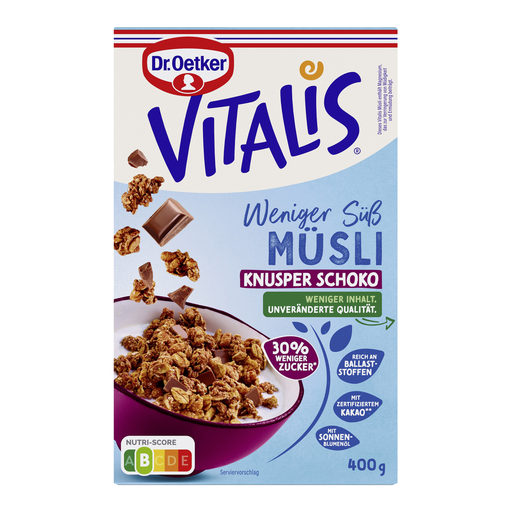 Image unavailable
If you’re choosing chocolate muesli, compare the fibre and sugar figures here using the nutrition information per 100 g; you can’t determine the nutritional value from “Less Sweet” alone.
If needed, check the specific pack for information about possible pecan nuts.
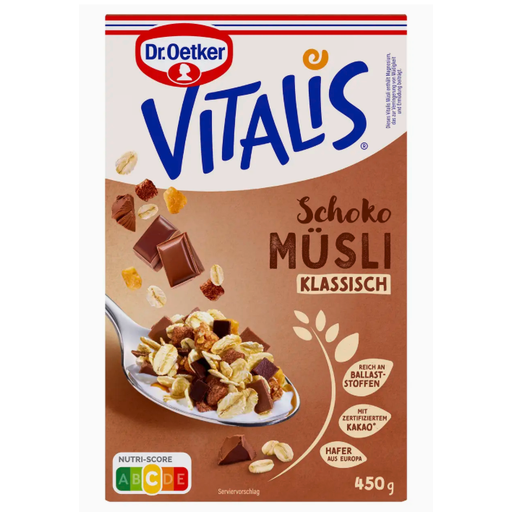 Image unavailable
If you’re choosing chocolate muesli with fibre in mind, remember to check the sugar value per 100 g for this version too.
The information lists milk and wheat, as well as possible pecan nuts; check the allergen information against the pack you receive.
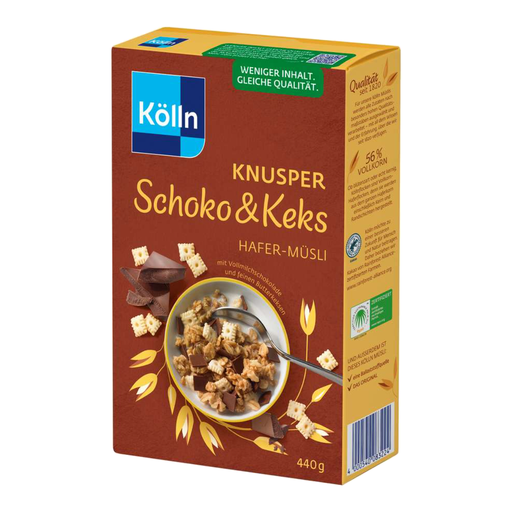 Image unavailable
If you’re looking for chocolate biscuit oat muesli, assess fibre and sugar separately using the nutrition information per 100 g.
According to the product information, it contains cereals containing gluten and milk, and may contain nuts; check the current pack labelling.
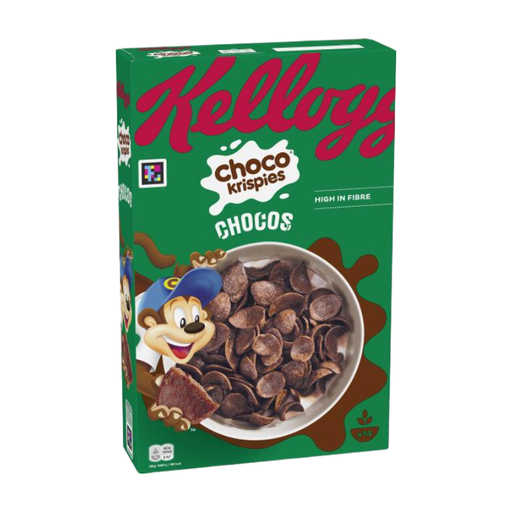 Image unavailable
If you’d prefer chocolate rice cereal to muesli, compare the fibre and sugar per 100 g for this product too.
The product information lists wheat and possible traces of soya, as well as gluten from other cereals; check the information on the pack you receive.
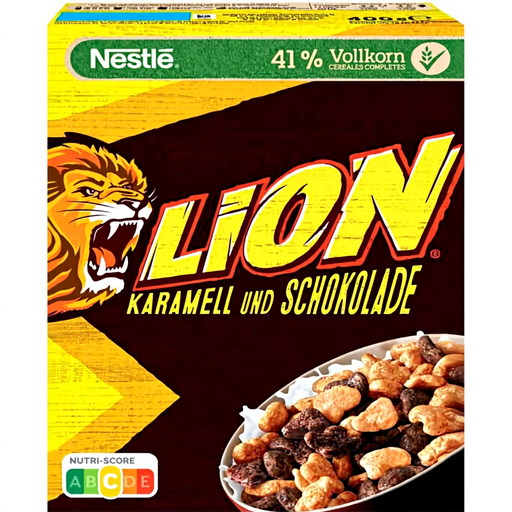 Image unavailable
If you’re choosing chocolate caramel cereal, compare its fibre value with the sugar value per 100 g.
The allergen information on the product page is contradictory about milk and nuts. If you need to avoid these ingredients, check the labelling on the specific pack before buying; don’t rely solely on the conflicting information.
Use the fibre value per 100 g so that pack sizes don’t skew the comparison. Wholegrain content gives you additional information about the ingredients, but it doesn’t replace the stated fibre value.
No. A higher fibre value on its own doesn’t mean a lower sugar value. For example, REWE lists 6.8 g of fibre and 27 g of sugar per 100 g for Kölln Knusprige Haferfleks Schoko, compared with 6 g of fibre and 13 g of sugar per 100 g for Kölln Zauberfleks Schoko.
Before ordering, read the ingredients list, any highlighted allergens and information about possible traces for the specific version. Compare this information with the pack after delivery. If allergen information you need is contradictory, check it before buying.
When recipes change, different packs may be available in shops at the same time for a while, as Nestlé Cereals explains for its German range. So don’t rely solely on an earlier order for information about ingredients and allergens.
Seeing a product page doesn’t confirm that the item can be delivered to your address. First choose your delivery address or store, then check the item on offer; EDEKA notes that product ranges vary by location.