If you have coeliac disease, choose chocolate-coated biscuits by looking for an explicit gluten-free claim on the current pack, not by judging the chocolate coating or the brand. Schär Digestive Choc and Poensgen Schokokekse are labelled accordingly by their manufacturers; however, both contain milk and soya, while Poensgen also contains sweet lupin flour. If you’re looking for a chocolate coating, biscuits with chocolate chips aren’t an equivalent alternative.
Who is this choice relevant to?
People with coeliac disease shopping for gluten-free food
For you, an explicit gluten-free claim on the specific biscuit is essential. Under Commission Implementing Regulation (EU) No 828/2014, this claim may only be used if the food contains no more than 20 mg/kg of gluten at the point of sale.
Chocolate biscuit shoppers with other allergies
As well as checking the gluten-free claim, you need to check the ingredients and allergen information for each variety. Schär and Poensgen list different ingredients and allergen information for the products covered here, including milk, soya, lupin and egg.
People shopping in supermarkets
If you’re looking for a particular variety, check the range at your chosen supermarket. REWE stocks several products in its gluten-free chocolate biscuit category; when deciding what to buy, the labelling on the specific pack is what matters.
What should you look for when buying?
First, check the gluten-free claim, then look at the other ingredients and allergens. After that, you can compare suitable varieties and pack sizes for your shopping.
| What to look for |
What to check when buying |
Who it matters most to |
| Gluten-free claim |
The current pack must explicitly say “gluten-free”. EU Implementing Regulation No 828/2014 requires the product to contain no more than 20 mg/kg of gluten at the point of sale for this claim to be used. |
When I buy biscuits with coeliac disease, I need a clear claim rather than making assumptions based on the brand or chocolate coating; around 45% of consumers put this labelling first. |
| Other allergens |
Compare the ingredients and allergen information for the specific variety, particularly for milk, soya, lupin and egg. |
If I need to avoid ingredients other than gluten, the recipe determines which variety is suitable for me; around 36% of consumers prioritise checking for additional allergens. |
| Range and pack size |
Check that your chosen supermarket stocks the variety you want, and check the weight of the current pack. |
I want to find a suitably labelled variety at a supermarket I can get to and know which pack I’m buying; for around 19% of consumers, access to the right range comes first. |
Common buying mistakes
-
Assuming a chocolate coating means a product is gluten-free
A coating tells you nothing about whether the biscuit is labelled gluten-free. Bahlsen lists both a milk chocolate coating and wheat flour in its Schoko Spekulatius.
If you have coeliac disease, use the explicit gluten-free claim on the current pack as your first check.
-
Assuming “gluten-free” means “free from all allergens”
Schär Digestive Choc and Poensgen Schokokekse are described as gluten-free, but their manufacturers say they contain milk and soya. Poensgen also lists sweet lupin flour, while Schär warns that the product may contain lupin and egg.
If you have other allergies, read the full ingredients and allergen information on the specific pack.
-
Assuming an online listing reflects the range in your local shop
A list of several gluten-free chocolate biscuits shows you which varieties you can compare, but not which packs are available at your chosen supermarket.
Before shopping, check whether your supermarket stocks the variety you want, then check the labelling on the pack.
-
Overlooking differences in nutritional values
Two chocolate biscuits labelled gluten-free can differ in their sugar, saturated fat and fibre content. You can’t draw a general conclusion about whether a product is suitable from a single nutritional value.
If these details matter to you, compare the nutritional information per 100 g and check the pack size.
Brands to consider
Schär
Schär offers biscuits labelled gluten-free; Digestive Choc is a specific variety described as having a milk chocolate coating.
- Schär says Digestive Choc contains 29% milk chocolate and 6.7 g of fibre per 100 g.
- The variety contains milk and soya, and may contain lupin and egg. Schär also lists 34 g of sugar per 100 g.
Poensgen
Poensgen describes its chocolate biscuits as gluten-free and says they contain 25% whole milk chocolate couverture.
- The manufacturer says the variety is egg-free.
- The ingredients include milk, soya and sweet lupin flour. Poensgen also states that egg, nuts and sesame are handled at the production site.
REWE frei von / REWE
The REWE gluten-free chocolate biscuit category is a useful starting point for comparing different varieties.
- REWE lists products including REWE frei von Bio Chocolate Cookies, Schär Digestive Choc and Poensgen Schokokekse.
- The category doesn’t replace checking the ingredients and gluten-free claim on each individual pack.
Bahlsen
Bahlsen Schoko Spekulatius shows why a chocolate coating alone isn’t a useful way to choose biscuits if you have coeliac disease.
- Bahlsen describes this variety as a biscuit with a milk chocolate coating.
- The manufacturer also lists wheat flour. This specific variety shouldn’t be confused with chocolate biscuits explicitly labelled gluten-free.
Gullón
The Gullón catalogue includes both biscuits containing chocolate and varieties labelled gluten-free.
- When looking for a variety, you can check the information about chocolate and gluten-free labelling separately.
- Check the specific pack to see whether a particular variety is chocolate-coated and suitably labelled for your needs.
Related Joybuy products
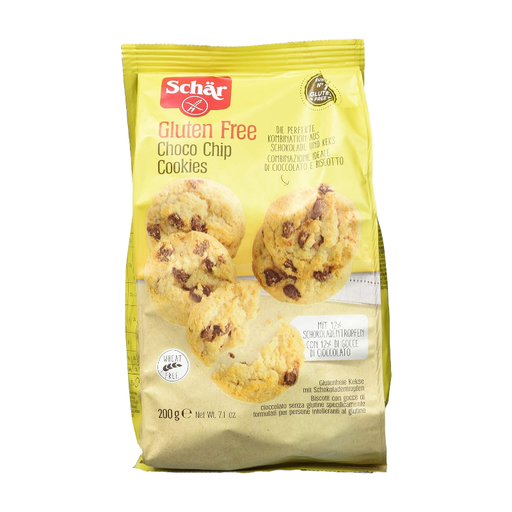
This selection includes a biscuit explicitly labelled gluten-free that contains chocolate chips. If you’re looking for a chocolate coating, make sure the variety you choose actually has one.
 No image available
Schär Gluten-Free Chocolate Chip Cookies, 200 g
A gluten-free labelled biscuit with chocolate, if you’re happy to have chocolate chips rather than a coating.
The product name gives the pack size as 200 g. If you have a soya or egg allergy, it’s particularly important to check the current ingredients and allergen information; the available information about egg is inconsistent.
View at Joybuy
Frequently asked questions
Is a list of ingredients with no wheat flour enough if you have coeliac disease?
No. For this selection, look for an explicit gluten-free claim rather than relying on the listed ingredients alone. Under Commission Implementing Regulation (EU) No 828/2014, the claim “gluten-free” means the product contains no more than 20 mg/kg of gluten at the point of sale.
Does a biscuit labelled gluten-free have to carry the Crossed Grain symbol?
No. The Crossed Grain symbol is an additional certification mark and isn’t required for a product to be labelled “gluten-free”. Control Union Certifications Germany describes it as a mark awarded under the AOECS standard; in all cases, check the information on the specific pack.
Are Schär Digestive Choc and Poensgen Schokokekse also free from milk, soya and lupin?
No. According to the manufacturers, both varieties contain milk and soya. Poensgen also lists sweet lupin flour, while Schär warns that the product may contain lupin and egg. If you have other allergies, the current pack labelling is what matters.
Why should I check the pack again when buying the product again?
The information on the current pack applies to the product you’re buying. Check the gluten-free claim, ingredients and allergen information again; Schär directs customers to the product packaging for the latest full ingredients and nutritional information.


